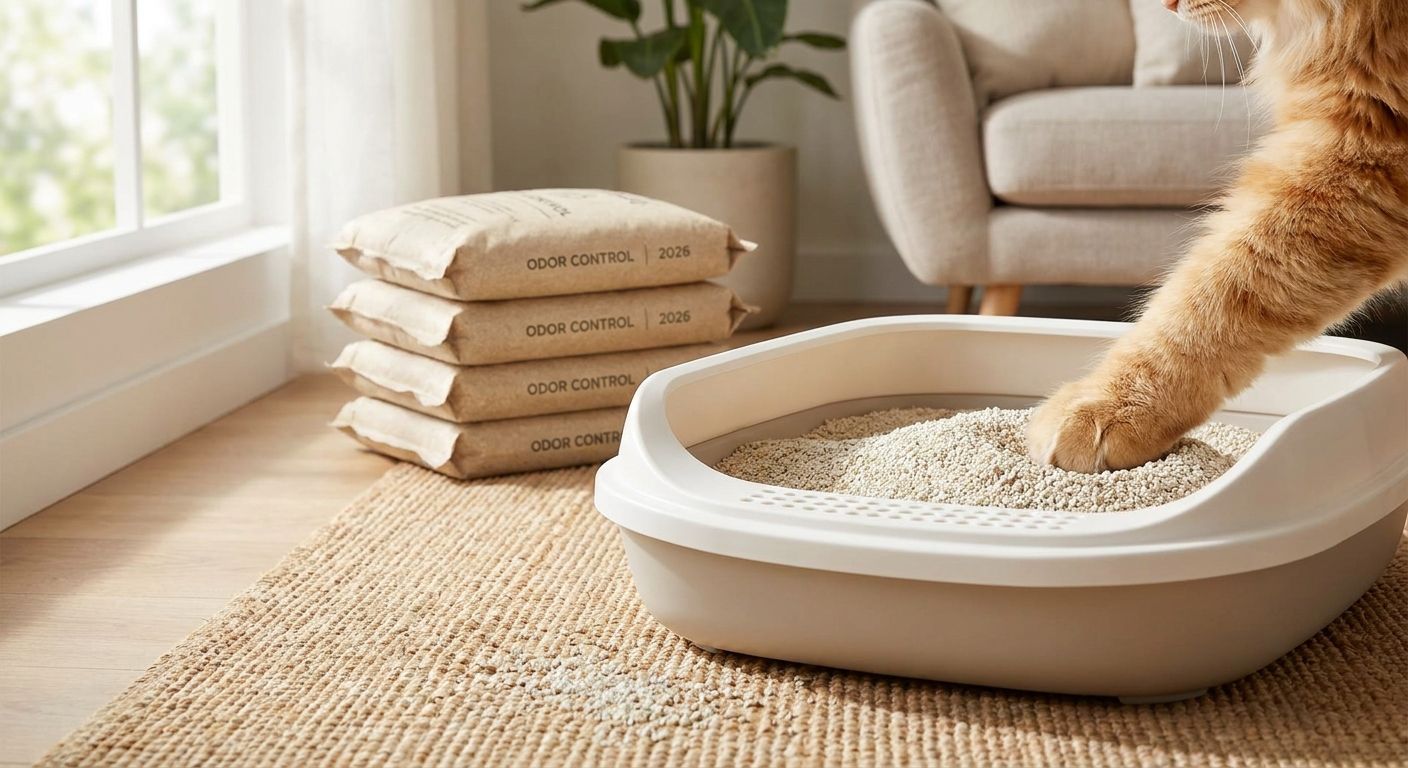
Clumping clay wins on daily odor control for most Sydney households, silica crystal litter wins for low-maintenance long-lasting freshness, and tofu litter wins for owners who want a flushable, low-dust option that's gentler on sensitive paws.
- Clumping clay litter is the best cat litter for odor control in multi-cat homes needing daily scooping.
- Silica crystal litter controls ammonia smell for up to a week between full changes.
- Tofu and corn litters suit sensitive cats and owners wanting a flushable, plant-based option.
- Activated-charcoal clumping litter is the strongest pick for small Northern Beaches apartments with poor ventilation.
- No litter fixes odor on its own if the tray isn't scooped daily and your cat has a clean bill of health.
Why this matters
A sudden change in litter smell is often the first sign something's off with your cat's health, not just the tray. Ammonia odor that returns within hours of scooping can point to a urinary tract issue, kidney changes, or diet problems rather than a bad litter choice. Before you swap brands, rule out a health cause — persistent strong odor, straining, or more frequent trips to the tray are reasons to get your cat checked at Two by Two Vet rather than just buying a new bag of litter.
Once health is ruled out, the litter itself does most of the odor-control work. The right type traps ammonia at the source, absorbs moisture fast, and doesn't need constant top-ups. The wrong type just masks smell with perfume, which cats often dislike and which wears off within a day.
What makes the best cat litter for odor control
- Ammonia absorption speed — how fast the litter locks in urine before it starts smelling
- Clumping strength — tight, scoopable clumps that lift out the source instead of spreading it
- Dust level — low-dust formulas matter for cats with respiratory sensitivity and for owners with asthma
- Tracking — how much litter ends up on your floor instead of in the tray
- Longevity between full changes — some formulas hold odor for a week, others need daily top-ups
- Cat acceptance — a litter your cat refuses to use controls zero odor, because they'll go elsewhere
At a glance: cat litter types compared
| Litter type | Best for | Standout feature | Key limitation |
|---|---|---|---|
| Clumping clay | Multi-cat households, daily scooping | Tight clumps trap odor at the source | Heavy, dusty, not flushable |
| Silica crystal | Low-maintenance owners wanting fewer changes | Absorbs moisture without daily scooping | Doesn't clump, harder to spot-clean solids |
| Activated-charcoal clumping | Small apartments with weak airflow | Charcoal binds ammonia molecules directly | Costs more per bag than plain clay |
| Tofu litter | Sensitive paws, flushable disposal | Plant-based, low dust, flushable in small amounts | Clumps softer than clay, breaks apart if wet |
| Pine pellet | Natural odor control, eco-conscious owners | Pine oils mask ammonia naturally | Pellets don't clump, need a sifting tray |
| Corn-based | Kittens and cats prone to licking litter | Fully biodegradable, safer if ingested | Can attract insects in humid weather |
1. Clumping clay litter: best for multi-cat households
Clumping clay is the standard most Australian vets and pet stores stock because it does one job well: it seizes urine into a solid clump the second it hits the tray, which stops ammonia from spreading through the rest of the litter. For a two- or three-cat household on the Northern Beaches, that means one scoop removes the smell source entirely instead of leaving residue behind.
Clumping clay pros:
- Clumps within seconds, easy to spot-clean twice a day
- Widely available in every supermarket and pet store
- Works with almost every open or covered tray
Clumping clay cons:
- Generates noticeable dust when poured or scooped
- Heavy bags make it awkward for apartment living
- Not flushable and not biodegradable
Verdict: Buy if you're managing more than one cat and want the fastest, most reliable odor lockdown available in 2026.
2. Silica crystal litter: best for owners who scoop less often
Silica crystals absorb liquid into the granules themselves rather than clumping around it, which is why a single tray can go five to seven days before needing a full change. That's the appeal for owners who travel for work or simply don't want to scoop twice daily.
Silica crystal pros:
- Longest odor control between full litter changes
- Very low dust compared with clay
- Lighter to carry and store than clay bags
Silica crystal cons:
- Doesn't clump, so solid waste still needs manual removal
- Some cats dislike the texture underfoot and avoid the tray
- Crystals can feel sharp if a cat has sensitive paw pads
Verdict: Buy for single-cat households where convenience matters more than daily scooping ritual.
3. Activated-charcoal clumping litter: best for small apartments
Adding activated charcoal to a clumping clay base gives the litter a second odor-fighting mechanism — the charcoal binds ammonia molecules chemically instead of just trapping them physically. In a small unit with limited airflow, that extra layer is the difference between a fresh-smelling laundry corner and a smell that greets visitors at the door.
Activated-charcoal clumping pros:
- Two-stage odor control: clumping plus chemical binding
- Performs well in poorly ventilated laundries and bathrooms
- Still clumps tightly like standard clay
Activated-charcoal clumping cons:
- Pricier per bag than plain clumping clay
- Dark granules can look messy if tracked onto light floors
- Overkill for well-ventilated homes with a single cat
Verdict: Buy if odor complaints from housemates or neighbours are the actual problem you're solving.
4. Tofu litter: best for sensitive paws and flushable disposal
Made from soybean pulp, tofu litter clumps on contact with moisture and is soft enough for kittens or cats recovering from surgery who need a gentler surface underfoot. Two by Two Veterinary Hospital sees this come up often with cats recovering from dental or soft-tissue procedures where a low-dust, soft litter reduces irritation.
Tofu litter pros:
- Low dust, gentle on paws recovering from surgery or injury
- Small clumps can be flushed in most Australian plumbing
- Naturally low odor from cats that tolerate the base ingredient
Tofu litter cons:
- Clumps are softer and can break apart if left too long
- More expensive per kilogram than clay
- Not ideal for cats that chew or lick litter, despite being plant-based
Verdict: Buy for post-op recovery, kittens, or households wanting flushable disposal.
5. Pine pellet litter: best for natural odor control
Compressed pine pellets release natural oils that mask ammonia as the pellets break down from moisture. It's a favourite with owners who want to avoid synthetic fragrances and don't mind using a sifting tray to separate soiled pellets from sawdust.
Pine pellet pros:
- Naturally low odor from pine oils, no added fragrance
- Fully biodegradable and compostable
- Very cost-effective by weight
Pine pellet cons:
- Doesn't clump, so a two-tier sifting tray is required
- Some cats dislike the pellet texture and refuse the tray
- Odor control drops off once pellets fully break down
Verdict: Hold unless you're specifically avoiding synthetic litters and are willing to manage a sifting system.
6. Corn-based litter: best for kittens and cats prone to licking litter
Corn litter clumps similarly to clay but is made entirely from ground corn, which makes it a safer option if your cat licks its paws excessively after using the tray or if you're litter-training a kitten. It's fully biodegradable and generally well tolerated by cats transitioning off clay.
Corn-based pros:
- Safer if small amounts are ingested during grooming
- Clumps reasonably well for easy scooping
- Biodegradable and compostable
Corn-based cons:
- Can attract pantry moths or ants in humid Sydney summers
- Odor control is moderate compared with charcoal-enhanced clay
- Costs more than standard clumping clay
Verdict: Hold as the safer choice for kittens, but not the top pick for pure odor performance.
How we ranked
Each litter type was assessed against the six criteria above: ammonia absorption speed, clumping strength, dust level, tracking, longevity between changes, and how readily cats accept the texture. Types that scored well on odor control but poorly on cat acceptance — like unscented crystal for texture-sensitive cats — were flagged in the cons rather than hidden.
Check for a health cause of odor
Persistent smell can signal a UTI or kidney issue, not a litter problem.
Which cat litter should you choose?
For most Northern Beaches households with more than one cat, clumping clay litter remains the most reliable choice for odor control in 2026 because it's fast, cheap, and available everywhere. If you're managing a small apartment or a single cat and want fewer full changes, silica crystal or activated-charcoal clumping litter are the stronger picks. Cats recovering from surgery, or households wanting flushable disposal, do best with tofu litter.
If your cat is already boarding while you travel, ask about the litter used on-site — cats can be fussy about a texture change, and a sudden switch sometimes shows up as tray avoidance rather than an odor complaint. Check current cat boarding options in Sydney if a texture mismatch is disrupting your cat's routine.
Whatever litter you choose, odor control also depends on parasite prevention — fleas and worms can change a cat's gut and skin odor independent of the tray. Reviewing flea and tick prevention products for cats is worth doing alongside a litter change if the smell issue started suddenly.
FAQ
What is the best cat litter for odor control in 2026?
Clumping clay litter controls odor best for most multi-cat homes because it traps urine into a solid clump within seconds. Silica crystal and activated-charcoal clumping litters outperform it for single-cat households wanting fewer full tray changes.
Is silica crystal litter better than clumping clay for smell?
Silica crystal litter holds odor longer between full changes, often five to seven days, but it doesn't clump so solid waste still needs manual scooping. Clumping clay controls fresh odor faster because it isolates urine immediately.
Why does my cat's litter tray smell bad even after scooping?
Persistent odor right after scooping can mean the litter type isn't absorbing fast enough, or it can signal a urinary tract or kidney issue changing your cat's urine smell. If the smell returns within hours of a clean tray, get your cat checked rather than just changing litter brands.
Is tofu litter good for odor control?
Tofu litter controls odor well and is low-dust, making it a good choice for cats recovering from surgery or kittens. It clumps softer than clay, so trays need more frequent scooping to stay effective.
How often should I change cat litter for odor control?
Clumping litters need daily scooping and a full change every one to two weeks depending on how many cats share the tray. Non-clumping litters like pine pellets or silica crystal can go longer between full changes but still need daily waste removal.
Can litter choice affect my cat's health?
Litter choice mostly affects comfort and tray acceptance rather than health directly, but a sudden odor change is more likely to signal a health issue than a litter problem. Cats recovering from surgery benefit from softer, low-dust litters like tofu or corn-based options.
What cat litter is safest for kittens?
Corn-based and tofu litters are generally considered safer for kittens because they're less harmful if small amounts are ingested during grooming or exploration. Clumping clay isn't recommended for very young kittens still learning tray habits.
Does activated-charcoal litter really control odor better?
Activated-charcoal clumping litter adds a chemical binding step on top of standard clumping, which noticeably improves odor control in small or poorly ventilated spaces. It costs more per bag than plain clay, so it's most worth it when ventilation is genuinely limited.
One last thing
If you've switched litter types more than once in a month chasing a smell that keeps coming back, stop testing brands and get your cat's urine checked — a change in odor intensity or frequency is one of the more reliable early signs of a urinary tract or kidney issue in cats, and it's far easier to catch in 2026 than to manage once it's advanced.