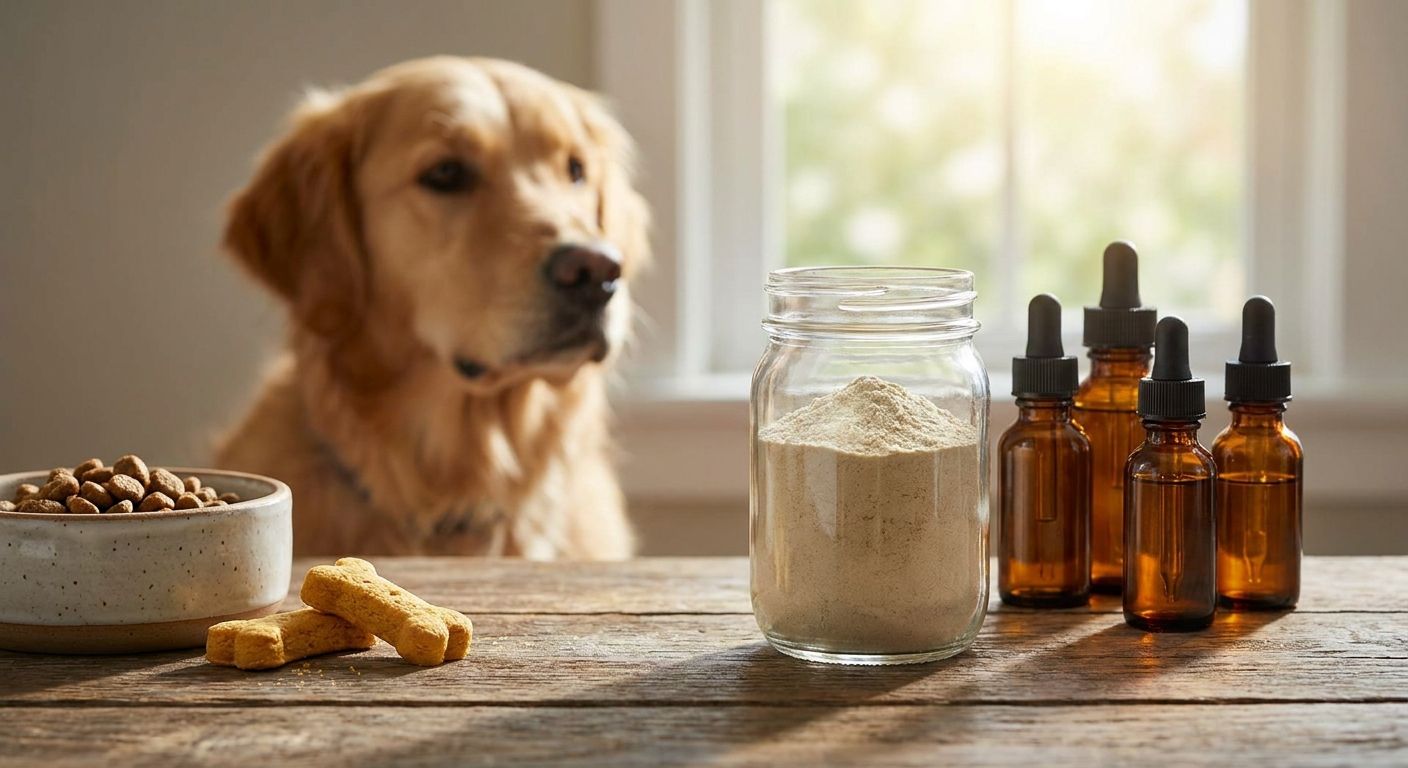

Older dogs slow down for lots of reasons, but stiff, sore joints are the most common one vets on the Northern Beaches see walking through the door. This guide ranks the main categories of joint supplements for older dogs in 2026, so you know which type actually fits your dog's stage of arthritis before you spend a cent.
- Glucosamine-chondroitin combination supplements are the best overall pick for early to moderate joint stiffness in older dogs.
- Green-lipped mussel extract works best for dogs with visible arthritis flare-ups and morning stiffness.
- Omega-3 fish oil is the best budget option and supports joints as part of a broader anti-inflammatory diet.
- Turmeric or curcumin supplements suit dogs that can't tolerate anti-inflammatory medication long term.
- Vet-prescribed joint diets are best for dogs with diagnosed multi-joint osteoarthritis needing a structured plan.
Why this matters
Osteoarthritis in dogs is progressive and it does not reverse itself. Left unmanaged, a dog that is a little slow on stairs in 2026 can be struggling to stand by 2027.
Supplements are not a substitute for a proper diagnosis. A dog that is limping, reluctant to jump, or slow to rise needs an exam at Two by Two Veterinary Hospital before you pick a product, because hip dysplasia, cruciate disease and simple age-related wear all get managed differently. Long-term joint disease also gets expensive once imaging, medication and repeat visits are added up, which is worth factoring into your pet insurance for dogs decision while your dog is still young enough to be insured without a pre-existing condition exclusion.
Best overall: glucosamine-chondroitin combination supplements. Best for active arthritis flare-ups: green-lipped mussel extract. Best budget option: omega-3 fish oil. Each of the five categories below solves a different problem, not the same problem five times over.
What makes the best joint supplement for older dogs
- Evidence behind the active ingredient — glucosamine, chondroitin, omega-3 fatty acids and green-lipped mussel extract all have veterinary research behind them; vague "joint blend" labels don't.
- Dose matched to the dog's weight — most joint supplements underdose medium and large dogs when owners split a small-dog serving.
- Anti-inflammatory action, not just cartilage support — stiffness relief comes from reducing inflammation, not just feeding cartilage-building blocks.
- Palatability and daily compliance — a supplement that gets spat out on the kitchen floor does nothing.
- Fits alongside existing medication — some options interact with prescription anti-inflammatories and need vet sign-off.
- Realistic timeframe — genuine joint supplements take four to eight weeks to show a difference; anything promising overnight results is marketing, not pharmacology.
At a glance
| Category | Best for | Standout feature | Key limitation |
|---|---|---|---|
| Glucosamine-chondroitin combinations | Early to moderate stiffness | Best-researched cartilage-support pairing | Slow onset, four to eight weeks |
| Green-lipped mussel extract | Active flare-ups and morning stiffness | Natural omega-3s plus glycosaminoglycans in one source | More variable dosing between brands |
| Omega-3 fish oil | Budget-conscious, broader inflammation support | Cheapest way to add anti-inflammatory fatty acids | Doesn't rebuild cartilage on its own |
| Turmeric / curcumin | Dogs that can't tolerate NSAIDs long term | Anti-inflammatory without gut or kidney load | Poor absorption unless formulated for bioavailability |
| Vet-prescribed joint diets | Diagnosed multi-joint osteoarthritis | Whole-diet approach, no separate dosing to remember | Requires a diagnosis and diet switch |
1. Glucosamine-chondroitin combinations: best joint supplement for early to moderate stiffness
This pairing is the default starting point for a senior dog that has slowed down but isn't showing dramatic pain. Glucosamine supplies the raw material for cartilage repair, chondroitin sulfate helps cartilage retain water and resist breakdown, and the two are almost always sold together because they work on complementary stages of joint tissue.
Glucosamine-chondroitin pros:
- Most-studied joint ingredient pairing in veterinary medicine
- Widely available in chews, powders and liquid form for dogs that won't take tablets
- Generally safe alongside most other medications
Glucosamine-chondroitin cons:
- Takes four to eight weeks before you see a change
- Low-dose products (common in supermarket brands) won't do much for a 30kg dog
Best for: dogs showing the first signs of slowing down, not yet on prescription pain relief.
Verdict: Buy as the first joint supplement to try for a senior dog with mild stiffness.
2. Green-lipped mussel extract: best for active arthritis flare-ups
Green-lipped mussel (Perna canaliculus) is a New Zealand shellfish extract that naturally contains omega-3 fatty acids alongside glycosaminoglycans, giving it a broader anti-inflammatory effect than glucosamine alone. It's the option vets reach for when a dog is having a visibly bad week — struggling on stairs, slow to get up from lying down, stiff first thing in the morning.
Green-lipped mussel pros:
- Combines cartilage support with genuine anti-inflammatory action
- Often better tolerated than fish oil in dogs with sensitive stomachs
- Works well layered on top of an existing glucosamine-chondroitin regimen
Green-lipped mussel cons:
- Extract concentration varies significantly between brands, so labels need checking
- Shellfish-based, so it's not suitable for dogs with a known shellfish allergy
Best for: dogs having noticeable stiff-and-sore days, particularly in cold or wet weather common across Sydney's Northern Beaches in 2026.
Verdict: Buy for dogs with visible flare-ups rather than just general slowing down.
3. Omega-3 fish oil: best budget joint support
Fish oil doesn't rebuild cartilage the way glucosamine does, but EPA and DHA fatty acids reduce inflammatory chemical signalling throughout the body, joints included. It's the cheapest way to add meaningful anti-inflammatory support to a senior dog's diet, and it doubles as a support for skin, coat and heart health.
Omega-3 fish oil pros:
- Lowest cost per dose of any option on this list
- Backed by strong general anti-inflammatory research, not just joint-specific studies
- Easy to dose by body weight using liquid or capsule products
Omega-3 fish oil cons:
- No direct cartilage-repair action, so it works best paired with glucosamine or mussel extract
- High doses can cause loose stool or a fishy smell some owners find off-putting
Best for: owners managing a tight budget who still want a genuine anti-inflammatory in the daily routine.
Verdict: Buy as a low-cost addition, not a standalone fix for advanced arthritis.
4. Turmeric and curcumin: best for dogs sensitive to anti-inflammatory medication
Curcumin, the active compound in turmeric, has anti-inflammatory properties studied in both human and veterinary medicine. It appeals to owners whose dogs have had gut upset or kidney concerns on prescription NSAIDs and want a gentler alternative alongside diet changes such as those covered in a hypoallergenic dog food plan for dogs with sensitive stomachs.
Turmeric/curcumin pros:
- Anti-inflammatory action without the gut or kidney load of some prescription NSAIDs
- Fits well into a food-based approach for dogs with existing dietary sensitivities
- No known interaction issues with most joint supplements
Turmeric/curcumin cons:
- Raw turmeric powder is poorly absorbed; needs a bioavailability-enhanced formulation to be effective
- Weaker evidence base in dogs specifically compared with glucosamine or omega-3s
Best for: dogs that can't tolerate standard anti-inflammatory medication or have a sensitive gut.
Verdict: Hold unless the product is specifically formulated for absorption — plain turmeric powder from the pantry does very little.
5. Vet-prescribed joint diets: best for diagnosed multi-joint osteoarthritis
Once arthritis is confirmed in more than one joint, a therapeutic joint diet built around omega-3s, glucosamine and controlled calories often outperforms adding a supplement to regular food, because every meal delivers a consistent dose without a separate step to remember.
Vet-prescribed joint diets pros:
- Removes the guesswork of dosing a separate supplement correctly
- Manages weight at the same time, and extra weight is one of the biggest drivers of joint pain in senior dogs
- Formulated to a therapeutic level, not a general wellness level
Vet-prescribed joint diets cons:
- Requires a diagnosis first, so it's not a self-selected option
- A full diet switch is a bigger commitment than adding a chew or powder
Best for: dogs already diagnosed with osteoarthritis in multiple joints, managed under veterinary supervision.
Verdict: Buy once a diagnosis confirms it's the right stage for a full diet change.
How we ranked these
Each category was assessed against the criteria above: strength of research behind the active ingredient, correct dosing by weight, genuine anti-inflammatory action versus cartilage support alone, palatability, and how well it fits alongside other medication. Categories that only had marketing claims behind them, with no ingredient research, didn't make the list at all.
Not sure which joint supplement fits your dog?
Book a check-up and get a plan matched to your dog's stage of arthritis.
Which joint supplement should you choose?
For most owners of a senior dog that's just started slowing down, start with a glucosamine-chondroitin combination and give it the full six to eight weeks before judging it. If your dog is already having visibly stiff, sore days, layer in green-lipped mussel extract rather than waiting to see if the basic pairing catches up. Budget-limited households still get real value from omega-3 fish oil alone.
Dogs that can't tolerate standard anti-inflammatories are the one group where turmeric/curcumin genuinely earns its place, provided the formulation is absorption-enhanced. And any dog with a confirmed multi-joint diagnosis in 2026 gets more consistent results from a vet-prescribed joint diet than from any add-on supplement. Book a check-up before choosing if your dog is limping, reluctant to jump, or slower than usual on stairs — that's a diagnosis question, not a supplement question.
FAQ
What's the best joint supplement for older dogs in 2026?
Glucosamine-chondroitin combinations are the best overall starting point for early to moderate stiffness in older dogs. Dogs with active flare-ups often do better adding green-lipped mussel extract on top.
Is green-lipped mussel extract better than glucosamine for dogs?
They work differently rather than one being universally better. Glucosamine supports cartilage repair over time, while green-lipped mussel adds a stronger anti-inflammatory effect for dogs having visible flare-ups.
How long does it take for joint supplements to work in dogs?
Most genuine joint supplements take four to eight weeks of consistent daily dosing before an owner notices a change. Anything claiming overnight results isn't backed by how these ingredients work.
Can I give my senior dog fish oil every day?
Yes, daily omega-3 fish oil is standard practice for senior dogs when dosed by body weight. High doses can cause loose stool, so it's worth starting at the lower end of the range.
Do joint supplements interact with arthritis medication?
Most joint supplements are safe alongside prescription anti-inflammatories, but it's worth confirming with your vet, especially with turmeric-based products if your dog is on other medication.
When should I take my dog to the vet instead of trying a supplement first?
See a vet before starting supplements if your dog is limping, reluctant to jump, or noticeably slower on stairs. Those signs need a diagnosis, because supplements alone won't fix hip dysplasia or cruciate disease.
Are prescription joint diets better than supplements for dogs?
For dogs with a confirmed multi-joint osteoarthritis diagnosis, a prescription joint diet often gives more consistent results than adding a separate supplement, because every meal delivers the same dose.
Does turmeric actually help dog joints?
Curcumin, the active compound in turmeric, has real anti-inflammatory properties, but plain turmeric powder is poorly absorbed. It needs a bioavailability-enhanced formulation to make a meaningful difference.
One last thing
Weight is the single biggest lever owners underuse. A senior dog carrying even 10-15% excess body weight puts meaningfully more load through arthritic joints than any supplement can offset, so a weight check at the same time you start a joint supplement often does more for mobility than the supplement itself.