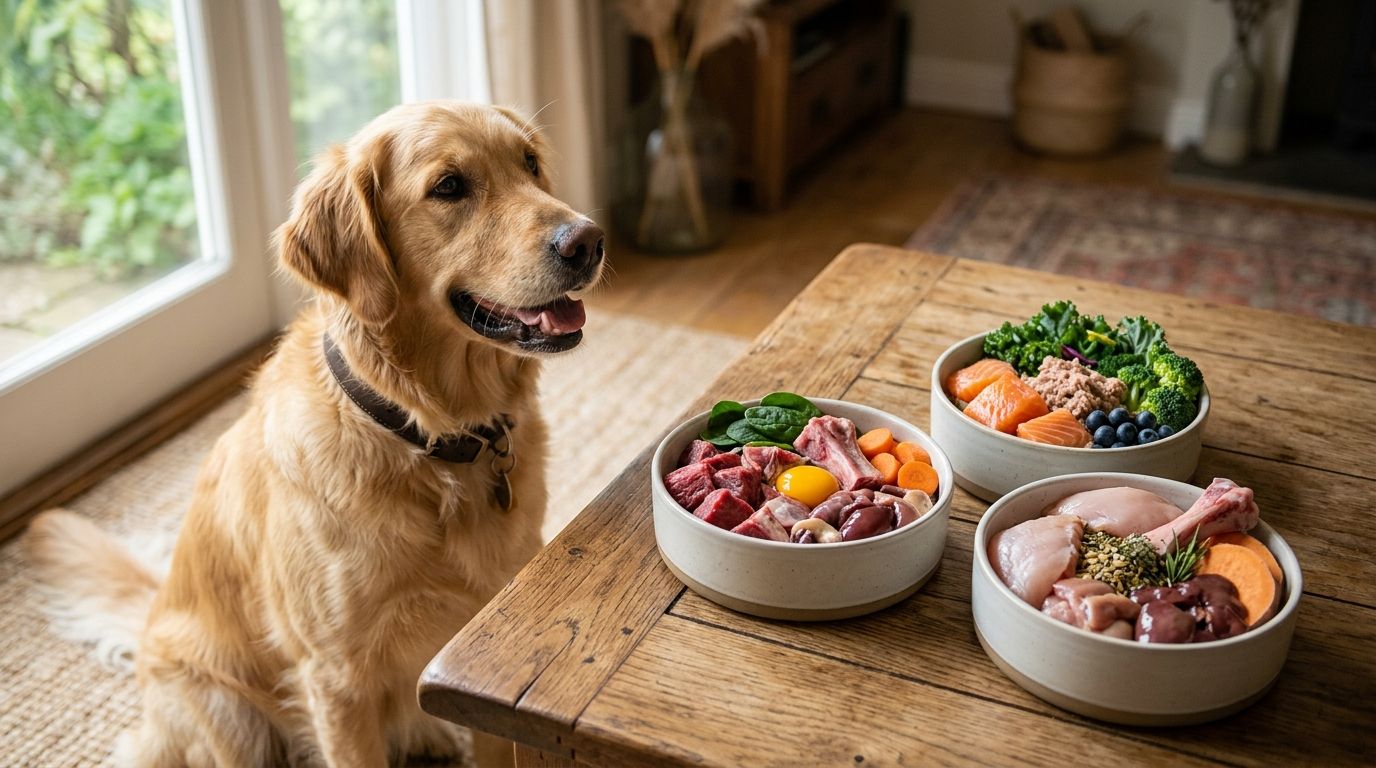
Raw food diets for dogs range from complete frozen blends formulated to a recognised feeding standard through to homemade bowls of meat, bone and vegetables, and the safest pick in 2026 depends on your dog's life stage, your kitchen hygiene, and whether a vet has actually checked the recipe. Best overall: commercially prepared complete and balanced frozen raw. Best for convenience: freeze-dried raw. Best for dogs with an existing health condition: a vet-supervised raw feeding plan.
- Commercially prepared complete frozen raw wins the best raw food diet for dogs compared in 2026 for balanced, checkable nutrition.
- Freeze-dried raw suits households with no freezer space or dogs that travel often.
- Homemade BARF diets need a properly formulated recipe, not guesswork, or dogs risk calcium and vitamin gaps.
- Prey model raw carries the highest risk of nutritional imbalance and bacterial exposure without veterinary input.
- Any raw food diet for dogs should get a vet review before it becomes the only thing your dog eats.
Why this matters
Raw feeding has moved from a niche choice to a mainstream one across the Northern Beaches, and the clinic sees the downside as often as the upside. Pancreatitis flare-ups, broken teeth from weight-bearing bones, and gastro episodes traced back to a bad batch of mince all turn up in the same consult room as owners asking about hypoallergenic dog food brands for a dog with a sensitive gut.
The honest answer in 2026 is that raw feeding isn't one thing — it's five different approaches with very different risk profiles, and lumping them together is how owners end up making the wrong call for their specific dog.
What makes the best raw food diet for dogs
- Nutritional completeness — formulated against a recognised feeding standard, not just "meat and veg in a bowl"
- Food safety handling — sourced, processed and stored in a way that limits Salmonella and Listeria exposure
- Life-stage suitability — puppies, adults and seniors need different calcium-to-phosphorus ratios and calorie density
- Practicality for your household — freezer space, prep time, and whether you can keep to it every day
- Veterinary oversight available — can a vet or vet nutritionist actually review the recipe
- Ingredient transparency — clear labelling of protein source, bone percentage and organ ratio, not vague marketing copy
Raw food diets for dogs at a glance
| Diet type | Best for | Standout feature | Key limitation |
|---|---|---|---|
| Commercial complete frozen raw | Owners wanting balanced nutrition without formulation math | Manufactured to a stated feeding standard | Still varies brand to brand — check the label |
| Freeze-dried raw | Travel, camping, small freezers | No cold-chain storage needed once opened | Rehydration step adds prep time |
| Homemade BARF diet | Owners wanting full ingredient control | Total transparency over every component | Easy to get calcium and micronutrients wrong |
| Prey model raw | Experienced raw feeders replicating a whole-prey approach | Minimal processing, whole animal parts | Highest risk of nutritional gaps and bacterial load |
| Vet-supervised raw plan | Dogs with existing health conditions | Recipe reviewed against your dog's bloodwork and history | Needs a consult, not a supermarket freezer aisle |
1. Commercial complete frozen raw diet: best raw food diet for dogs compared overall
This is raw meat, bone and organ mixed and frozen by a manufacturer that formulates the recipe against a stated feeding standard rather than eyeballing ratios. It ships as patties or mince blocks, thaws in the fridge overnight, and is meant to be the sole diet, not a topper.
Commercial frozen raw pros:
- Formulated ratios reduce the guesswork around calcium, phosphorus and vitamin A
- Consistent recipe batch to batch, which matters for dogs with sensitive stomachs
- Widely available across Sydney pet stores and online in 2026
Commercial frozen raw cons:
- "Complete and balanced" claims still vary — not every brand meets the same standard
- Requires genuine freezer space and daily thaw planning
- Cost per kilo runs higher than kibble
Best for: owners who want raw feeding without doing the nutrition maths themselves. Verdict: Recommended as the default starting point.
2. Freeze-dried raw diet: best raw food diet for dogs for travel and small kitchens
Freeze-dried raw strips the water out of a raw recipe so it stores at room temperature until rehydrated with water before serving. It behaves like commercial frozen raw nutritionally but solves the freezer and defrosting problem entirely.
Freeze-dried raw pros:
- No freezer required, which suits apartments and caravans
- Long shelf life makes it practical for boarding stays or holidays
- Same formulation logic as frozen raw, so nutrient ratios are generally comparable
Freeze-dried raw cons:
- Rehydration adds a few minutes to every meal
- Tends to cost more per serve than frozen equivalents
- Some dogs eat it too fast once rehydrated, which can trigger gulping and reflux
Best for: households without spare freezer space or dogs that travel with their owners. Verdict: Recommended for convenience-first feeding.
3. Homemade BARF diet: best raw food diet for dogs for owners who want ingredient control
BARF stands for Bones and Raw Food (or Biologically Appropriate Raw Food, depending who you ask), and it means building meals yourself from raw meaty bones, muscle meat, organs and often some vegetable matter. It gives total control over sourcing but shifts all the formulation responsibility onto the owner.
Homemade BARF pros:
- Full control over protein source, useful for dogs with known allergies
- No reliance on a manufacturer's supply chain or recipe changes
- Can be tailored around a vet-reviewed recipe for a specific dog
Homemade BARF cons:
- Recipes assembled from online forums frequently miss calcium, iodine or vitamin D targets
- Raw bone handling in a home kitchen needs the same hygiene as raw poultry for humans
- Time-intensive to source, weigh and rotate ingredients correctly, every week, indefinitely
Best for: owners committed to sourcing a properly formulated recipe and sticking to it. Verdict: Vet-supervised only — get the recipe checked before you start.
4. Prey model raw: best raw food diet for dogs replicating a whole-prey approach
Prey model raw skips manufactured formulas entirely and feeds whole animal parts — muscle meat, bone, organ, sometimes whole small prey — in ratios meant to mimic what a wild canid would eat. It's the least processed option and the one with the widest gap between best-case and worst-case outcomes.
Prey model raw pros:
- Minimal processing and no additives
- Popular among experienced raw feeders who track ratios closely over time
- Can work well long-term when portions and variety are genuinely monitored
Prey model raw cons:
- No manufacturer formulation to fall back on if ratios drift
- Whole bone content raises choking and dental fracture risk, especially with weight-bearing bones
- Highest documented bacterial exposure of the raw feeding styles, given minimal processing
Best for: experienced raw feeders who track intake closely and accept the added handling risk. Verdict: Approach with caution — not a first raw diet for a new feeder or a puppy.
5. Vet-supervised raw feeding plan: best raw food diet for dogs with an existing health condition
This isn't a separate product, it's a process: taking any of the raw feeding styles above and building or adjusting it against a specific dog's bloodwork, weight history and any diagnosed condition, with a vet checking the plan before it starts and reviewing it periodically.
Vet-supervised plan pros:
- Catches deficiencies before they become clinical problems, not after
- Can be adjusted around conditions like pancreatitis history or kidney values
- Gives owners a clear point of contact if something looks off after a diet change
Vet-supervised plan cons:
- Requires a consult, so it's not an off-the-shelf, same-day switch
- Not every raw brand or homemade recipe will pass review unchanged
Best for: dogs with a diagnosed condition, a history of dietary sensitivity, or owners switching a puppy onto raw for the first time. Verdict: Recommended before starting any raw diet, not just for sick dogs.
Get your dog's raw diet reviewed
A quick check catches calcium and vitamin gaps before they cause problems.
How we ranked these raw food diets
Each diet style was weighed against the six criteria above: formulation completeness, handling safety, life-stage fit, day-to-day practicality, whether a vet can meaningfully review it, and label transparency. Commercial frozen raw scores highest because it's the only category where a manufacturer has already done the ratio work; prey model raw scores lowest because that work sits entirely with the owner, with no formulation to check against.
“A raw food diet is only as safe as its handling — treat every batch like raw chicken in your own kitchen, every single time.”
Which raw food diet should you choose?
If you want a straightforward answer for 2026: start with a commercially prepared complete frozen raw diet, because it's the one style where the nutrient maths has already been done for you. Switch to freeze-dried if freezer space or travel is the real obstacle. Only move to homemade BARF or prey model raw once a vet has reviewed the specific recipe against your dog's age, breed and any existing condition — dogs already managed for gut sensitivity should also look at probiotics for dogs with sensitive stomachs alongside any diet change, and any dog moving onto raw meat should be current on worming treatments for adult dogs given the added parasite exposure from raw ingredients.
FAQ
What's the best raw food diet for dogs in 2026?
Commercially prepared complete frozen raw is the best raw food diet for dogs compared overall in 2026, because the nutrient ratios are formulated by the manufacturer rather than left to guesswork. Freeze-dried raw is the next-best option for owners short on freezer space.
Is a raw food diet safe for dogs?
Raw food diets can be safe when the recipe is complete and balanced and handled with the same hygiene as raw meat for humans. The main risks are bacterial contamination and nutrient gaps in poorly formulated homemade recipes.
Can puppies eat a raw food diet?
Puppies can eat raw, but their calcium-to-phosphorus needs are tighter than an adult dog's, so a vet-supervised raw feeding plan is strongly recommended before starting. Getting the ratio wrong during growth can affect skeletal development.
Is BARF diet better than commercial raw dog food?
Neither is automatically better — a homemade BARF diet gives full ingredient control but relies entirely on the owner getting the formulation right, while commercial raw has the ratios worked out by the manufacturer. BARF only matches commercial raw when the recipe has been checked by a vet or vet nutritionist.
How much raw food should I feed my dog?
Portion sizes depend on your dog's weight, age and activity level, and most commercial raw brands print a feeding guide by body weight on the packaging. A vet can confirm the right amount if your dog is under or overweight.
Do vets recommend raw food diets for dogs?
Vets generally support raw feeding when the diet is complete and balanced and handled safely, but flag concerns around bacterial contamination and nutritional gaps in poorly formulated homemade recipes. A vet review before starting is the most consistent recommendation across raw feeding styles.
What are the risks of feeding raw bones?
Raw bones carry a risk of dental fracture, especially weight-bearing bones like femurs, and a choking or obstruction risk if swallowed in large pieces. Recreational raw bones for chewing should be supervised and sized appropriately for the dog.
How do I switch my dog to a raw food diet safely?
Introduce raw gradually over 7 to 10 days, mixing it with the current diet in increasing proportions to avoid gastro upset. Dogs with a history of pancreatitis or a sensitive stomach should have the switch reviewed by a vet first.
One last thing
Check the fine print on any raw product before it becomes the only thing your dog eats in 2026 — a lot of raw mince sold in supermarket freezers and even some pet stores is labelled "not for sole feeding" or similar, meaning it's a treat or topper, not a complete diet. That label is easy to miss when the packaging looks identical to a complete formula sitting right next to it on the shelf.