Pet insurance in Australia isn't priced the same way twice — the plan tier you choose moves your premium more than the insurer's name printed on the policy. This guide ranks the main cover types by relative cost, from cheapest to most comprehensive, so you know what you're paying for before your pet's next vet visit in 2026.
- Accident-only cover is the cheapest pet insurance tier in Australia in 2026; comprehensive plans with wellness extras cost the most.
- Accident & illness cover is the best overall pick for most healthy adult dogs and cats.
- Multi-pet households often get better value bundling policies than insuring each pet separately.
- Waiting periods and annual benefit limits shape real-world cost as much as the monthly premium does.
- Senior pets and breeds prone to chronic conditions need comprehensive cover, not the cheapest tier.
Why this matters
Most pet owners compare pet insurance by premium alone, then get surprised at claim time when a sub-limit or exclusion kicks in. The bigger cost driver isn't the brand — it's the tier: accident-only, accident & illness, or comprehensive with wellness. Get that choice wrong and you either overpay for cover you don't need or underinsure a pet that develops a chronic condition later.
If you're insuring a dog specifically, the trade-offs differ from cat cover — breed-linked conditions like cruciate ligament injuries and hip dysplasia push more dogs toward comprehensive plans than cats need. Two by Two Vet's guide to pet insurance for dogs in Australia breaks down which conditions actually get claimed on most often.
The ranking below sorts plan types from lowest relative cost to highest, based on how Australian insurers structure their tiers in 2026 — not a single named product.
What makes the best pet insurance plan
- Annual benefit limit — the total an insurer pays out per policy year, often with per-condition sub-limits
- Excess structure — fixed dollar excess versus a percentage-based excess that scales with the claim
- Waiting periods — most Australian insurers apply a 24 to 48-hour wait for accidents, around 30 days for illness, and up to 6 months for cruciate ligament and some orthopaedic conditions
- Chronic and hereditary condition coverage — whether ongoing conditions like allergies or arthritis are covered long-term or capped after the first claim
- Age caps and premium creep — most insurers increase premiums as pets age, and some stop offering new cover past a certain age
- Multi-pet and bundling options — whether insuring more than one pet under the same provider lowers the combined cost
At a glance
| Plan tier | Best for | Standout feature | Key limitation |
|---|---|---|---|
| Accident-only | Young, healthy pets on a tight budget | Lowest relative premium in the market | No cover for illness, only injury |
| Accident & illness | Most adult dogs and cats | Balances cost against real disease risk | Sub-limits often apply to chronic conditions |
| Comprehensive with wellness | Senior pets, chronic-prone breeds | Covers illness, accident and routine care | Highest relative premium of the tiers |
| Multi-pet bundle | Multi-pet households | Combined policy management, one renewal date | Per-pet benefit limits can still apply individually |
| Higher-excess / capped-benefit | Cost-conscious owners of low-risk pets | Lower monthly premium in exchange for higher out-of-pocket cost | Large claims hit the excess hard |
1. Accident-only cover: best pet insurance for young, healthy pets on a budget
Accident-only policies pay out for injuries — being hit by a car, swallowing something they shouldn't, a torn claw — but not for illness. It's the entry point of pet insurance in Australia and the cheapest tier by a clear margin.
Accident-only pros:
- Lowest relative premium of any tier
- Straightforward claims for clear-cut injuries
- No wellness add-ons inflating the price
Accident-only cons:
- Zero cover for illness, cancer, or chronic disease
- Owners often underestimate how much of a pet's lifetime vet spend is illness-related, not injury-related
- Usually needs upgrading once a pet reaches middle age
Best for: puppies and kittens with no diagnosed conditions yet, or owners who genuinely cannot stretch to a higher tier.
Verdict: Buy if budget is the hard constraint and your pet is young and healthy — Skip it for anything over 5 years old.
2. Accident & illness cover: best pet insurance for most dogs and cats
This is the tier most Australian pet owners land on. It covers injuries and a wide range of illnesses — ear infections, gastro, skin conditions — sitting in the middle of the cost spectrum.
Accident & illness pros:
- Covers the two biggest claim categories: injury and sickness
- Mid-range premium relative to comprehensive plans
- Wide availability across Australian insurers
Accident & illness cons:
- Chronic conditions often hit annual sub-limits fast
- Routine care (vaccinations, dental cleans, desexing) usually isn't included
- Waiting periods still apply to new illness claims
Best for: healthy adult dogs and cats without a diagnosed pre-existing condition.
Verdict: Buy — this is the default recommendation for most pets in 2026 unless your pet has a specific risk profile pushing you toward comprehensive cover.
3. Comprehensive cover with wellness: best pet insurance for senior pets and chronic-prone breeds
Comprehensive plans add routine and preventive care — vaccinations, dental, sometimes desexing — on top of accident and illness cover. It's the most expensive tier, and for a reason: it's built for pets that are more likely to claim.
Comprehensive pros:
- Broadest protection against chronic and ongoing conditions
- Routine care contributes toward the annual limit rather than sitting entirely out of pocket
- Better suited to breeds with known hereditary risks (hip dysplasia, brachycephalic airway issues, luxating patella)
Comprehensive cons:
- Highest relative premium of all tiers
- Wellness extras often have their own small sub-limits, capping how much they're actually worth
- Pre-existing conditions still get excluded, no matter the tier
Best for: senior dogs and cats, and breeds with documented hereditary or chronic disease risk.
Verdict: Buy for pets over 7 years old or breeds with known chronic conditions — Hold for a young, low-risk pet where the cost premium isn't justified yet.
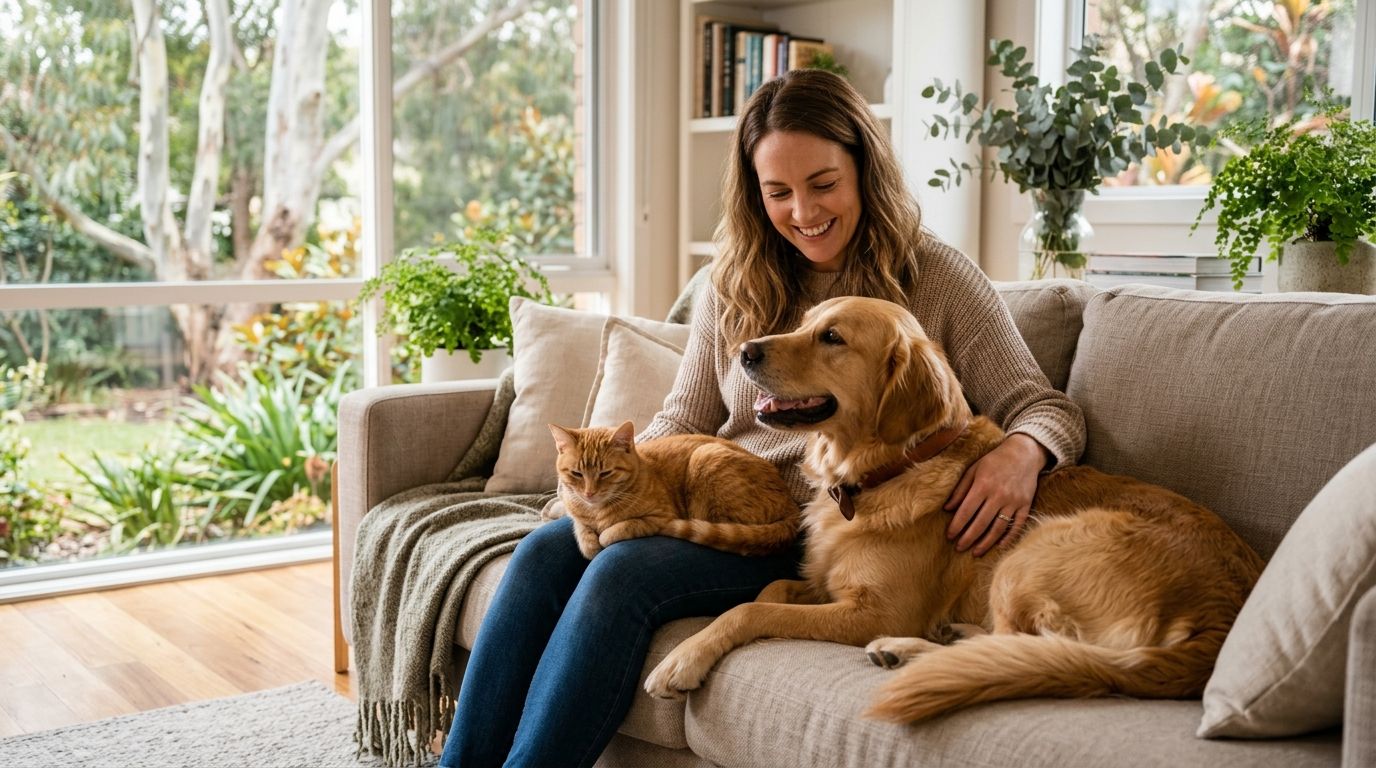
4. Multi-pet household plans: best pet insurance for families with more than one pet
Multi-pet plans bundle two or more pets under a single provider and renewal date. The per-pet cost structure still applies, but managing one account instead of three separate policies has real practical value.
Multi-pet pros:
- One renewal date and one point of contact for claims across all pets
- Some insurers offer combined-policy pricing that undercuts insuring pets separately
- Easier to track waiting periods and exclusions across the household
Multi-pet cons:
- Benefit limits are usually still calculated per pet, not pooled
- Not every insurer offers a genuine multi-pet structure — some just process separate policies under one login
- Switching providers later means moving every pet at once
For households juggling a dog and a cat with different risk profiles, Two by Two Vet's multi-pet household insurance guide covers how to structure cover per animal rather than picking one blanket policy.
Best for: two or more pets in the same household, regardless of species mix.
Verdict: Buy if you're insuring more than one pet — the administrative saving alone is worth comparing against separate policies.
5. Higher-excess or capped-benefit plans: best pet insurance for low-risk pets on tight budgets
Some insurers let you raise the excess or accept a lower annual benefit cap in exchange for a lower monthly premium. It's a lever, not a separate product — but it changes the cost profile enough to rank on its own.
Higher-excess pros:
- Lower ongoing premium than the standard version of the same policy
- Useful for pets with a low claim history
- Still provides a safety net for genuinely large, unexpected bills
Higher-excess cons:
- A serious injury or illness hits the wallet hard before cover kicks in
- Capped annual benefits can run out mid-treatment for a chronic condition
- Easy to underestimate the excess amount until you're mid-claim
Best for: owners of low-risk, low-claim pets who want a safety net for catastrophic events only, not day-to-day vet visits.
Verdict: Hold unless you have savings set aside to cover the higher excess — Wait if your pet's breed carries known chronic disease risk.
“The cheapest pet insurance policy on paper is often the most expensive one at claim time.”
How we ranked
Each tier is ordered by relative premium cost against the criteria above: benefit limits, excess structure, waiting periods, chronic condition coverage, age caps, and bundling options. Accident-only sits lowest because it excludes the largest claim category — illness. Comprehensive sits highest because it adds routine and preventive care on top of full injury and illness cover. Everything in between is a trade-off between premium and protection, not a quality difference between insurers.
Which pet insurance plan should you choose?
If your pet is young and healthy, accident & illness cover is the default choice for 2026 — it covers the two claim categories most pets actually use. If your pet is a senior or a breed with known hereditary risk, comprehensive cover earns its higher premium. If budget is the hard limit and your pet has no diagnosed conditions, accident-only is a reasonable starting point — but plan to upgrade before your pet turns middle-aged. Multi-pet households should compare bundled pricing before assuming separate policies are cheaper.
Review your policy at your next check-up
Bring your pet insurance documents to your next visit at Two by Two Vet.
FAQ
What affects the cost of pet insurance in Australia?
Plan tier, your pet's age and breed, annual benefit limits, and excess structure all move the premium. Accident-only is the cheapest tier and comprehensive with wellness is the most expensive, regardless of insurer.
Is accident-only cover cheaper than comprehensive cover?
Yes, accident-only sits at the bottom of the cost range because it excludes illness claims entirely. Comprehensive cover costs more because it adds illness, chronic condition support and often routine care.
Does pet insurance cost more for older dogs and cats?
Premiums generally rise as pets age, and some insurers cap the age at which new policies can start. Insuring a pet while young and healthy locks in lower ongoing costs than waiting until symptoms appear.
Are there waiting periods on new pet insurance policies?
Most Australian insurers apply a 24 to 48-hour waiting period for accidents, around 30 days for illness, and up to 6 months for conditions like cruciate ligament injuries. Cover doesn't start the day you sign up.
Do multi-pet households get cheaper pet insurance?
Some insurers offer combined pricing for multi-pet policies, though benefit limits are usually still calculated per pet. It's worth comparing a bundled quote against separate policies before assuming it's cheaper.
Is pet insurance worth it in Australia in 2026?
It depends on your pet's age, breed risk and your own savings buffer for vet bills. A young, healthy pet on accident & illness cover balances cost against protection better than skipping insurance entirely.
What's usually not covered by pet insurance?
Pre-existing conditions are excluded across every tier and every insurer. Routine care like vaccinations and dental cleans is only included on comprehensive plans with wellness add-ons.
Should I insure a purebred pet differently to a mixed breed?
Purebred dogs and cats with known hereditary conditions — hip dysplasia, brachycephalic airway syndrome, luxating patella — benefit more from comprehensive cover than mixed breeds with no documented breed risk.
One last thing
Ask about a policy's sub-limits before you ask about the premium — a comprehensive plan with a low per-condition cap can pay out less on a real chronic illness claim than a mid-tier plan with a higher single limit. Bring the policy schedule, not just the renewal email, to your pet's next check-up at Two by Two Vet, and have the team flag any exclusion that's easy to miss on a first read.