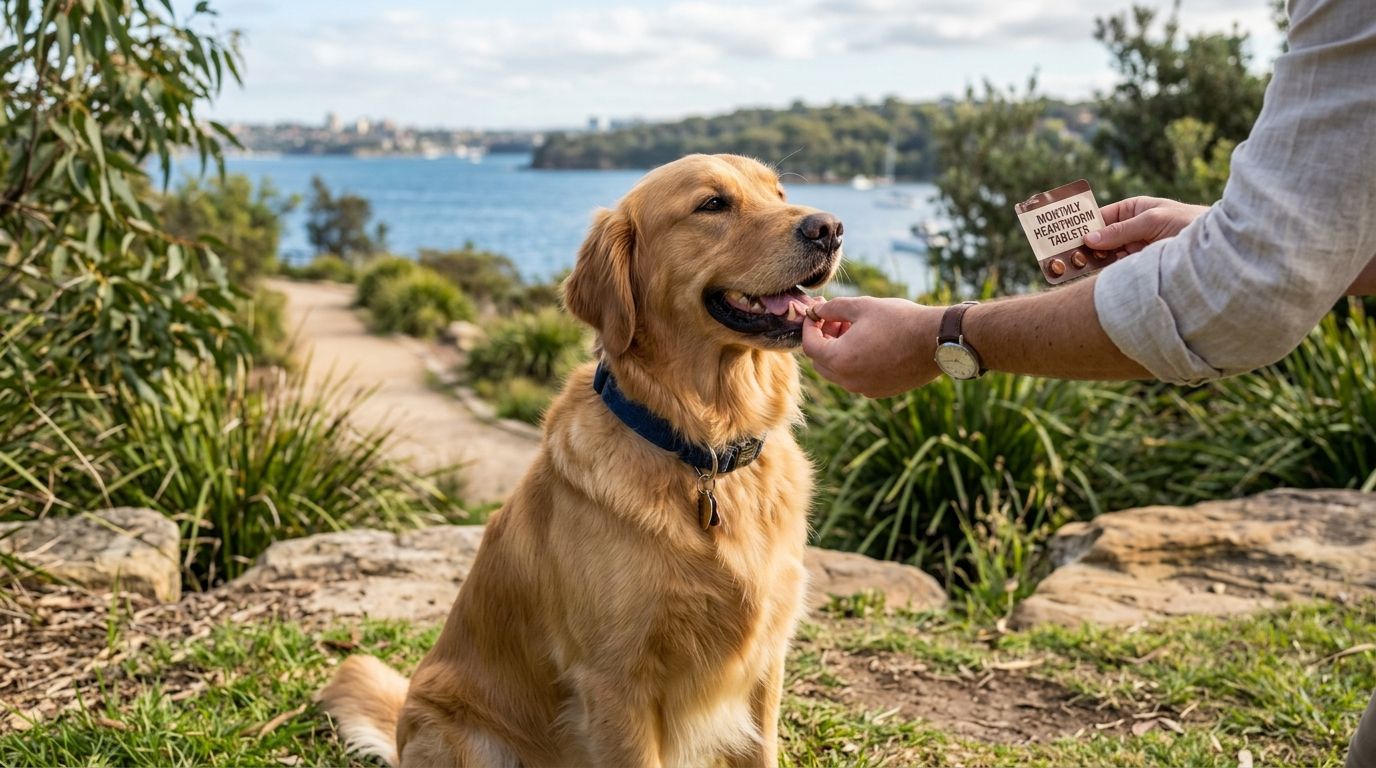
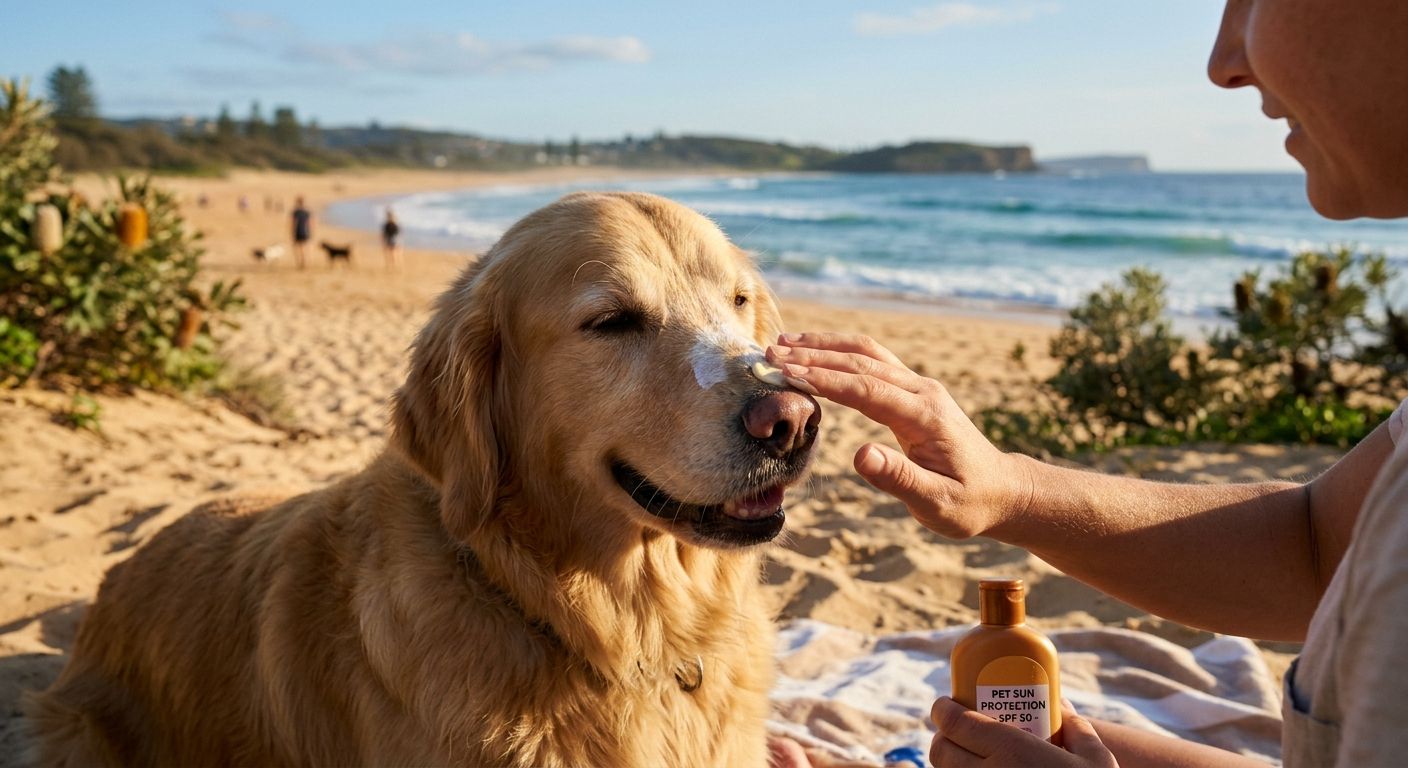
Best overall: Petkin Doggy Sun Stick for fast nose-and-ear touch-ups on daily walks. Best for sensitive or pink skin: My Dog Nose It Sun Protector Balm. Best for broad, whole-body coverage on short-haired breeds: Filta-Bac Sunscreen for Pets. Best budget pick for large areas like the belly and groin: a pet-specific spray sunscreen. Best non-topical alternative for water dogs: a UV-protective rash vest.
- Petkin Doggy Sun Stick wins for spot application on the nose and ears before a beach walk.
- My Dog Nose It Sun Protector Balm is the pick for pink-skinned or allergy-prone dogs in 2026.
- Filta-Bac Sunscreen for Pets covers short-haired, pale-coated breeds head to tail.
- Zinc oxide is toxic to dogs if ingested, so human sunscreen is never a safe substitute.
- A UV rash vest beats reapplying sunscreen every time a dog swims off Manly or Fairlight.
Why this matters
Sydney's Northern Beaches get some of the highest UV index readings in the country through summer, and dogs get sunburnt the same way people do. Pink noses, white coats and thin bellies burn fastest, and repeated sun damage over several years is linked to skin cancers like squamous cell carcinoma in dogs. The team at Two by Two Vet in Balgowlah sees this pattern every summer in Staffies, Boxers, Bull Terriers and any dog with pale or thinly-furred skin.
Most human sunscreens are unsafe for dogs because they often contain zinc oxide or fragrance compounds that cause vomiting or worse if licked off. That's the whole reason a best sunscreen for dogs Australia shortlist needs to be dog-specific, not whatever's left in the beach bag.
Sunscreen season also overlaps with tick and flea season on the Northern Beaches, so a lot of owners are stocking up on more than one summer product at once. If you're already checking your dog's flea and tick prevention routine before the warmer months, sunscreen belongs on the same list.
What makes the best sunscreen for dogs
- Zinc-free formula — zinc oxide is toxic to dogs if licked, so it has no place in a dog-safe product
- Coverage of high-risk zones — nose, ear tips, belly and groin burn first and need the most attention
- Water and sweat resistance — a product that washes off after one swim isn't doing its job at the beach
- Ease of application — stick, balm and spray formats suit different dogs and different areas of the body
- Low irritation potential — fragrance-free, non-stinging formulas matter for dogs with existing skin sensitivity
- Availability in Australia — stocked locally or shipped reliably, not a US import with customs delays
Sunscreen for dogs Australia: at a glance
| Product | Best for | Standout feature | Key limitation |
|---|---|---|---|
| Petkin Doggy Sun Stick | Quick touch-ups on nose and ears | Solid stick, no drift near eyes | Not a full-body solution |
| My Dog Nose It Sun Protector Balm | Pink-skinned or allergy-prone dogs | Fragrance-free, zinc-free formula | Smaller pack empties fast on big dogs |
| Filta-Bac Sunscreen for Pets | Short-haired, pale-coated breeds | Broad, whole-body coverage | Slower to apply across a full coat |
| Pet-specific spray sunscreens | Belly and groin, budget-conscious owners | Fast coverage over large areas | Spray drift risk near the face |
| UV-protective rash vests | Dogs that swim for hours | No reapplication needed | Doesn't cover nose, ears or legs |
1. Petkin Doggy Sun Stick: best sunscreen for dogs for quick nose and ear touch-ups
This is a compact, solid-stick sunscreen made specifically for dogs, built for spot application rather than full-body coverage. It's designed for the nose, ear tips and thin-furred belly patches — the zones that burn first on a beach walk around Balgowlah or Manly.
Petkin Doggy Sun Stick pros:
- Solid format means no spray drift near the eyes or mouth
- Fast to reapply mid-walk without mess or fuss
- Small enough to keep in a lead pouch or the car
Petkin Doggy Sun Stick cons:
- Not built for full-body coverage on short-haired dogs
- Needs reapplying often after swimming
Best for: spot protection on daily walks. Verdict: Buy.
2. My Dog Nose It Sun Protector Balm: best sunscreen for dogs with pink or sensitive skin
An Australian-formulated balm aimed squarely at dogs with pink noses, pale bellies or a history of skin allergies. It skips zinc oxide and fragrance, which matters for dogs prone to reacting to topical products.
My Dog Nose It pros:
- Fragrance-free formula suits allergy-prone dogs
- Balm texture stays put on floppy ears and noses better than a spray
- Positioned as safe in the small amounts a dog licks off naturally
My Dog Nose It cons:
- Pack size runs out faster on larger dogs
- Balm can feel greasy under a collar or harness
Best for: dogs with pink noses, pale skin or known skin sensitivity. Verdict: Buy. If your dog already has a diagnosed condition, it's worth reading through the vet's skin allergy treatments for dogs guide before adding a new topical product to the routine.
3. Filta-Bac Sunscreen for Pets: best sunscreen for dogs needing whole-body coverage
Filta-Bac has a longer track record in the Australian animal health market than most newer pet sunscreen brands, originally developed for livestock and horses before a pet-specific version came to market. It's built for covering a whole coat rather than just spot zones, which suits short-haired or pale-coated breeds like Staffies and Boxers.
Filta-Bac pros:
- Broad-spectrum coverage suited to whole-body application
- Longer-established brand in the Australian market
- Water-resistant formula holds up better on swimming dogs than a balm
Filta-Bac cons:
- Takes longer to apply across a full coat than a stick
- Some dogs try to lick it off immediately due to the texture
Best for: short-haired or pale-coated breeds needing full-body coverage. Verdict: Buy.
4. Pet-specific spray sunscreens: best budget option for belly and groin coverage
Rather than one named product, this covers the category of spray-format sunscreens made for dogs — faster to apply over large areas like the belly, groin and inner legs than a stick or balm, which matters for dogs who lie around on sand or grass all day.
Spray sunscreen pros:
- Faster application over large body areas
- Generally lower cost per application than premium balms on bigger dogs
Spray sunscreen cons:
- Drift risk near the eyes and nose if not applied close to the skin
- Some dogs find the spray sound or sensation stressful
Best for: covering the belly and groin fast before a beach day. Verdict: Hold — fine as a budget top-up, but check the zinc-free label carefully before buying any spray brand.
5. UV-protective dog rash vests: best non-topical alternative for water dogs
A lightweight, UV-rated fabric vest rather than a sunscreen at all, covering the back and belly so there's nothing to reapply after every swim. This suits dogs that spend hours in the water off Manly, Fairlight or Shelly Beach through summer.
UV rash vest pros:
- Zero reapplication needed once it's on
- No risk of a dog licking off a topical product
- Doubles as visibility gear on overcast days
UV rash vest cons:
- Doesn't cover the nose, ears or legs, so sunscreen is still needed there
- Some dogs need a few short sessions to get used to wearing one
Best for: dogs that swim for hours and need all-day coverage. Verdict: Buy, as a companion to a topical sunscreen rather than a replacement.
How we ranked these
Each product was weighed against the same six criteria: zinc-free safety, coverage of high-risk zones, water resistance, ease of application, irritation risk, and reliable availability in Australia. No single product wins on every criterion in 2026, which is exactly why this list has five distinct picks instead of one.
Which sunscreen for dogs should you choose?
For most dogs on the Northern Beaches, the honest answer is two products, not one. A zinc-free balm like My Dog Nose It handles the nose, ears and belly, and a UV rash vest handles the hours spent swimming. Owners of short-haired or pale-coated breeds who need whole-body coverage should default to Filta-Bac instead of trying to cover a whole dog with a spot stick.
If your dog has a diagnosed skin condition, get it checked before layering on any new topical product for the season.
Book a skin and coat check
Get sun damage, allergies or irritation checked by a vet before summer peaks.
FAQ
What's the best sunscreen for dogs in Australia?
There's no single best product for every dog in 2026 — a zinc-free balm like My Dog Nose It suits pink-skinned dogs, while Filta-Bac suits short-haired breeds needing whole-body coverage. Match the product to your dog's skin type and coat.
Can I use human sunscreen on my dog?
No, human sunscreen is not safe for dogs. Many formulas contain zinc oxide or fragrance compounds that cause vomiting or worse if a dog licks them off.
Is zinc oxide sunscreen safe for dogs?
Zinc oxide is toxic to dogs if ingested, which rules out most standard human sunscreens. Dog-specific sunscreens are formulated without it for exactly this reason.
Do black dogs need sunscreen?
Dark-furred dogs still need protection on unfurred or thinly-furred areas like the nose, ear tips and belly. Coat colour reduces risk on covered skin but doesn't remove it entirely.
How often should you reapply sunscreen on a dog?
Reapply after swimming or heavy sweating, and follow the specific product's label instructions for daytime intervals. Balms and sticks generally need more frequent touch-ups than water-resistant sprays.
Which dog breeds need sunscreen the most?
Short-haired and pale-coated breeds like Staffies, Boxers, Bull Terriers and Dalmatians burn fastest, along with any dog with a pink nose or thin-furred belly. These dogs need daily protection through Australian summers.
Can dogs get skin cancer from sun exposure?
Yes, repeated sun damage is linked to skin cancers including squamous cell carcinoma in dogs, particularly on the nose and ears. Annual skin checks catch early changes that sunscreen alone won't prevent.
Where do I apply sunscreen on a dog?
Focus on the nose, ear tips, belly, groin and any other thinly-furred or pink-skinned area. Avoid the eyes and mouth, and check the product label for any areas it advises against.
One last thing
Sunscreen only manages part of the risk — the bigger long-term issue is that solar damage on a dog's nose or ears builds up quietly over several summers before it's visible as a problem. A yearly skin check at Two by Two Vet catches early changes that no amount of balm or spray will flag on its own, which matters more than which brand sits in the cupboard.