Choosing the right cat travel carrier in 2026 comes down to three things: how your cat travels (car, plane, or a walk to the vet), how anxious your cat gets, and whether the carrier meets airline rules if you're flying. This guide ranks the options that actually work for Australian conditions and Northern Beaches vet visits.
- Sleepypod Air is the best cat travel carrier in Australia overall for 2026 — crash-tested and shaped for cabin stowage.
- Sleepypod Mobile Pet Bed wins for car trips and vet visits because it doubles as a car seat and exam bed.
- Petmate Two Door Top Load Kennel suits long-haul travel and boarding stays needing a hard-sided crate.
- K&H Universal soft-sided carrier is the budget pick for occasional local trips.
- Ferplast Atlas hard crate suits anxious cats who need a den-like enclosed feel.
Why this matters
A cat that panics in a flimsy carrier is harder to examine, harder to sedate safely, and more likely to bolt at the worst moment — at the vet clinic door, at the airport gate, or in a moving car. The right carrier reduces stress before you even reach the consult room, and pairing it with the right anti-anxiety products for cats during vet visits makes a real difference for cats that already dread travel.
Carrier design has moved on from the wire-door plastic box. In 2026, most reputable brands sold in Australia offer top-loading access, washable liners, and airline-compliant shapes, which matters if you're flying a cat domestically or internationally. The wrong choice isn't just uncomfortable — a carrier that doesn't latch properly or flexes under weight is a genuine escape risk on a train platform or in an airport terminal.
What makes the best cat travel carrier
- Secure double-latch closure — a single clip fails under a determined cat; look for two independent locks.
- Top-loading access — lets you lower a stressed cat in rather than dragging it through a front door.
- Ventilation on at least three sides — airflow matters more in Australian summer heat than most owners realise.
- Hard-sided vs soft-sided fit for purpose — hard shells protect better in transit; soft-sided carriers pack down for storage and fit under aircraft seats.
- Room to turn around and lie flat — a carrier that's too snug increases panic on longer trips.
- Airline compliance where relevant — carriers like the Sleepypod Air are shaped and tested to meet many domestic carry-on requirements, though you always confirm with the airline directly.
Cat travel carriers at a glance
| Carrier | Best for | Standout feature | Key limitation |
|---|---|---|---|
| Sleepypod Air | Air travel overall | Crash-tested, cabin-shaped design | Smaller interior than boarding-style crates |
| Sleepypod Mobile Pet Bed | Car travel & vet visits | Converts to a bed, straps to a seatbelt | Not built for the cargo hold |
| Petmate Two Door Top Load Kennel | Long-haul trips & boarding | Rigid hard shell, two access doors | Bulkier to store between trips |
| K&H Universal soft-sided carrier | Budget option | Lightweight, foldable for storage | Less structural protection in a crash |
| Ferplast Atlas hard crate | Anxious cats | Enclosed, den-like feel | Heavier than soft-sided options |
1. Sleepypod Air: best cat travel carrier for air travel
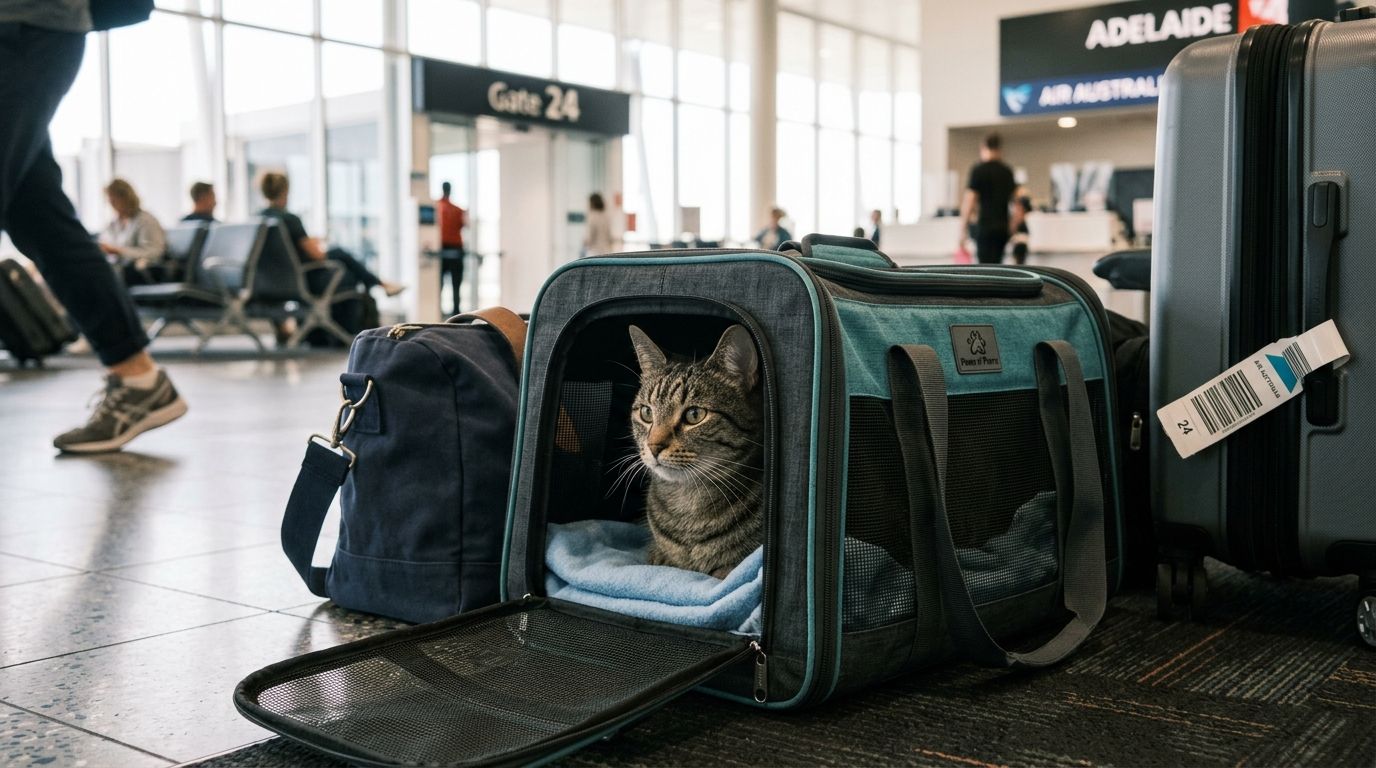
The Sleepypod Air is built specifically around the shape and size constraints of aircraft cabins, and it's one of the few carriers independently crash-tested by the Center for Pet Safety — a detail worth knowing if you're flying with your cat rather than driving.
Sleepypod Air pros:
- Crash-tested structural design, unusual in the soft-carrier category
- Fits under most domestic economy seats
- Removable, washable liner
Sleepypod Air cons:
- Interior space is tighter than a boarding-style crate
- Premium build means it's an investment piece, not a spare carrier
Best for: owners flying their cat domestically or internationally in 2026. Verdict: Buy if air travel is a regular part of your cat's life.
2. Sleepypod Mobile Pet Bed: best for car travel and vet visits
This carrier doubles as a padded bed that clips directly to a car seatbelt, so your cat rides secured rather than sliding around the footwell on the drive to Balgowlah or anywhere else on the Northern Beaches. Vets can often examine a cat directly in the open bed without a full transfer, which cuts handling stress at check-up time.
Sleepypod Mobile Pet Bed pros:
- Seatbelt-secured for safer car travel
- Opens flat for low-stress vet exams
- Familiar bedding smell reduces carrier anxiety over repeat trips
Sleepypod Mobile Pet Bed cons:
- Not designed or rated for air cargo
- Less enclosed, so it suits calmer cats better than escape artists
Best for: regular car trips and routine vet visits. Verdict: Buy if most of your cat's travel is by road.
3. Petmate Two Door Top Load Kennel: best for long-haul trips and boarding
This is the hard-sided workhorse category — rigid plastic construction with both a front door and a top-loading hatch, the kind of carrier that turns up outside boarding facilities across Sydney. It's the practical choice when a cat is heading in for a multi-day boarding stay rather than a quick appointment.
Petmate Two Door Top Load Kennel pros:
- Two access points cut handling time and stress
- Rigid shell holds up to repeated boarding drop-offs
- Easy to hose out and disinfect between uses
Petmate Two Door Top Load Kennel cons:
- Bulkier to store at home between trips
- Not as compact for public transport or foot travel
Best for: boarding stays and longer relocations. Verdict: Buy if your cat boards regularly or you're moving house.
4. K&H Universal soft-sided carrier: best budget option
A lightweight, foldable soft carrier that covers the basics — mesh ventilation panels, a shoulder strap, and a fold-flat design for storage between the occasional vet visit. It won't survive rough handling the way a hard shell will, but for a cat that travels a few times a year, it does the job.
K&H Universal carrier pros:
- Folds flat for easy storage
- Mesh panelling on multiple sides for airflow
- Machine-washable liner
K&H Universal carrier cons:
- Less structural protection than hard-sided options
- Not suited to air travel
Best for: occasional local trips on a tight budget. Verdict: Hold — fine for infrequent travel, upgrade if travel becomes regular.
5. Ferplast Atlas hard crate: best for anxious cats
The enclosed, den-like shape of this hard crate suits cats that hide or freeze in open or mesh-heavy carriers. Less visibility from the outside often means less visible stress from the inside — some cats settle faster when they can't see what's happening around them.
Ferplast Atlas pros:
- Enclosed design reduces visual stimulation for anxious cats
- Sturdy hard shell
- Ventilation slats keep airflow adequate without full mesh exposure
Ferplast Atlas cons:
- Heavier to carry than soft-sided equivalents
- Bulkier footprint in a small car
Best for: cats that panic in see-through or mesh carriers. Verdict: Buy if your cat is a hider, not a fighter.
How we ranked
Each carrier was assessed against the criteria above: closure security, loading style, ventilation, size for the cat to turn and lie flat, and — where relevant — airline compliance. Carriers with independent crash-testing data or clearly documented airline-fit specifications ranked above those relying on general soft-sided design alone.
Get carrier and travel advice for your cat
Ask the team at Two by Two Vet which carrier suits your cat's next trip or check-up.
Which cat travel carrier should you choose?
If you're flying anywhere in 2026, the Sleepypod Air is the safest bet given its crash-test history and cabin-friendly shape. For everyday car trips and vet check-ups, the Sleepypod Mobile Pet Bed earns its place because it doubles as a secured car seat and an exam-ready bed. Boarding a cat for a few days or moving house calls for the rigid Petmate Two Door Top Load Kennel, and a cat that hides rather than fights does better in the enclosed Ferplast Atlas. Only reach for the K&H Universal if your cat travels rarely and budget matters more than long-term durability.
FAQ
What's the best cat travel carrier in Australia for 2026?
The Sleepypod Air is the best overall pick for 2026 because it's crash-tested and shaped to fit cabin stowage on most domestic flights. For car trips and vet visits, the Sleepypod Mobile Pet Bed is the stronger choice.
Is a hard-sided or soft-sided carrier better for cats?
Hard-sided carriers like the Petmate Two Door Top Load Kennel offer more structural protection for boarding and long trips. Soft-sided carriers pack down smaller and suit occasional local travel.
Do airlines require a specific type of cat carrier?
Airlines set their own size and ventilation rules for in-cabin pet carriers, so confirm requirements directly with the airline before booking. Carriers designed around cabin dimensions, like the Sleepypod Air, are built with these constraints in mind.
How do I get my cat used to a travel carrier?
Leave the carrier out at home with familiar bedding inside so it stops being an object only associated with travel. Cats that already show anxiety around carriers often benefit from anti-anxiety products used ahead of a vet visit.
What size carrier does my cat need?
Your cat should be able to stand up, turn around, and lie flat inside the carrier without touching all sides. A cramped carrier increases stress on longer trips regardless of build quality.
Can I take my cat's carrier into a vet boarding facility?
Most boarding facilities accept your own carrier for drop-off and pickup, though the cat usually stays in the facility's own enclosure during the boarding period. Check with the specific facility on the Northern Beaches before your booking.
Are top-loading carriers better than front-loading ones?
Top-loading carriers make it easier to lower a stressed or resistant cat in without a struggle at the door. Many 2026 carrier designs now include both a front door and a top hatch for flexibility.
One last thing
The carrier itself is only half the job — a cat that associates the carrier with a calm car ride and a familiar smell will settle faster than one dragged out only for stressful trips. Leaving the carrier accessible at home between uses, rather than stored away until travel day, is a small habit that changes how your cat reacts every single time.