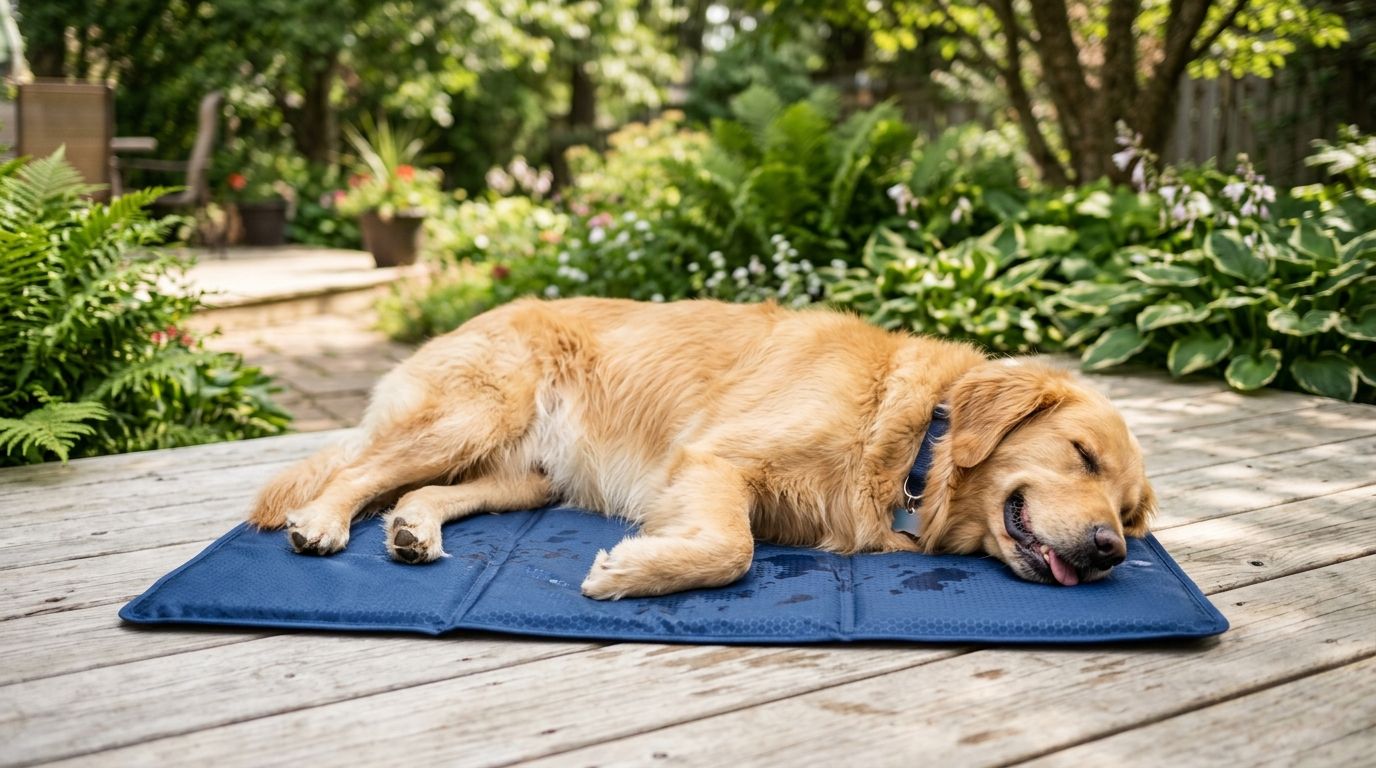
Sydney summers push well into the mid-30s°C on the Northern Beaches, and dogs left without proper cooling are at real risk of heat stress. Best overall: gel pressure-activated cooling mat. Best for apartment dogs: self-cooling foam mat. Best budget option: water-fillable cooling mat. Best for outdoor dogs: elevated mesh cooling cot. Best for brachycephalic and senior dogs: cooling mat paired with a fan.
- The best cooling mat for dogs summer 2026 is a gel pressure-activated mat that stays cool for hours without power or freezing.
- Self-cooling foam mats suit apartment dogs with no fridge or freezer access, though they cool less dramatically than gel versions.
- Water-fillable mats are the budget pick but need refilling and can leak if a dog chews the seams.
- Elevated mesh cots work best outdoors because airflow underneath does the cooling, not contact pressure.
- Brachycephalic breeds and senior dogs benefit most from pairing any mat with a fan rather than relying on the mat alone.
Why this matters
A dog's normal body temperature sits between roughly 38.3°C and 39.2°C. Once core temperature climbs past about 39.5°C, according to general veterinary guidance, the risk of heat-related illness rises fast, and dogs can't sweat the way people do to bring it back down.
A cooling mat is not a substitute for shade, water and sense — it's one tool in a heat-management kit. The team at Two by Two Veterinary Hospital sees more heat-stress presentations in January and February than any other months, and most of those dogs had no cooling option available when the temperature spiked.
This guide ranks cooling mat types by what actually protects a dog in 2026's summer conditions, not by marketing claims.
What makes the best cooling mat for dogs
- Cooling mechanism — pressure-activated gel, evaporative mesh, or water-fill, each performs differently in direct sun versus shade
- Durability against chewing — a punctured gel mat is a mess and a potential choking hazard
- Size relative to the dog's resting position — a mat too small only cools part of the body
- Ease of cleaning — non-porous surfaces matter for dogs that drool or shed heavily
- Portability and power independence — no fridge, freezer or outlet required is a genuine advantage
- Non-toxic materials — gel-filled mats should be non-toxic if punctured and chewed
At a glance
| Type | Best for | Standout feature | Key limitation |
|---|---|---|---|
| Gel pressure-activated mat | Overall use | Cools on contact, no prep needed | Loses effectiveness after prolonged unbroken pressure |
| Self-cooling foam mat | Apartment dogs | No fridge, freezer or water required | Cooling effect is milder than gel |
| Water-fillable mat | Budget buyers | Cheapest entry point | Needs refilling and can leak if chewed |
| Elevated mesh cot | Outdoor dogs | Airflow cooling from underneath | Does nothing without a breeze or shade |
| Mat + fan combo | Brachycephalic and senior dogs | Active airflow adds to passive cooling | Needs power access, less portable |
1. Gel pressure-activated cooling mat: best cooling mat for dogs overall
This type uses a gel core that activates the moment a dog's body weight presses down, drawing heat away from the skin without needing to be frozen or chilled beforehand. It resets once the dog gets up and air reaches the surface again, so it's ready to reuse within minutes.
Gel pressure-activated mat pros:
- Works instantly, no fridge or freezer prep
- Reusable multiple times a day as the gel resets
- Portable enough for the car, a vet visit or a picnic at Manly
Gel pressure-activated mat cons:
- Cooling effect fades if a dog lies in exactly the same spot for hours without moving
- Gel core can be punctured by determined chewers
Best for: dogs that move around during the day and need repeatable, low-effort cooling. Verdict: Buy.
2. Self-cooling foam mat: best for apartment dogs without a fridge or freezer
These mats use a layered foam-and-gel construction that stays cooler than room temperature through material properties alone, rather than pressure activation or refrigeration. They suit units and apartments across the Northern Beaches where freezer space is limited.
Self-cooling foam mat pros:
- Zero prep, zero power, zero water
- Lightweight and easy to fold for travel
- Machine-washable covers on most designs
Self-cooling foam mat cons:
- Cooling effect is noticeably milder than gel versions
- Less effective once ambient room temperature climbs above the high 20s°C
Best for: indoor dogs in apartments with no fridge access for pre-cooling. Verdict: Buy.
3. Water-fillable cooling mat: best budget cooling mat for dogs
This style holds water inside a sealed bladder, either filled from a tap or frozen ahead of time, and relies on evaporation and thermal mass to draw heat away from the dog's body. It's the simplest mechanism on this list and the cheapest to produce.
Water-fillable mat pros:
- Lowest-cost option in the cooling mat category
- Cooling intensity is adjustable by how much water goes in
- Simple to top up on hot days without buying a new product
Water-fillable mat cons:
- Leaks are common once a dog chews or claws the seams
- Needs refilling and can't be left out in direct sun without warming up
Best for: owners on a tight budget who supervise their dog closely outdoors. Verdict: Buy for supervised use, Wait if your dog is a heavy chewer.
4. Elevated mesh cooling cot: best for backyard and outdoor dogs
Rather than cooling the surface itself, this design lifts the dog off the hot ground and lets air circulate underneath the taut mesh fabric. It's less about active cooling and more about removing the dog from direct contact with concrete or decking that can reach far higher temperatures than the air around it.
Elevated mesh cot pros:
- Keeps dogs off hot pavers and decking, which can exceed 50°C in direct sun
- Durable enough for daily outdoor use
- No gel, water or power required
Elevated mesh cot cons:
- Provides no active cooling if there's no shade or airflow
- Larger footprint than a flat mat, less practical indoors
Best for: dogs that spend significant daytime hours in the backyard. Verdict: Buy, paired with shade.
5. Cooling mat and fan combo: best for brachycephalic breeds and senior dogs
Pugs, French Bulldogs, Boxers and other brachycephalic breeds struggle to pant efficiently, and older dogs regulate temperature less effectively than younger ones. Pairing any cooling mat with a directed fan adds active airflow on top of passive surface cooling, which matters more for these higher-risk dogs.
Mat and fan combo pros:
- Combines passive and active cooling for genuinely heat-sensitive dogs
- Reduces panting effort in brachycephalic breeds
- Useful year-round for senior dogs with reduced thermoregulation
Mat and fan combo cons:
- Requires power access, which limits use outdoors or in the car
- Less portable than a standalone mat
Senior dogs managing joint pain alongside heat sensitivity often do better with a supportive surface underneath the cooling mat — see joint supplements for older dogs if arthritis is part of the picture. Anxious dogs that pant and pace in heat sometimes need more than temperature management; calming aids for anxious dogs covers options worth discussing with a vet.
Best for: brachycephalic breeds, seniors, and dogs with diagnosed heat sensitivity. Verdict: Buy.
How we ranked these
Each type was assessed against the six criteria above: cooling mechanism, chew durability, size coverage, cleaning ease, portability, and material safety. Gel pressure-activated mats ranked highest overall because they need no prep and reset quickly between uses, while water-fillable mats ranked lowest on durability due to leak risk.
Which cooling mat should you choose?
For most dogs on the Northern Beaches, the gel pressure-activated mat is the safest default purchase for summer 2026 — it needs no fridge, no water and no power, and it holds up to daily use. If your dog is a heavy chewer, the self-cooling foam mat is the safer alternative since there's no liquid core to puncture. Brachycephalic and senior dogs need the extra step of a fan alongside any mat, not the mat alone.
Dogs that spend time outdoors also need sun protection alongside cooling — check sunscreen for dogs if your dog has thin coat coverage or pink skin. Heat can also aggravate existing skin conditions, so dogs prone to hot spots may need input from skin allergy treatments for dogs as part of a summer plan.
Worried about heat stress this summer?
Two by Two Veterinary Hospital can check your dog's heat tolerance before the hot months hit.
FAQ
What's the best cooling mat for dogs in summer 2026?
A gel pressure-activated cooling mat is the best all-round choice for 2026 because it cools instantly on contact and resets between uses without a fridge or freezer. Self-cooling foam mats are a close second for apartment dogs with no cold-storage access.
Do cooling mats actually work for dogs?
Yes, cooling mats lower the surface temperature a dog is lying on, which helps regulate body heat, but they work best alongside shade and water rather than as a standalone solution. A mat left in direct sun with no airflow provides far less benefit.
Are cooling mats safe for puppies?
Most gel and foam cooling mats are safe for puppies, but supervise them closely since puppies are more likely to chew through a gel core. Water-fillable mats carry higher risk for teething puppies due to leak and ingestion concerns.
How long do gel cooling mats stay cool?
Gel pressure-activated mats stay cool for as long as a dog's weight is on them and reset within minutes once the dog stands up. Cooling weakens if a dog lies in the exact same spot for several hours without moving.
Can cooling mats cause skin problems in dogs?
Cooling mats themselves rarely cause skin issues, but a dog left on a damp or leaking water mat for extended periods can develop irritation. Dogs already prone to skin conditions may need separate management alongside a cooling mat.
What temperature is dangerous for dogs in Australia?
Core body temperatures above roughly 39.5°C put dogs at risk of heat-related illness, according to general veterinary guidance, and ambient temperatures above 30°C raise that risk significantly for at-risk breeds. Brachycephalic and senior dogs face higher risk at lower ambient temperatures than fit, younger dogs.
Should brachycephalic breeds use cooling mats?
Yes, brachycephalic breeds like Pugs, French Bulldogs and Boxers benefit strongly from cooling mats because they pant less efficiently than other dogs. Pairing a mat with a fan gives better results than a mat alone for these breeds.
How do I clean a dog cooling mat?
Most gel and foam cooling mats wipe clean with a damp cloth, and some have machine-washable outer covers. Water-fillable mats need the bladder checked for leaks before and after each wash cycle.
One last thing
The mat matters less than where you put it — a gel cooling mat in direct afternoon sun on a Balgowlah deck can actually warm up rather than cool down, since the gel absorbs ambient heat once it's saturated. Position any cooling mat in shade or an air-conditioned room for the best result, and treat it as one part of a summer plan that includes water, shade and rest breaks, not the whole plan.