If your dog spins at the front door, shreds bedding during storms or trembles through every vet visit, you need a calming aid that actually matches the trigger — not a generic supplement off a pet-store shelf. Best overall: Adaptil Calm Diffuser. Best for noise phobias: ThunderShirt compression wrap. Best budget option: L-theanine calming chews. Best for severe or chronic anxiety: a veterinary behavioural assessment with prescription medication.
- Adaptil Calm Diffuser is the best overall pick among calming aids for anxious dogs in 2026 for separation-related stress.
- ThunderShirt compression wraps work best for storm and fireworks phobia, not general anxiety.
- L-theanine calming chews are the budget option for one-off stress like vet visits or travel.
- Severe or chronic anxiety needs a veterinary behavioural assessment, not another supplement.
Why this matters
Anxiety in dogs isn't one condition — a dog terrified of thunder needs something different from a dog who howls the second you leave the house. Vets on the Northern Beaches see both patterns constantly, and the wrong calming aid for the wrong trigger just wastes money and prolongs the stress. If your dog's anxiety is affecting sleep, appetite or safety (bolting, self-injury, destructive escape attempts), that's a reason to book a visit at Two by Two Vet rather than keep testing products at home.
2026 has brought a wider range of over-the-counter calming products than ever, which makes the decision harder, not easier. This guide ranks the categories that hold up, tells you honestly where each one falls short, and flags the point where a supplement stops being enough.
What makes the best calming aid for anxious dogs
- Matches the specific trigger — noise phobia, separation anxiety and situational stress each respond to different tools
- Evidence behind the mechanism, not just marketing copy on the packaging
- No heavy sedation — a calm dog should still be a functional, responsive dog
- Easy to administer without a wrestling match every time
- Safe for regular or long-term use if your dog needs ongoing support
- Works alongside a vet-guided plan rather than replacing one when anxiety is severe
Calming aids for anxious dogs at a glance
| Calming aid | Best for | Standout feature | Key limitation |
|---|---|---|---|
| Adaptil Calm Diffuser | Separation and general anxiety | Plug-in pheromone signal mimics a nursing mother | Takes several weeks of steady use to show full effect |
| ThunderShirt compression wrap | Storm and fireworks phobia | Constant gentle pressure, no chemicals | Some dogs resist wearing it at first |
| L-theanine calming chews | Situational stress (vet visits, travel, grooming) | Fast-acting, no prescription required | Mild effect compared with medication |
| Structured exercise and enrichment | Day-to-day anxiety management | Free beyond your time, treats the root cause | Slow results, needs daily consistency |
| Veterinary behavioural assessment and prescription medication | Severe or chronic anxiety | Diagnoses the actual cause, tailored dosing | Requires a vet visit plus follow-up |
1. Adaptil Calm Diffuser: best calming aid for anxious dogs with separation anxiety
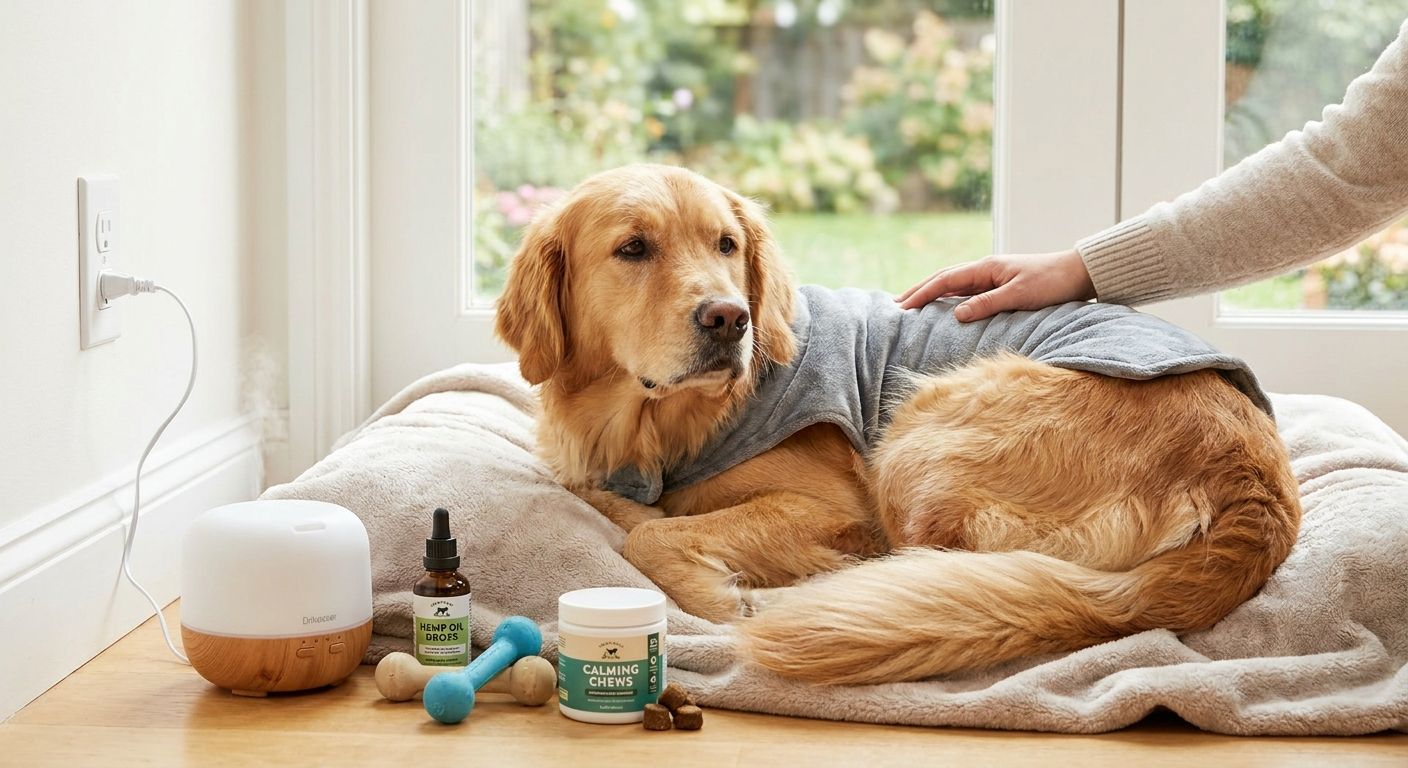
Adaptil plugs into a wall socket and releases a synthetic version of the pheromone a mother dog produces to reassure her puppies. It's the most studied non-prescription option on this list and the one vets mention first for dogs who panic when left alone.
Adaptil Calm Diffuser pros:
- Odourless to humans, no sedation, no daily dosing required
- Covers an entire room continuously once plugged in
- Safe to run alongside other calming aids or medication
Adaptil Calm Diffuser cons:
- Only effective in the room it's plugged into
- Needs 2-4 weeks of consistent use before the full effect shows
- Won't do much on its own for a dog mid-panic during a storm
Best for: dogs anxious about being left alone or adjusting to a new home. Verdict: Buy as a first-line, low-risk starting point.
2. ThunderShirt compression wrap: best calming aid for anxious dogs with storm or fireworks phobia
A ThunderShirt applies constant, snug pressure across the torso, working on the same principle as swaddling an infant. It's a physical tool, not a chemical one, which makes it a reasonable first try for owners wary of supplements.
ThunderShirt pros:
- No ingredients, no interactions with medication
- Reusable indefinitely, no ongoing cost per use
- Works within minutes for dogs who respond to it
ThunderShirt cons:
- A meaningful share of dogs need a few short wearing sessions before they'll tolerate it
- Does nothing for separation anxiety or situational stress unrelated to noise
- Sizing has to be snug but not restrictive, which takes some trial and error
Best for: dogs who shake, hide or destroy things during thunderstorms or fireworks. Verdict: Buy for noise-specific phobia; Skip if separation anxiety is the actual problem.
3. L-theanine calming chews: best budget calming aid for anxious dogs
L-theanine is an amino acid found in green tea that has a mild calming effect without sedation. Chews built around it are cheap, easy to give like a treat, and fast enough to use before a known stressful event like a grooming appointment or car trip.
L-theanine calming chews pros:
- No prescription needed, available over the counter
- Fast onset, useful for a specific known event
- Easy to dose as a treat rather than forcing a pill
L-theanine calming chews cons:
- Effect is noticeably milder than prescription anxiolytics
- Quality and dosing vary a lot between brands
- Won't touch severe, chronic anxiety on its own
Best for: occasional situational stress like vet visits or car travel. Verdict: Buy as a low-cost first try for mild, one-off triggers.
4. Structured exercise and enrichment: best calming aid for anxious dogs day to day
Snuffle mats, licking mats and a genuinely tiring daily walk aren't glamorous, but they address the boredom and pent-up energy that make baseline anxiety worse. This is management, not a quick fix, and it works best stacked underneath one of the other options.
Enrichment pros:
- Costs nothing beyond your time
- Improves overall behaviour, not just anxiety
- Complements every other item on this list without conflict
Enrichment cons:
- Slow to show results — think weeks, not days
- Requires daily consistency from the owner
- Won't resolve a genuine phobia or panic response alone
Best for: dogs with mild, generalised anxiety or excess energy driving reactive behaviour. Verdict: Buy as a permanent baseline habit, regardless of what else you try.
5. Veterinary behavioural assessment and prescription medication: best calming aid for anxious dogs with severe or chronic anxiety
When a dog's anxiety is constant, escalating, or involves self-injury and destructive escape attempts, over-the-counter aids stop being the right tool. A vet can rule out medical causes, identify the specific anxiety pattern, and prescribe medication like fluoxetine or trazodone where it's genuinely warranted. Two by Two Vet handles this assessment as part of a standard consult, working out whether medication, a referral, or a management plan is the right next step.
Veterinary assessment pros:
- Rules out pain or medical conditions masquerading as anxiety
- Tailored dosing rather than guessing with supplements
- Gives you a proper plan instead of trial-and-error at home
Veterinary assessment cons:
- Requires an appointment and possibly follow-up visits
- Prescription medication needs monitoring, not a one-off purchase
- Costs more upfront than a diffuser or a bag of chews
Ongoing behavioural treatment and medication add up over a dog's life, which is worth checking against your pet insurance for dogs cover before you assume it's out of reach.
Best for: dogs whose anxiety disrupts daily life or puts them at risk. Verdict: Buy — this is the option that actually treats the cause rather than dulling the symptom.
“If your dog needs sedation just to get through an ordinary afternoon, that's a conversation for your vet, not a bigger bag of chews.”
How this list was ranked
Each calming aid was matched against a specific trigger — noise, separation, situational stress, or chronic anxiety — because a product that works brilliantly for one does nothing for another. Sedation risk, ease of daily use, and whether the aid can safely sit alongside veterinary treatment mattered more than price or packaging claims.
Book a behavioural check for your dog
Get a proper diagnosis before trying another supplement.
Which calming aid should you choose?
Start with the trigger, not the product aisle. Storm and fireworks phobia responds best to a ThunderShirt, separation anxiety responds best to an Adaptil Calm Diffuser, and one-off stressful events are covered by L-theanine chews. If your dog's anxiety is constant, worsening, or putting them at physical risk, skip the trial-and-error entirely and book a veterinary behavioural assessment in 2026 — it's the only option on this list built around an actual diagnosis.
FAQ
What's the best calming aid for anxious dogs in 2026?
There's no single best option — Adaptil Calm Diffuser suits separation anxiety, ThunderShirt suits noise phobia, and severe or chronic cases need a veterinary behavioural assessment rather than a supplement.
Is CBD oil safe for anxious dogs?
CBD products for pets aren't regulated in Australia the same way registered medications are, so dosing and quality vary widely between brands. Talk to your vet before adding it to your dog's routine, especially alongside other medication.
Do calming chews really work for dog anxiety?
L-theanine calming chews produce a mild, real effect for situational stress like vet visits or travel, but they're noticeably weaker than prescription anxiolytics. They're not built for severe or chronic anxiety.
How long does it take for a calming diffuser to work?
Adaptil Calm Diffuser typically needs two to four weeks of continuous use before its full calming effect shows. It won't do much for an acute panic episode happening right now.
Can I combine a ThunderShirt with calming chews?
Yes, a compression wrap and L-theanine chews work through different mechanisms and are commonly used together for storm phobia. Introduce each separately first so you know what your dog tolerates.
When should I take my anxious dog to the vet instead of trying home remedies?
See a vet if anxiety is constant, escalating, or involves self-injury, destructive escape attempts, or refusal to eat. A behavioural assessment rules out medical causes and gets your dog a tailored plan instead of ongoing guesswork.
Are prescription anti-anxiety medications safe for dogs long-term?
Medications like fluoxetine or trazodone are prescribed for long-term use in dogs when a vet has assessed the case and set up monitoring. They're not a first resort — they're for anxiety that hasn't responded to management alone.
Does exercise help calm an anxious dog?
Structured daily exercise and enrichment like snuffle mats reduce baseline anxiety over weeks, though they won't resolve a genuine phobia on their own. It's a habit worth running alongside any other calming aid on this list.
One last thing
Dogs with storm phobia often start reacting before the thunder even starts — dropping barometric pressure and static in the air trigger the panic response hours ahead of the noise. If you're waiting for the first rumble to hand over a calming chew or clip on a ThunderShirt, you've already missed the window; get ahead of it the next time the forecast calls for a storm.