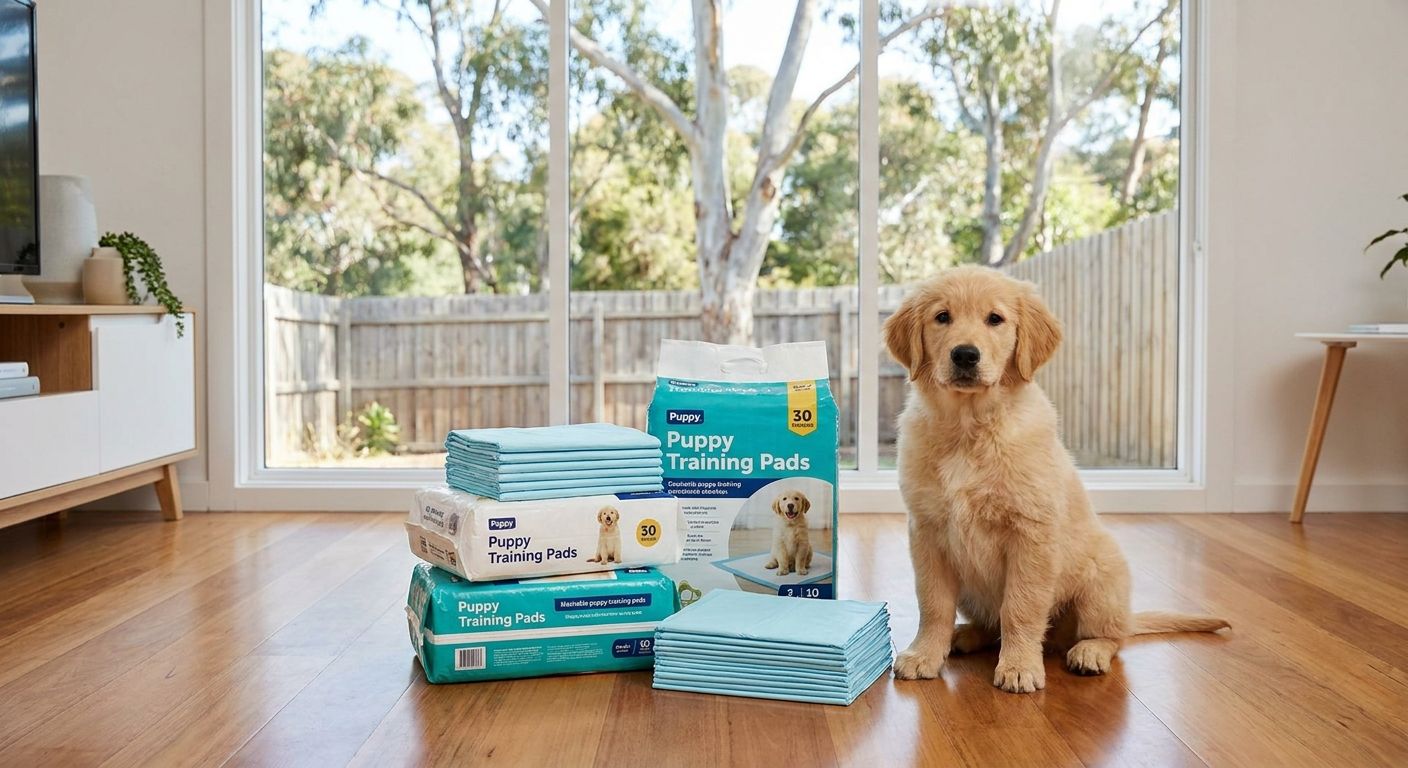
Puppy training pads in Australia range from basic single-layer throwaways to vet-grade, leak-proof mats built for heavy wetters. Best overall: PetPäd Puppy Training Pads. Best for odour control: Absorb Plus Vet-Grade Training Pads. Best budget: Woof Woof Training Pads. Best for large-breed puppies: Trixie XXL Training Pads. Best reusable system: IRIS Pet Training Pad Tray Kit.
- PetPäd Puppy Training Pads win overall for balanced absorbency and size options in 2026.
- Absorb Plus Vet-Grade pads control odour best for apartment living or multi-puppy households.
- Woof Woof Training Pads are the budget pick for owners still deciding on a toileting routine.
- Trixie XXL pads suit large-breed puppies that outgrow standard pad sizes fast.
- The best puppy training pads in Australia depend on breed size, not brand hype.
Why this matters
Housetraining a puppy on the Northern Beaches usually means juggling apartment living, wet weather, and a puppy that isn't fully vaccinated yet, so backyard access is limited until the core vaccination schedule finishes. Training pads bridge that gap between 8 and 16 weeks, before a puppy has full outdoor freedom.
Getting the wrong pad means leaks on carpet, a puppy that won't toilet on anything except grass, or a bill for cleaning solution every second day. The right pad absorbs fast, holds odour, and doesn't shred the second your puppy starts sniffing at it.
If you're still working through vaccination timing or parasite prevention alongside toilet training, book a puppy health check to get the full schedule sorted rather than guessing.
What makes the best puppy training pads
- Absorbency and leak-proof backing — a plastic or polymer base that stops liquid soaking through to flooring underneath
- Size range — pads that scale from small-breed puppy through to XXL for large-breed puppies that outgrow standard sizes by 10-12 weeks
- Odour control — an activated carbon or baking-soda layer that holds smell between changes, not just a scent to mask it
- Adhesive tabs or non-slip base — stops the pad sliding when a puppy paws or circles before toileting
- Attractant option — some pads carry a mild attractant scent that speeds up training; unscented versions suit puppies who ignore scented pads entirely
- Pack value — cost per pad, since heavy training in the first month can burn through a pack in days
Best puppy training pads in Australia at a glance
| Pad | Best for | Standout feature | Key limitation |
|---|---|---|---|
| PetPäd Puppy Training Pads | Overall everyday use | Balanced absorbency across small to medium breeds | Not sized for giant breeds past 12 weeks |
| Absorb Plus Vet-Grade Training Pads | Odour control | Carbon-layer odour lock, common in clinic settings | Firmer surface some puppies avoid at first |
| Woof Woof Training Pads | Budget option | Low cost per pad for early-stage training | Thinner core, leaks with heavy wetters |
| Trixie XXL Training Pads | Large-breed puppies | Oversized surface for mastiffs, Labradors, similar breeds | Bulkier, awkward for small apartments |
| IRIS Pet Training Pad Tray Kit | Reusable tray system | Frame holds pad flat, reduces sliding and mess | Higher upfront setup than loose pads |
1. PetPäd Puppy Training Pads: best puppy training pad for everyday use
PetPäd pads are an Australian-market staple sold through most major pet retailers, built around a multi-layer absorbent core with a plastic backing sheet. They handle the standard toileting volume of small and medium-breed puppies without soaking through onto floorboards or carpet underlay.
PetPäd pros:
- Reliable absorbency for day-to-day use
- Widely stocked, easy to reorder
- Suits most small-to-medium breed puppies through the 8-16 week window
PetPäd cons:
- Not built for giant-breed puppies once they pass 12-15kg
- No tray or holder included, so pads can shift on tile
PetPäd best for: owners who want a straightforward, no-fuss pad for a small or medium-breed puppy. Verdict: Buy.
2. Absorb Plus Vet-Grade Training Pads: best puppy training pad for odour control
Absorb Plus pads use a carbon-infused layer designed to trap ammonia smell rather than just cover it, which is why they show up in clinic and boarding settings where odour control matters more than in a typical home. That same design makes them a strong pick for apartments or multi-pet households where smell builds up fast between changes.
Absorb Plus pros:
- Strong odour lock compared with standard pads
- Firm, leak-resistant base
- Suits multi-puppy or multi-pet households
Absorb Plus cons:
- Surface feels firmer, and some puppies hesitate on it at first
- Premium positioning means a higher cost per pad than budget options
Absorb Plus best for: apartment living or households managing more than one puppy at once. Verdict: Buy.
3. Woof Woof Training Pads: best puppy training pad on a budget
Woof Woof pads, sold through Kmart, are the low-cost entry point for owners who aren't ready to commit to a premium pad before knowing if their puppy will even use one. They do the basic job — absorb and contain — without the extras.
Woof Woof pros:
- Low cost per pad for early experimentation
- Easy to buy alongside a regular Kmart shop
- Fine for light-to-moderate toileting volume
Woof Woof cons:
- Thinner absorbent core leaks with heavier wetters
- Less odour control than vet-grade options
Woof Woof best for: owners testing whether pad training suits their puppy before spending more. Verdict: Buy for a trial run, upgrade if leaks start.
4. Trixie XXL Training Pads: best puppy training pad for large breeds
Trixie's XXL pads exist because standard-size pads simply run out of surface area once a large-breed puppy — a Labrador, a Rottweiler, a Great Dane — starts putting on size fast in the first few months. The oversized mat gives enough room that a growing puppy doesn't miss the edge.
Trixie XXL pros:
- Sized for large and giant-breed puppies
- Reduces missed edges as the puppy grows
- Solid absorbent core for higher volume
Trixie XXL cons:
- Bulky for small apartments or limited floor space
- Overkill for toy and small-breed puppies
Trixie XXL best for: owners raising a large or giant-breed puppy that's outgrowing standard pads. Verdict: Buy if you're raising a large breed.
5. IRIS Pet Training Pad Tray Kit: best puppy training pad system for apartments
The IRIS tray holds a standard pad flat inside a raised frame, which stops sliding and contains any overflow that a loose pad on tile or floorboards can't manage alone. It suits apartment owners who want a fixed toileting spot rather than moving a loose pad around the room.
IRIS pros:
- Frame stops pad sliding during use
- Contains overflow better than a loose pad
- Creates a consistent, fixed toileting spot
IRIS cons:
- Higher setup cost than buying loose pads
- Tray needs occasional wiping down, adding a step to cleanup
IRIS best for: apartment owners who want a fixed, contained toileting station. Verdict: Buy if you want a permanent setup.
How we ranked these puppy training pads
Each pad is measured against the criteria above: absorbency and leak-proof backing, size range for the puppy's eventual adult weight, odour control, adhesion or containment, attractant vs unscented options, and pack value. No pad wins on every criterion — that's why the list splits by use case instead of naming one universal winner.
Which puppy training pad should you choose?
For most new puppy owners in 2026, PetPäd Puppy Training Pads cover the everyday case without overspending. If odour is the bigger problem — apartment living, more than one puppy, a household sensitive to smell — Absorb Plus Vet-Grade Training Pads earn the upgrade. Raising a large or giant breed makes Trixie XXL the practical choice regardless of price, since standard pads simply run out of room.
Whatever pad you land on, treat it as a bridge, not the end goal. Most vets recommend phasing pads out by 12-16 weeks once a puppy's vaccination schedule allows outdoor access, so the pad doesn't become a permanent habit instead of a training step.
Get your puppy's schedule sorted
Book a puppy health check and vaccination plan on the Northern Beaches.
Training pads solve toileting, but they don't solve intestinal parasites picked up from grass, other dogs, or contaminated soil while your puppy is still learning where to go. Pair pad training with an appropriate worming treatment for puppies so the toileting routine doesn't undo the parasite prevention plan.
FAQ
What are the best puppy training pads in Australia in 2026?
PetPäd Puppy Training Pads rank best overall for everyday use in 2026, with Absorb Plus Vet-Grade pads winning on odour control and Trixie XXL suited to large-breed puppies. The right choice depends on breed size and household setup more than brand alone.
How long do puppies need training pads?
Most puppies use training pads from around 8 weeks until they're fully vaccinated and can access the yard safely, often by 12-16 weeks. Pads should be phased out once outdoor access is available so the habit doesn't become permanent.
Are scented or unscented puppy pads better?
Scented pads with a mild attractant speed up initial training for some puppies, while unscented pads suit puppies that ignore or avoid scented options. There's no universal answer — it depends on how your individual puppy responds.
Do large-breed puppies need bigger training pads?
Yes, standard-size pads run out of surface area fast on large and giant-breed puppies growing through their first few months. XXL pads like Trixie's reduce missed edges and mess as the puppy's size increases.
Can training pads replace outdoor toilet training?
No, pads are a bridge while a puppy is too young for full outdoor access, not a permanent substitute. Vets generally recommend transitioning to outdoor training once the puppy's vaccination schedule is complete.
Do vet-grade training pads control odour better than standard pads?
Yes, vet-grade pads like Absorb Plus use a carbon-infused layer designed to trap ammonia smell rather than mask it. This makes a noticeable difference in apartments or multi-puppy households where odour builds up between changes.
Is a reusable pad tray worth it over loose pads?
A tray system like the IRIS kit stops pads sliding and contains overflow better than a loose pad on tile or floorboards. It costs more upfront but suits apartment owners who want one fixed toileting spot.
One last thing
The pad brand matters less than the phase-out plan — puppies left on pads past 16 weeks without a parallel outdoor routine often struggle to switch later, because the indoor surface has become the default rather than the backup. Start introducing outdoor toileting as soon as vaccination timing allows, and treat the pad as a fallback for wet days, not the long-term system.