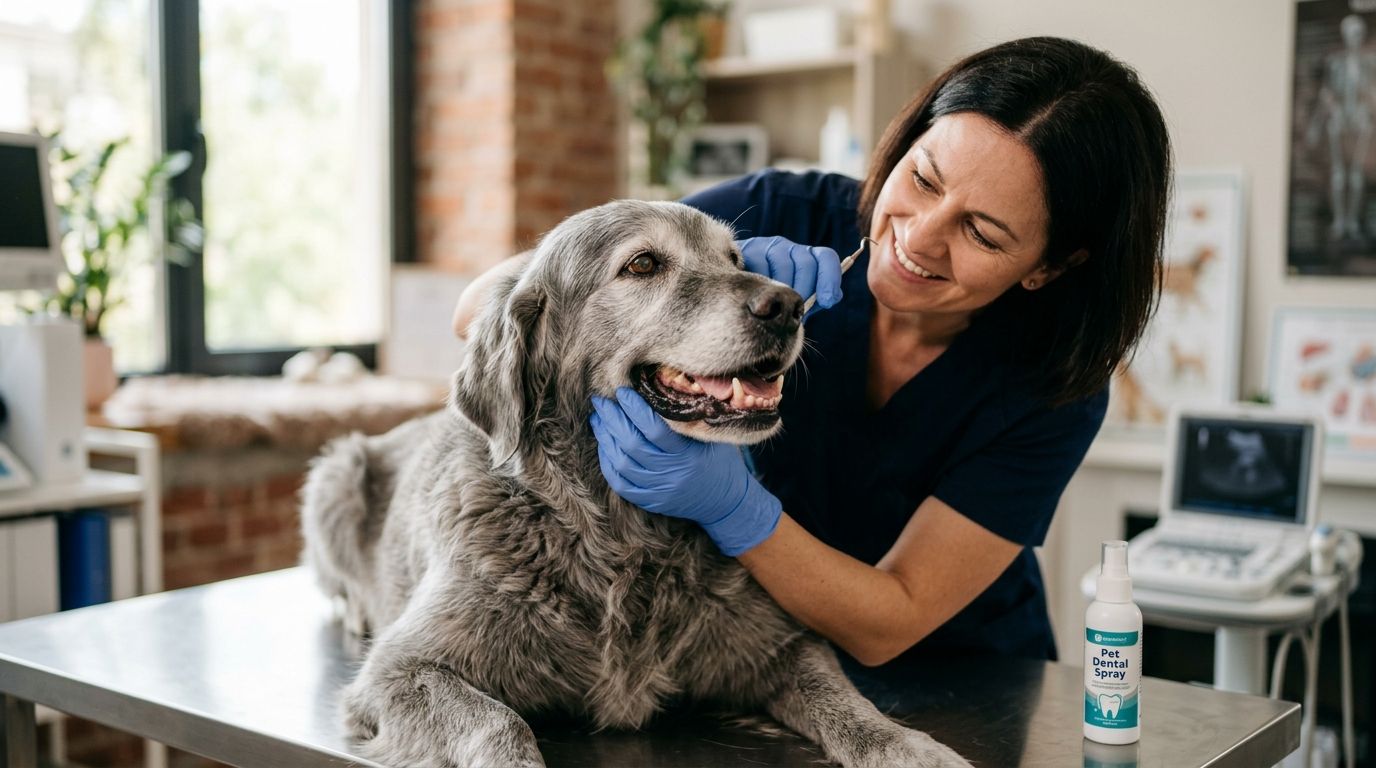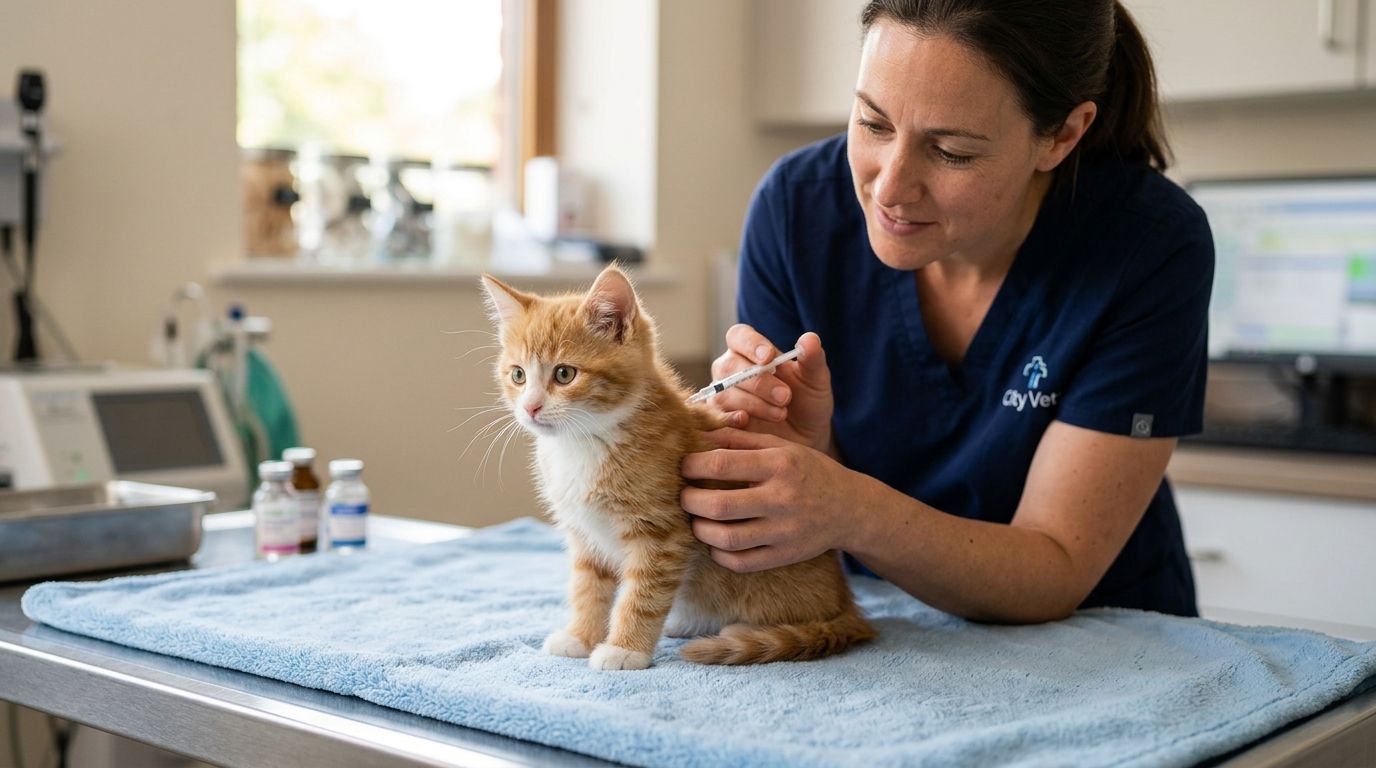
Microchipping rescue dogs is the process of implanting a permanent ID chip under a dog's skin and registering it against your details, so a lost or surrendered dog can be traced back to you rather than to the shelter or previous owner still listed on the national database. Rescue dogs carry an extra wrinkle that puppy owners never deal with: most arrive already chipped, but the registration usually still points to a shelter, a foster carer, or a stranger three postcodes away.
- Most rescue dogs already have a microchip — the job in 2026 is updating ownership, not inserting a new one.
- NSW law requires dogs to be microchipped by 12 weeks of age or before sale or transfer of ownership.
- A chip registered to a shelter or foster carer will not reunite you with your dog if the details were never transferred.
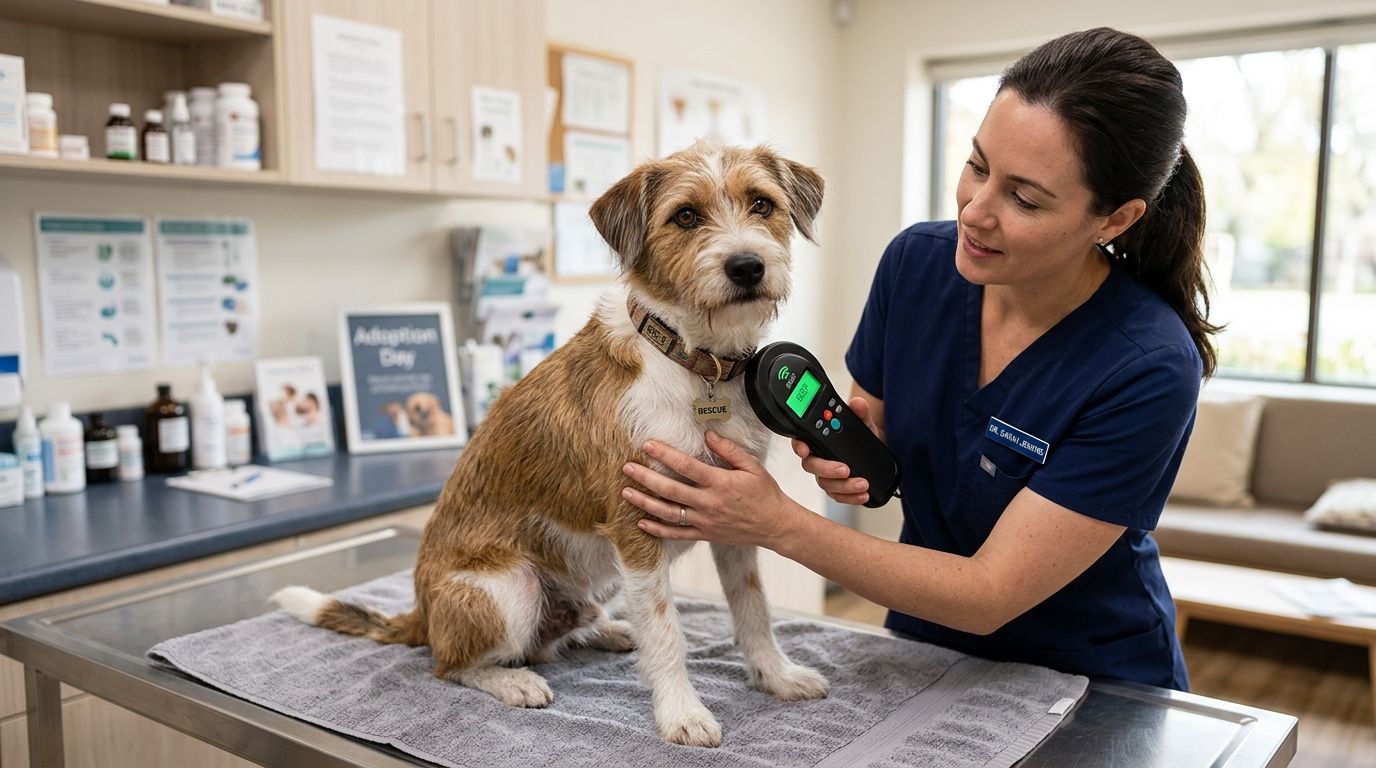
- Two By Two Vet scans every adopted dog's chip on the first visit and checks the registration against the current owner.
- Rechipping is only needed if the original chip has failed a scan test — otherwise it's a registration update, not a new procedure.
Why this matters
A microchip is only useful if the phone number on file still rings. Rescue dogs move house at least once in their first year — from shelter, to foster home, to your lounge room — and each move is a chance for the registered contact to go stale. The chip itself rarely fails; the paperwork behind it does.
If your rescue dog bolts from the backyard in 2026 and the chip still lists a foster carer from 2023, the vet clinic or council that scans it calls the wrong number. That single gap is the difference between a dog home by dinner and a dog sitting in a pound for a week.
Why microchipping matters for rescue dogs
Rescue dogs are handled by more people, in more locations, than a dog bought from a breeder ever is. Shelter staff, foster carers, transport volunteers, and adoptive families all touch the same animal inside a few months, and each handoff is a point where microchip details can lag behind reality.
Under the NSW Companion Animal Act 1998, every dog must be microchipped by 12 weeks of age or before it's sold or given away — which covers every legitimate rescue and shelter transaction in the state. That means the chip almost always exists by the time you adopt. What doesn't automatically happen is the transfer of registration into your name, which most shelters flag as the adopter's responsibility, not theirs.
A microchip brand comparison is worth a look if your rescue dog's paperwork lists a chip type you don't recognise — some older shelter chips use frequencies that not every scanner reads cleanly, which matters if the dog ever ends up at a clinic outside its usual area.
How to microchip and register a rescue dog properly
Work through these steps in order. Skipping the scan step and assuming a new chip is needed wastes a vet visit and money.
Scan for an existing microchip first
Every adopted dog should be scanned before anyone talks about inserting a new chip.
- Ask the shelter or rescue group for the chip number on the adoption paperwork
- Have a vet scan the dog on the first visit to confirm the number matches
- Note the chip brand and frequency if it's an older or imported chip
- Flag any scan that returns "no chip found" immediately — some very old chips migrate or fail
Check the current registration on the database
Australia runs several microchip registries, and a chip can only be checked through the one it was originally registered on.
- Search the chip number on the relevant state or national pet registry
- Confirm whose name, address, and phone number are currently listed
- Check whether the listed contact is the shelter, a foster carer, or the dog's prior owner
- Print or screenshot the current record before you start changing anything
Transfer ownership into your name
This is the step adopters miss most often, because the shelter's job ends at handover and the registry update is left to the new owner.
- Complete the ownership transfer form through the registry the chip is listed on
- Submit proof of adoption if the registry asks for it
- Update the record within the first week of bringing the dog home, not "eventually"
- Keep a copy of the confirmation email as proof the transfer went through
Microchip the dog if no chip is found
If the scan comes back blank, the dog needs a new chip before any registration can happen.
- Book the microchip insertion at the same visit as the initial vet check
- Combine it with vaccination or a health check to avoid a second separate appointment
- Ask for the chip number and brand in writing before you leave the clinic
- Register the new chip immediately rather than waiting for a follow-up reminder
Add a second contact and update it as circumstances change
A single phone number is a single point of failure.
- List a second contact — partner, parent, or close friend — on the registration
- Update the record the same week you change your phone number or move house
- Re-check the listed address at least once a year, not just after a move
- Consider adding a GPS tracker for dogs alongside the chip for real-time location if your rescue dog is a known escape risk
Confirm council registration is separate from the microchip
Microchip registration and council dog registration are two different systems, and rescue adopters often assume paying one covers the other.
- Check with your local council on the Northern Beaches for its own registration requirement
- Pay council registration fees separately from any microchip registry fee
- Keep the dog's council tag on the collar as a visible backup to the chip
- Renew council registration on the date your council specifies, not the adoption anniversary
Comparing your options for a rescue dog's microchip status
| Option | Best for | Typical process | Key limitation |
|---|---|---|---|
| Transfer existing shelter chip | Dogs adopted with confirmed chip paperwork | Online registry form, no vet visit needed | Only works if the shelter's paperwork is accurate |
| New microchip at a vet clinic | Dogs that scan with no chip found | Insertion plus same-day registration | Requires a vet visit and a short recovery from the injection |
| Combined vet visit (chip, vaccination, health check) | Newly adopted dogs needing a full first workup | One appointment covers chip, vaccines, and a physical exam | Takes longer than a chip-only visit |
| DIY registration update only | Dogs already chipped correctly, just needing new owner details | Online form through the existing registry | Does nothing if the original chip has failed or migrated |
Two By Two Vet's verdict for most rescue adopters in 2026: scan first, transfer registration second, and only book a new microchip if the scan comes back empty.
Common mistakes rescue dog owners make
- Assuming "already microchipped" means "registered to you" — a chip number on adoption paperwork tells you a chip exists, not who the registry currently lists as owner
- Registering once and never checking again — details go stale every time you move house or change numbers, and nobody reminds you
- Confusing council registration with microchip registration — paying one does not update the other, and both matter if your dog goes missing
- Skipping the vet scan because the shelter said the dog is chipped — shelter records lag, and a five-minute scan at the first vet visit confirms the chip actually reads
- Leaving only one phone number on file — foster-to-adopter handoffs mean the original contact is often unreachable within months
Get your rescue dog's chip checked
A scan and registration check take minutes at your first visit.
FAQ
Do rescue dogs already come microchipped in 2026?
Most rescue dogs adopted through a registered shelter in NSW are already microchipped, because the Companion Animal Act 1998 requires it before sale or transfer of ownership. The registration on that chip usually still needs to be updated into the adopter's name.
Is microchipping a rescue dog mandatory in NSW?
Yes. NSW law requires all dogs to be microchipped by 12 weeks of age or before they're sold or given away, which covers shelter and rescue adoptions. Council registration is a separate requirement on top of the microchip.
How do I update a microchip after adopting a rescue dog?
Find the microchip number on your adoption paperwork, look it up on the registry it's listed with, and submit an ownership transfer with proof of adoption. Do this within the first week home rather than waiting.
What happens if my rescue dog's chip is still registered to the shelter?
If your dog goes missing and a vet or council scans the chip, they'll contact the shelter or previous owner instead of you. This is the single biggest reason reunions fail with adopted dogs.
Does a rescue dog need a new microchip if it already has one?
No, not if the existing chip scans correctly. A new microchip is only needed if a vet scan finds no chip or the original chip has failed.
Is microchipping painful for a rescue dog?
The insertion feels similar to a routine injection and takes seconds, usually done during a vaccination or health check visit. Most dogs show no lasting reaction.
Can I microchip a rescue dog myself at home?
No. Microchip insertion in Australia needs to be done by a vet or an authorised implanter to be valid for registration and to ensure it's placed correctly.
Is a collar tag enough instead of a microchip for a rescue dog?
A collar tag helps but isn't a substitute — tags fall off and collars get removed, while a microchip is a permanent, unremovable form of ID that's also a legal requirement in NSW.
One last thing
The detail adopters overlook most: a microchip registered correctly does nothing if the registry itself is the wrong one. Some older or imported rescue dogs carry chips registered on a database that isn't the standard Australian registry, which means a routine scan at a local vet or pound won't return a result at all. If your rescue dog came from interstate, overseas, or a long chain of foster placements, ask Two By Two Vet to confirm which registry the chip actually sits on — not just that a chip exists.