Puppy vaccinations for first-time dog owners are the scheduled shots — usually three doses given between 6 and 16 weeks of age — that protect a new puppy from parvovirus, distemper and hepatitis while its immune system is still too immature to fight them off alone. First-time owners face a specific problem seasoned dog owners don't: no existing vet relationship, no muscle memory for the schedule, and a puppy that's already been exposed to parks, other dogs and visitors before the course is even finished.
- Puppy vaccinations for first-time dog owners run on a three-dose core schedule finishing around 14-16 weeks — missing a dose resets the risk window.
- A C3 vaccine covers parvovirus, distemper and hepatitis; a C5 adds kennel cough protection for puppies headed to daycare or boarding.
- Two by Two Vet in Balgowlah runs the full puppy vaccination schedule alongside health checks so gaps in the course get caught early.
- Full immunity isn't confirmed until roughly two weeks after the final dose — that's the earliest date for off-lead parks in 2026.
- Worming, flea and heartworm prevention need to start alongside the vaccine course, not after it.
Why puppy vaccinations matter for first-time dog owners
A puppy's immune system doesn't fully take over from its mother's antibodies until somewhere between 8 and 16 weeks — and nobody can pinpoint the exact week for an individual dog. That's why the course is three doses, not one: each shot is timed to catch the puppy the moment maternal protection fades, rather than betting on a single date.
First-time owners typically underestimate two things: how contagious parvovirus is in unvaccinated puppies, and how much day-to-day exposure a new puppy gets in its first 16 weeks. Vet visits, footpaths, other people's shoes and even the grass at a friend's house carry risk before the course is complete. Pairing the vaccine schedule with worming treatment timed for puppies closes another gap first-timers often miss — intestinal parasites hit young puppies hardest and most protocols run worm doses on a separate, tighter schedule than vaccines.
Get the core schedule locked in
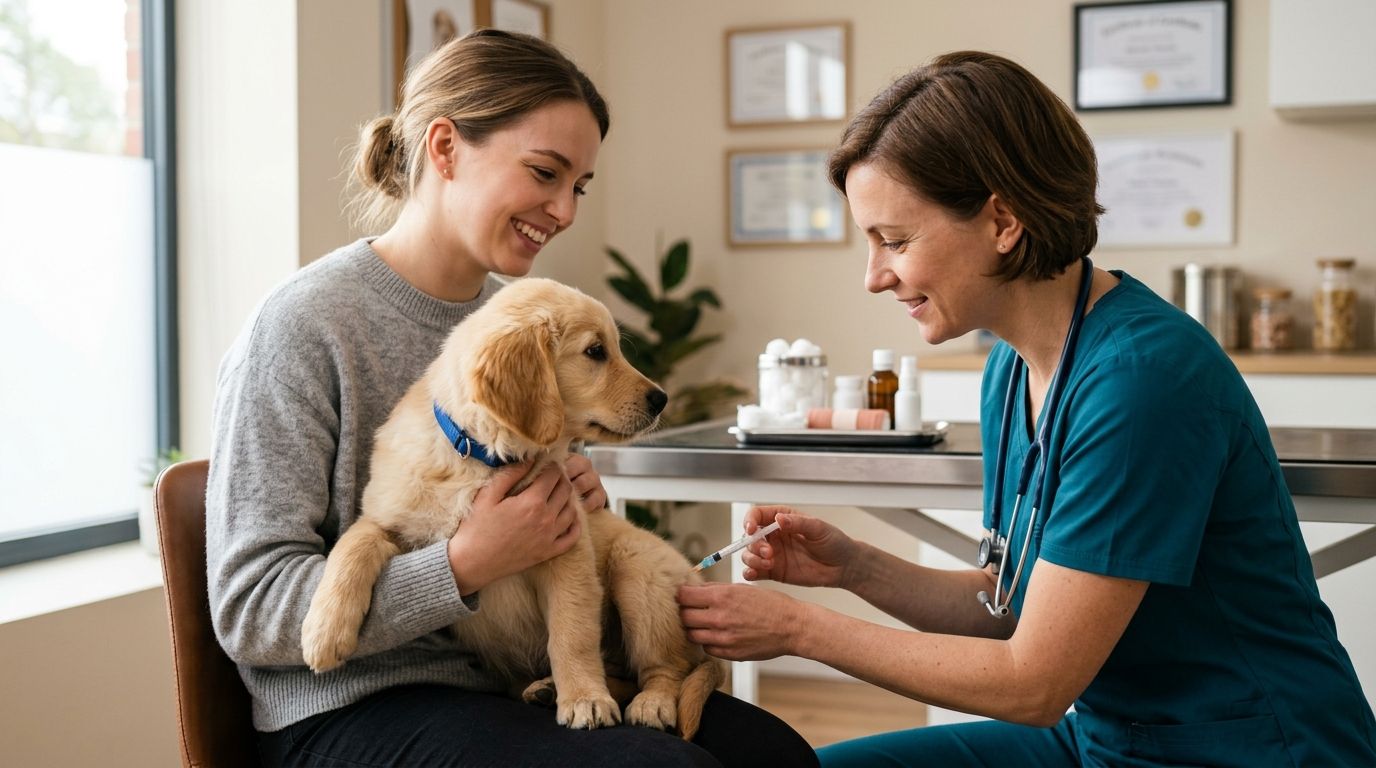
The backbone of puppy vaccinations for first-time dog owners is three doses, spaced four weeks apart, starting as early as 6-8 weeks.
- Book the first dose as soon as the puppy is home, even before 8 weeks if the breeder hasn't already started the course
- Space each following dose roughly four weeks apart — don't let it slide to five or six
- Confirm the final dose lands at 14-16 weeks, not earlier, since this is the one that overrides any remaining maternal antibodies
- Keep the vaccination record (usually a sticker booklet or digital certificate) from every dose — boarding facilities and puppy schools ask for it
- Ask whether the clinic uses C3 or C5 before the first appointment, since it changes what the puppy is and isn't protected against
Choose between C3 and C5 with your lifestyle in mind
C3 covers the three core diseases every puppy needs protection from. C5 adds parainfluenza and bordetella — the two biggest contributors to kennel cough.
- Pick C3 if the puppy's world for the next year is mostly home, backyard and quiet walks
- Pick C5 if daycare, boarding, puppy school or dog parks are already on the calendar
- Check any boarding or daycare facility's entry requirements before booking — most in 2026 require C5, not C3
- Ask the vet to confirm which protocol was used on the vaccination certificate, since C3 and C5 look identical on a puppy that just got a needle
Two by Two Vet runs both C3 and C5 protocols as part of its puppy vaccination service in Balgowlah, and will flag which one suits a puppy's planned lifestyle at the first visit rather than defaulting to one option.
Time the first vet visit correctly
The first vaccination appointment is also the first full health check most puppies ever get, and first-time owners often treat it as a formality rather than a diagnostic visit.
- Bring any vaccination record from the breeder so the vet knows what's already been given
- Expect a full physical check — heart, hips, eyes, teeth, umbilical area — alongside the injection
- Ask about the puppy's weight trajectory; it's the easiest early flag for growth or feeding issues
- Raise any behaviour concerns now, even small ones, since early intervention is far easier than correcting a habit at 12 months
- Book the next two appointments before leaving, rather than relying on a reminder text
Keep your puppy safe between doses
A puppy is not fully protected until roughly two weeks after the third dose — that's the real end date, not the injection date itself.
- Avoid dog parks, communal grass areas and pet stores until the course is finished
- Carry the puppy rather than letting it walk on public footpaths for the first few weeks
- Socialise indoors with fully vaccinated adult dogs from friends or family instead of public spaces
- Start puppy preschool only once the clinic confirms it's safe — many run these classes on vaccinated, contained premises specifically to bridge this gap
- Keep visitors' shoes off the puppy's usual play area if they've recently been near other dogs
Layer on parasite prevention alongside the vaccine course
Vaccination protects against viral disease, not parasites — first-time owners often assume one covers the other.
- Start heartworm prevention for dogs on the schedule the vet sets at the first visit, since heartworm is close to unpreventable once established
- Run flea and tick prevention from the same appointment, particularly on the Northern Beaches where tick exposure is high
- Confirm the worming schedule runs separately from vaccination — puppies typically need worming more often than the vaccine course requires visits
- Ask which products are safe to combine at a puppy's age and weight rather than assuming an adult-dog product scales down
Track side effects and know when to call
Most puppies handle vaccination with nothing more than mild lethargy for a day. First-time owners need to know what's normal and what isn't.
- Expect mild soreness at the injection site or a day of reduced energy
- Watch for facial swelling, vomiting or hives in the hours after the shot — these need a same-day call
- A low-grade temperature for 24 hours is common; anything beyond that warrants a check-in
- Keep the clinic's contact details somewhere immediate, not buried in an app, for the first 48 hours after each dose
Book your puppy's vaccination course
Two by Two Vet runs the full C3/C5 schedule alongside a first health check in Balgowlah.
Comparing your options as a first-time owner
| Option | Best for | Key limitation |
|---|---|---|
| C3 vaccine | Puppies staying mostly home and on quiet walks | Doesn't cover kennel cough |
| C5 vaccine | Puppies headed to daycare, boarding or puppy school | Requires the same three-dose schedule, no shortcut |
| Titre testing after the core course | Owners wanting to confirm immunity before extra boosters | Adds a step and cost, doesn't replace the initial series |
| Pet insurance alongside the vaccine schedule | Budgeting for the full first-year vet workload | Doesn't cover the vaccines themselves under most policies |
Verdict: run the full three-dose course, choose C5 over C3 if daycare or boarding is even a maybe, and don't treat the final dose as optional just because the puppy seems fine. Reviewing pet insurance for dogs before the first vaccination appointment gives first-time owners a clearer picture of what's covered later versus what's an out-of-pocket vet visit now.
Common mistakes first-time dog owners make
- Treating one dose as "done" — a single vaccine gives partial, temporary protection at best; the puppy isn't safe until the full course plus the two-week buffer is over
- Taking the puppy to a dog park right after the second dose — the puppy isn't protected until after the third
- Skipping the record book — daycare, boarding and puppy school in 2026 routinely ask for proof, and a missing certificate means starting the course over in some cases
- Assuming flea, tick and worm prevention is covered by the vaccine appointment — it's a separate schedule that needs its own plan from week one
- Waiting for symptoms before calling the vet — parvovirus in an unvaccinated puppy can progress from mild lethargy to critical within 24 hours
FAQ
What is the standard puppy vaccination schedule in Australia in 2026?
Most Australian vets run a three-dose core schedule starting at 6-8 weeks, a second dose around 10-12 weeks, and a final dose at 14-16 weeks. Full protection is confirmed roughly two weeks after that last dose.
Is C5 better than C3 for a first puppy?
C5 covers everything C3 does plus kennel cough protection, so it's the better default if daycare, boarding or puppy school are on the calendar. C3 alone is enough for a puppy staying mostly at home.
Can I take my puppy outside before the vaccination course is finished?
Carrying a puppy on outings is fine, but letting it walk on public ground or mix with unknown dogs before the course ends carries real parvovirus risk. Full protection starts roughly two weeks after the third dose.
How much does a puppy vaccination course cost?
Costs vary by clinic and by whether C3 or C5 is used, plus whether a full health check is bundled in. Ask the clinic directly for current pricing rather than relying on older estimates.
Do puppies need worming alongside vaccinations?
Yes — worming runs on its own schedule, usually more frequent than vaccination visits, because intestinal parasites affect puppies earlier and more severely than adult dogs.
What side effects are normal after a puppy vaccination?
Mild lethargy, a sore injection site, or a slightly reduced appetite for a day are common. Facial swelling, vomiting or hives need a same-day call to the vet.
When can my puppy go to a dog park?
Not until roughly two weeks after the third and final core vaccine dose, typically around 16-18 weeks of age. Going earlier exposes the puppy before its immune system has caught up.
Do adult dogs need annual vaccinations after the puppy course?
Yes — the first annual booster is due around 12 months of age, with most vets moving to a triennial schedule for certain core vaccines after that depending on the puppy's health history.
One last thing
The single most missed detail for first-time dog owners isn't the injection schedule — it's the two-week buffer after the final dose. Plenty of owners mark the calendar for the last vaccine appointment and treat that day as the finish line, then head straight to a busy dog park. The puppy isn't actually protected yet. Build that extra fortnight into the plan from day one and the whole schedule stops feeling like a race against exposure.