Best overall pet first aid kit for 2026: a vet-assembled comprehensive kit that covers wound care, medication dosing and documentation. Best for hikers and beach walkers: a compact trauma kit built for tick and paw injuries. Best budget option: a DIY checklist kit you assemble yourself from a chemist and a vet clinic. Best for multi-pet households: an expanded kit with separate compartments per animal.
- The best pet first aid kit australia owners can rely on in 2026 combines wound care, a tick removal tool and written vet contact details.
- A vet-assembled comprehensive kit suits most households; a compact trauma kit suits hikers and beach walkers on the Northern Beaches.
- DIY checklist kits cost less but only work if you actually know what to put in them.
- Multi-pet households need separate labelled sections per animal, not one shared kit.
- No kit replaces a phone call to your vet or an emergency clinic when a pet is bleeding heavily or struggling to breathe.
Why this matters
A pet first aid kit buys you the first ten minutes after something goes wrong. That's the window where a tick bite, a cut paw on oyster shells at low tide, or a bee sting either gets managed calmly or spirals into a panicked drive to an emergency vet with no plan.
Most Australian households don't have one assembled. They have a box of human bandaids and hope. Two by Two Vet sees the gap every week: pet owners who improvise with kitchen towels and cling wrap because nobody told them what actually belongs in a kit built for a dog or cat.
2026 hasn't changed the basics of pet first aid, but it has changed what's available off the shelf. More Australian retailers now stock dedicated kits rather than repackaged human ones, which is why this guide ranks kit types rather than a single winner — different households need different setups.
What makes the best pet first aid kit
- Wound care essentials — non-stick gauze, self-adhesive bandage, saline solution and a tick removal tool
- Medication and dosing clarity — space for any prescribed medications with dosing notes, not guesswork
- Documentation — your vet's number, the nearest emergency clinic's address, and a copy of vaccination records
- Portability — fits in a car, a backpack or a beach bag without falling apart
- Expiry management — saline, antiseptic wipes and any topical treatments have use-by dates that need checking
- Species-specific items — a cat needs a smaller muzzle option or towel-wrap technique; a dog needs a properly sized bandage roll
At a glance
| Kit type | Best for | Standout feature | Key limitation |
|---|---|---|---|
| Vet-assembled comprehensive kit | Everyday households | Covers wound care, medication and documentation in one place | Bulkier than a travel kit |
| Compact trauma kit | Hikers and beach walkers | Fits a daypack, prioritises tick and paw injuries | Skips broader medication storage |
| DIY checklist kit | Budget-conscious owners | Costs less because you source items yourself | Only as good as your own checklist |
| Multi-pet household kit | Homes with two or more pets | Separate labelled sections per animal | Needs regular restocking discipline |
| Senior or chronic-condition kit | Pets on ongoing medication | Built around dosing schedules and mobility aids | Not designed for acute trauma |
1. Vet-assembled comprehensive kit: best pet first aid kit for everyday households
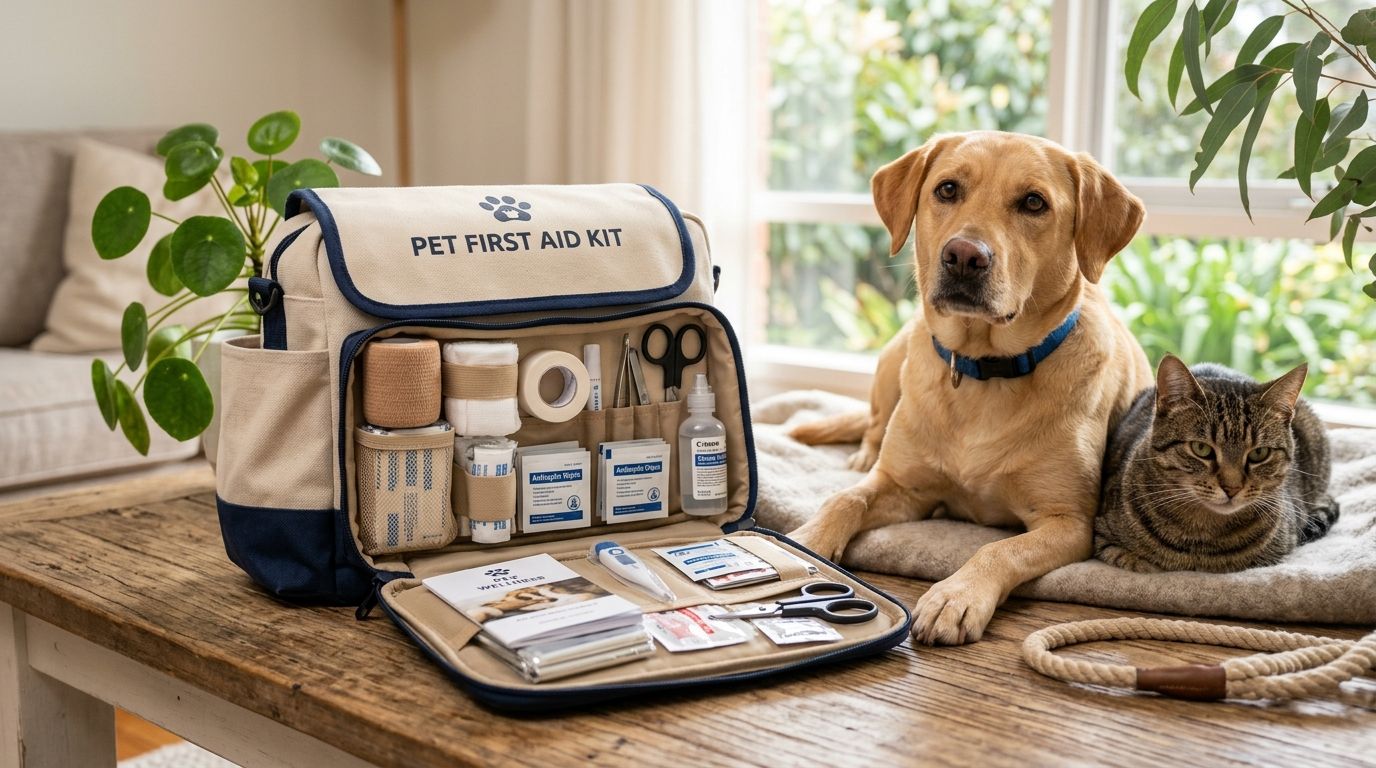
This is the standard household setup: a single case with wound dressings, saline, a digital thermometer, tweezers, a tick removal tool and a laminated card with your vet's contact details. It's built to handle the common stuff — cuts, minor burns, insect stings, upset stomachs — while you decide whether a trip to the clinic is needed.
Comprehensive kit pros:
- Covers the widest range of everyday incidents in one box
- Easy to keep at home where it's needed most
- Works for both cats and dogs with minor substitutions
Comprehensive kit cons:
- Too large to carry on a walk or hike
- Still requires you to know basic wound care technique
Comprehensive kit pricing: varies by retailer and contents; check current stock and pricing before buying.
Best for: households wanting one reliable kit that stays in the house or car. Verdict: Buy.
2. Compact trauma kit: best pet first aid kit for hikers and beach walkers
Built smaller and lighter, this kit strips things back to what matters on a trail or at low tide on the Northern Beaches: tick removal tools, a compression bandage, saline for flushing wounds, and a muzzle or soft lead for restraint if a scared dog needs handling.
Trauma kit pros:
- Fits in a daypack or glovebox without adding real weight
- Prioritises tick and paw injuries, the two most common outdoor incidents
- Faster to grab in a hurry than a full household kit
Trauma kit cons:
- No room for ongoing medication storage
- Not built for internal issues like vomiting or lethargy
Trauma kit pricing: check current retailer pricing; compact kits generally sit below full comprehensive sets.
Best for: owners who walk dogs on trails, at Manly, or along the harbour foreshore regularly. Verdict: Buy.
3. DIY checklist kit: best pet first aid kit for budget-conscious owners
Instead of buying a packaged kit, you assemble one from a pharmacy and your vet clinic: non-stick gauze, a bandage roll, saline solution, blunt-tipped scissors, and a printed emergency contact sheet. It costs less because you're sourcing components individually rather than paying for packaging and branding.
DIY kit pros:
- Cheaper than most packaged kits when assembled carefully
- Lets you tailor contents to your specific pet's needs
- No filler items you'll never use
DIY kit cons:
- Only as good as your own research — miss an item and the kit has a gap
- Takes more effort upfront than buying a ready-made box
- Easy to forget expiry checks without a packaged reminder
Best for: owners comfortable doing their own research and happy to build it once, properly. Verdict: Buy if you're diligent about the checklist.
4. Multi-pet household kit: best pet first aid kit for two or more animals
A single first aid kit shared across multiple pets creates confusion in an emergency — wrong bandage size, mixed-up medication notes, wasted seconds. This kit type separates supplies into labelled sections per animal, with species-specific items (cat-sized bandages, dog-sized muzzles) kept apart.
Multi-pet kit pros:
- Reduces fumbling during a genuine emergency with more than one pet
- Keeps species-specific sizing correct
- Scales as you add pets to the household
Multi-pet kit cons:
- Larger and less portable than single-pet kits
- Needs more disciplined restocking since more items get used over time
Best for: households with a dog and a cat, or multiple dogs of different sizes. Verdict: Buy.
5. Senior or chronic-condition kit: best pet first aid kit for pets on ongoing medication
Built around a pet's existing health needs rather than acute trauma, this kit prioritises medication organisation, dosing schedules, mobility support items, and a written summary of the pet's condition for anyone who needs to step in and help — a pet sitter, a neighbour, or an emergency vet who's never met the animal.
Senior kit pros:
- Keeps medication schedules clear for anyone caring for the pet temporarily
- Reduces dosing errors, which matter more in older or chronically ill pets
- Pairs well with a post-desexing recovery cone or suit if the pet is also recovering from surgery
Senior kit cons:
- Not designed for sudden trauma like a car accident or dog attack
- Needs updating every time a medication or dose changes
Best for: pets managing arthritis, diabetes, or other ongoing conditions. Verdict: Buy if your pet is on regular medication.
“If the kit doesn't include a tick removal tool, it's not built for an Australian backyard.”
How we ranked these
Each kit type was measured against the six criteria above: wound care coverage, medication clarity, documentation, portability, expiry management and species-specific fit. None of these kit types wins on every criterion — that's the point of ranking by use case rather than by a single leaderboard. A trauma kit that's light enough for a hike will never out-store a comprehensive household kit, and that trade-off is the actual decision most owners face.
Anxiety during an emergency compounds the problem, especially with dogs already prone to stress. If your dog struggles with vet visits or unfamiliar handling, pairing a first aid kit with proper calming aids for anxious dogs makes the actual first-aid process smoother once you've stabilised the situation.
Not sure what your pet needs?
Talk through your pet's specific first aid and health needs with the team.
Which pet first aid kit should you choose?
For most Northern Beaches households in 2026, the vet-assembled comprehensive kit is the default buy — it covers the widest range of incidents without requiring specialist knowledge to assemble correctly. If you walk trails or beaches regularly, add a compact trauma kit to your car or backpack alongside it. Multi-pet households should skip the single shared kit entirely and go straight to the labelled, separated version. Whatever you choose, a first aid kit is a bridge to professional care, not a replacement for it — call your vet or an emergency clinic the moment an injury looks serious.
FAQ
What's the best pet first aid kit in Australia for 2026?
A vet-assembled comprehensive kit covering wound care, saline, a tick removal tool and vet contact details is the best all-round option for 2026. Hikers and beach walkers should add a compact trauma kit for portability.
Is a DIY pet first aid kit as good as a packaged one?
A DIY kit can match a packaged one if you research the checklist carefully and check items regularly for expiry. The main risk is missing an item you didn't know you needed.
How much does a pet first aid kit cost in Australia?
Pricing varies by retailer and contents, so check current stock and pricing directly with the seller before buying. DIY kits assembled from a pharmacy generally cost less than packaged comprehensive kits.
What should be in a dog first aid kit but not a cat one?
Dogs typically need larger bandage rolls and a properly sized muzzle for restraint, while cats need smaller dressings and often respond better to a towel-wrap technique than a muzzle. Both need a tick removal tool given Australia's paralysis tick risk.
Do I still need to see a vet if I use a first aid kit?
Yes — a first aid kit stabilises a pet for the trip to the vet, it doesn't replace professional treatment. Heavy bleeding, breathing difficulty or suspected fractures need immediate veterinary attention regardless of what's in the kit.
How often should I check my pet first aid kit?
Check saline, antiseptic wipes and any topical treatments for expiry every few months, and restock immediately after using any item. A kit with expired saline is functionally an empty kit.
What's the most commonly missing item in Australian pet first aid kits?
A dedicated tick removal tool is the most commonly missing item, despite ticks being one of the most common outdoor injuries for pets in coastal and bushland areas. Tweezers work in a pinch but a proper tool reduces the risk of leaving mouthparts embedded.
Should a multi-pet household buy one kit or several?
A multi-pet household should buy one kit with separate labelled sections per animal rather than several small kits or one shared box. This avoids confusion over sizing and medication notes during an actual emergency.
One last thing
Most packaged pet first aid kits sold in Australia skip a muzzle or restraint option entirely, even though a scared or injured pet — cat or dog — is far more likely to bite than usual. If your kit doesn't include one, add a soft lead or a spare towel you know how to wrap around a cat's body before you ever need it.