Switching vets doesn't mean starting from scratch on your pet's history. Instead of your new clinic guessing at vaccination dates or repeating tests your pet already had, request a full records transfer before the first appointment so the vet walks in already knowing your pet.
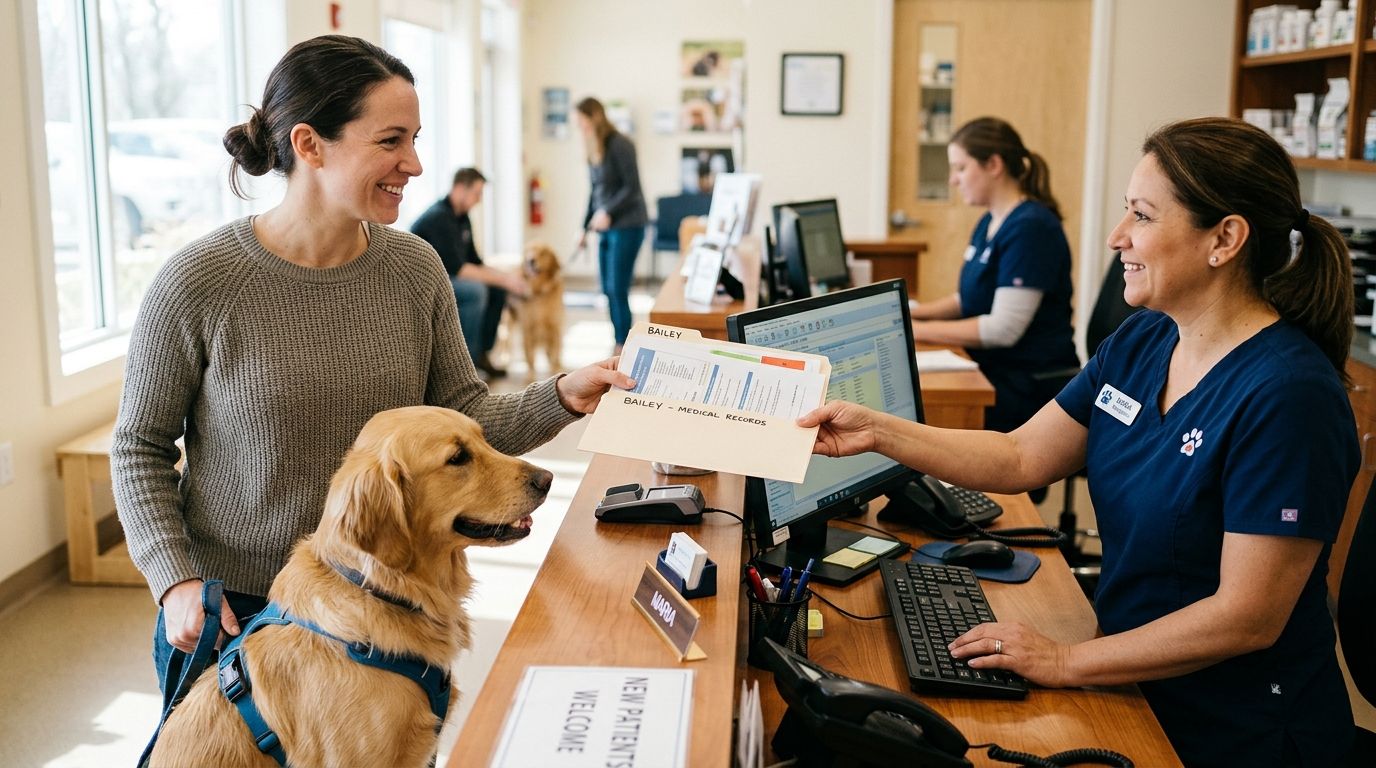
- To transfer pet medical records to a new vet, call your old clinic, sign a release form, and ask for records by email or fax.
- Most Australian clinics send records within 1-3 business days once you've signed the authorisation.
- Bring vaccination certificates and microchip paperwork to your first visit even if the transfer is still in progress.
- Two by Two Veterinary Hospital in Balgowlah accepts transferred records from any clinic before your pet's first appointment.
- Rescue and adopted pets often arrive with incomplete files - a health check fills the gaps fast.
Why this matters
A new vet without your pet's history is working blind on the things that matter most: past reactions to anaesthesia, chronic conditions, current medications, and when the last heartworm dose was actually given.
Gaps in the file mean repeated blood tests, re-done x-rays, or a vaccination given early because nobody could confirm the last date. That costs you money and your pet an unnecessary needle. A clean transfer avoids all of it.
The fastest fix is also the simplest: sign one release form and let the two clinics talk to each other directly. You don't need to chase paper copies or scan anything yourself in most cases.
Before you start
- Know your old clinic's exact records policy. Some release digital PDFs within a day, others still print and post - ask upfront so you're not waiting on results before a check-up.
- Have your pet's full name, date of birth (or age), and microchip number ready. Clinics use this to locate the right file fast, especially if you share a surname with another client.
- The gotcha: many clinics only release records to another registered veterinary practice, not directly to you as the owner. If you want a personal copy for your own files, ask for that explicitly and in writing - otherwise the file goes clinic-to-clinic and you never see it.
Request the transfer from your current clinic
- Call or email your outgoing clinic and ask for a records transfer or records release.
- Sign their authorisation to release form - most clinics require this in writing, even for a simple email request.
- Confirm what's included: vaccination history, surgical notes, bloodwork, x-rays, and any specialist referral letters. Ask specifically if x-rays and lab results are attached, since some clinics only send the summary notes unless you ask.
- Give them the new clinic's name, address, and fax or email. If you're booking with Two by Two Veterinary Hospital, provide the practice details from the Two by Two Veterinary Hospital contact page so records land at the right inbox.
Expected result: your old clinic confirms the transfer has been sent, usually within 1-3 business days for digital files.
Confirm your new clinic has everything
- Call the new clinic 2-3 business days after the request and ask them to confirm receipt of the file.
- Check the file includes: vaccination certificate, desexing status, current medications, and known allergies or reactions.
- If anything's missing, ask the new clinic to follow up directly with the old practice - clinic-to-clinic requests move faster than owner-to-clinic ones.
- Bring your own paper copies of vaccination certificates to the first appointment regardless, as a backup if the digital transfer is delayed.
Expected result: the new clinic has a complete file before your pet's first consult, so the vet isn't asking you to recall dates from memory.
Transferring records for a newly adopted or rescue pet
If your pet came from a shelter or rescue rather than a previous private vet, the process runs slightly differently. Shelters and pounds often hold only partial records - a single vaccination, a desexing date, and a microchip registration, with no ongoing history.
Ask the rescue organisation for whatever paperwork they have at handover, then book a full health check with your new clinic within the first two weeks. This establishes a baseline weight, temperament notes, and a physical exam your new vet can build on, which matters more for a rescue pet than chasing a thin paper trail. The guide on health checks for rescue and adopted pets covers what that first visit typically involves.
Troubleshooting
- Old clinic isn't responding to the request. Follow up by phone rather than email - reception staff often prioritise phone requests over an inbox backlog. Give it 5 business days before escalating.
- Records arrive incomplete. Ask specifically for x-rays and lab results by name - many practice management systems only auto-attach the vaccination summary unless someone manually pulls the rest.
- Old clinic uses a different software system. Most Australian clinics can still export to PDF regardless of platform, so a format mismatch is rarely a real blocker - push back if you're told otherwise.
- You've moved interstate. Records transfer the same way regardless of state, but ask your new clinic if state-specific parasite prevention protocols differ, since tick and heartworm risk varies across Australia.
- Microchip details don't match. Update your pet's microchip registration separately through the national database - a vet records transfer does not automatically update chip registration details.
Book your pet's first visit
Get your pet's records transferred and settled in before the appointment.
What to do once the transfer is complete
Once your new clinic has the file, use the first appointment to close any gaps rather than just introducing your pet. Ask the vet to confirm vaccination due dates against the transferred records, and flag anything that looks inconsistent - a missed booster or an unclear desexing date is easier to fix at visit one than six months later.
For puppies, kittens, or senior pets moving to a new clinic, a baseline health check matters more than the paperwork itself. The pet health checks for puppies and kittens guide and the vet health checks for senior pets guide both cover what to expect at that first visit, depending on your pet's life stage.
If you're comparing clinics before deciding where those records should land, the breakdown of Two by Two Vet vs Greencross Vets walks through what differs between a corporate chain and a family-run practice on the Northern Beaches.
FAQ
How do I transfer pet medical records to a new vet?
Call your current clinic, sign an authorisation-to-release form, and give them your new clinic's contact details. Most Australian practices send digital records within 1-3 business days.
Can I get a copy of my pet's medical records myself?
Yes, but you need to ask for it specifically - many clinics only release files directly to another veterinary practice unless you request a personal copy in writing.
How long does a vet records transfer take?
Digital transfers between clinics usually take 1-3 business days. Posted paper files can take longer, so ask your old clinic which method they use before your first appointment.
What records should transfer with my pet?
A complete file includes vaccination history, desexing status, current medications, known allergies, past surgical notes, and any bloodwork or x-rays on file.
Do I need records for a rescue or adopted pet?
Get whatever paperwork the shelter provides at handover, then book a full health check with your new clinic within the first two weeks to establish a proper baseline.
Does a records transfer update my pet's microchip registration?
No. Microchip registration is updated separately through the national database - a vet-to-vet records transfer does not change chip ownership details.
What if my old clinic won't respond to a records request?
Follow up by phone rather than email, since reception staff often action phone requests faster. Give it about 5 business days before escalating.
One last thing
The detail most owners miss: a records transfer rarely includes microchip registration updates, even though the two feel related. If you've moved suburbs or changed your phone number along with switching vets, update the chip registry separately - otherwise a lost pet in 2026 gets traced back to an old address or an outdated number, regardless of how complete the new clinic's file is.