
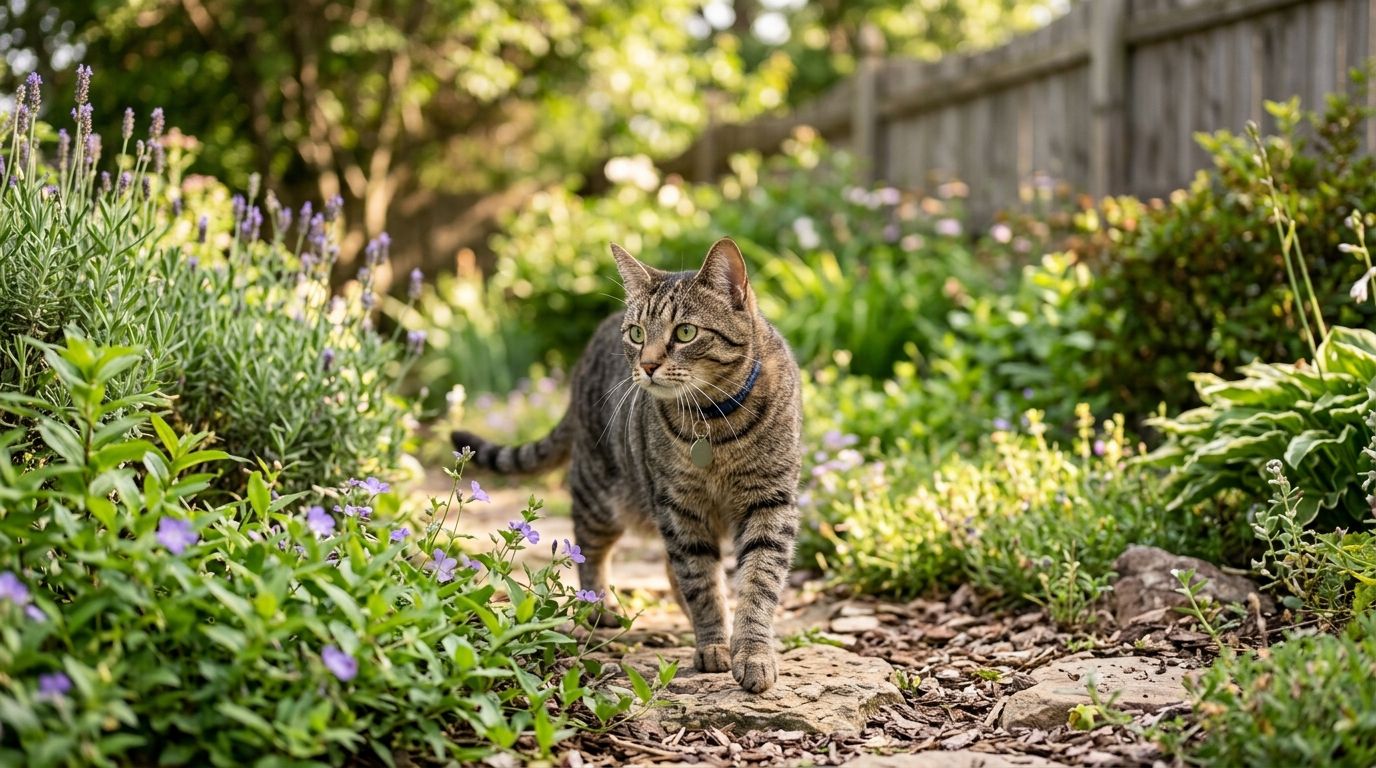
Parasite prevention for outdoor cats is a stricter, more frequent routine than any indoor cat needs, because roaming exposes them daily to fleas, paralysis ticks, and intestinal worms that most indoor cats never meet. An outdoor cat on the Northern Beaches picks up parasites from bushland, neighbouring yards, other cats, and the wildlife it hunts — so the prevention schedule has to match that exposure, not a generic label on a box.
- Parasite prevention for outdoor cats needs monthly flea and tick cover, not the 3-month schedule that suits an indoor cat.
- Paralysis ticks are the biggest Northern Beaches risk for outdoor cats, with the danger season running September to March 2026.
- Spot-on treatments cover fleas and ticks together; many oral tablets skip paralysis ticks entirely — check the label.
- Outdoor cats that hunt need worming every 3 months minimum, not the standard 6-month interval.
- Two by Two Vet recommends a written prevention calendar for outdoor cats — memory-based dosing is the most common gap.
Why parasite prevention matters more for outdoor cats
An indoor cat's parasite exposure is mostly limited to whatever comes in on your shoes or another pet. An outdoor cat walks through long grass, sits under trees where paralysis ticks drop, drinks from puddles, and eats what it catches — birds, rodents, lizards. Each of those is a separate parasite entry point.
The best flea and tick prevention products for cats in Australia are built with this exposure gap in mind — outdoor-rated formulas cover a wider parasite range than the budget options aimed at indoor cats. Skipping that distinction is the single most common mistake owners of outdoor cats make in 2026.
Paralysis tick paralysis is the emergency end of this spectrum. Cats affected by paralysis ticks can go from wobbly hind legs to full respiratory collapse within 24 to 48 hours of the bite becoming symptomatic, which is why prevention beats treatment on every measure that matters for an outdoor cat.
Check your cat for ticks every day during tick season
This costs nothing and takes under five minutes once it's a habit. Run your hands slowly through the coat, paying attention to the head, neck, and between the toes — paralysis ticks favour these spots.
- Run fingers against the direction of coat growth, not with it, to feel for small bumps
- Check the ears, eyelids, lips, and gum line where ticks are easy to miss
- Check between the toes and around the anus and tail base
- Do the check after any day spent in long grass or bushland
- Keep tick season (roughly September to March in Sydney) as your highest-vigilance window
Choose a prevention product rated for outdoor exposure
Once daily checks are a habit, the product doing the background work matters more. Spot-on treatments and tick collars are built for continuous outdoor exposure; some oral tablets are formulated for fleas only and leave paralysis ticks uncovered.
- Read the label for "paralysis tick" coverage specifically, not just "tick" in general
- Match the reapplication interval to your calendar — monthly products lapse fast if you're not tracking dates
- Apply spot-on treatments between the shoulder blades where the cat can't groom it off
- Ask about combination products that cover fleas, paralysis ticks, and intestinal worms in one dose
- If your cat swims or is bathed often, check whether the product needs a dry-fur window before or after water exposure
Worm your outdoor cat more often than an indoor cat
Hunting is the main worm transmission route for outdoor cats — a single mouse or bird can carry tapeworm larvae. This is the step most owners under-schedule.
- Worm hunting cats every 3 months, not the standard 6-month interval for low-exposure indoor cats
- Use a product that covers both roundworm and tapeworm, since hunting cats are exposed to both
- Watch for rice-grain segments near the tail or in bedding as a visible tapeworm sign
- Weigh the cat before dosing — most worming products are dosed by body weight, not a flat dose
- Keep the worming date on the same calendar as flea and tick treatments to avoid gaps
Watch for ear mites and other skin parasites
Outdoor cats pick up ear mites from contact with other cats and from stray colonies. Left untreated, mites cause secondary skin infections that are harder to fix than the original mite problem.
- Check for dark, crumbly wax or a strong odour inside the ear canal
- Watch for excessive head shaking or scratching at one ear more than the other
- Look for small scabs or hair loss around the base of the ears and neck
- Don't self-treat with human ear drops — several are toxic to cats
Make your yard less hospitable to fleas
Flea eggs and larvae live in shaded, humid soil and bedding, not just on the cat. Treating the cat without touching the environment means reinfestation within weeks.
- Mow grass and clear leaf litter where the cat rests outdoors
- Wash outdoor bedding weekly in hot water during warmer months
- Vacuum indoor areas the cat frequents at least twice a week during flea season
- Treat any other pets in the household on the same schedule — one untreated pet reinfests the rest
Book seasonal vet checks to catch what you can't see
Some parasite damage — anaemia from a heavy flea burden, early paralysis tick symptoms, internal worm load — doesn't show on the outside until it's advanced. A vet check catches it earlier than a home inspection ever will.
- Book a check at the start of tick season (spring) and again heading into summer
- Ask for a faecal check if you've seen worm segments or unexplained weight loss
- Mention any recent hunting activity so the vet can weigh up worming frequency
- Bring your prevention product history so gaps in coverage are obvious on the record
Book a parasite check for your outdoor cat
Get a prevention schedule built around your cat's actual exposure.
Track prevention dates so treatments don't lapse
The most common failure point isn't the product — it's the gap between doses. A cat treated on time every month is protected; a cat treated "whenever you remember" isn't.
- Set a recurring phone reminder tied to the product's actual reapplication window
- Write the last dose date on the product box or a fridge calendar
- Reconcile prevention dates against your pet insurance for cats policy — some claims for parasite-related illness ask for proof of a maintained schedule
- Replace tick collars on the manufacturer's interval, not when they visibly wear out
Comparing parasite prevention options for outdoor cats
| Option | Best for | Key limitation |
|---|---|---|
| Spot-on topical | Outdoor cats needing combined flea and tick cover | Needs dry fur; grooming before it absorbs reduces effectiveness |
| Oral tablet | Cats that fight topical application | Many formulas don't cover paralysis ticks — check the label |
| Tick collar | Cats in bushland areas needing continuous barrier protection | Fit matters; loose collars lose effectiveness fast |
| Vet-administered injectable | Owners who struggle with home dosing schedules | Requires a clinic visit at each dosing interval |
Every option on this list works when used on schedule. None of them work if the reapplication date slips, which is the actual failure point for most outdoor cats.
“If your cat hunts, worm every three months — not the six-month interval that's fine for an indoor cat.”
Common mistakes outdoor cat owners make
- Using dog flea and tick products on a cat. Several dog-only formulas contain permethrin, which is toxic to cats even in small amounts.
- Treating for fleas but not ticks. Fleas are visible and itchy; paralysis ticks are silent until the cat is already symptomatic.
- Assuming winter means no risk. Sydney's mild winters keep flea populations active year-round, even if tick activity slows.
- Skipping worming because the cat "looks fine." Worm burdens build for weeks before weight loss or a dull coat becomes visible.
- Treating one cat in a multi-cat household and not the others. Untreated cats reinfest treated ones within days.
FAQ
What's the best parasite prevention for outdoor cats in 2026?
A spot-on or tick-collar product rated for paralysis ticks, combined with worming every 3 months if the cat hunts, covers the main risks for an outdoor cat in 2026. Oral-only flea tablets without tick coverage aren't sufficient for a roaming cat.
How often should you worm an outdoor cat?
Worm an outdoor cat every 3 months if it hunts regularly, or every 3 to 6 months for lower-exposure outdoor cats. Indoor cats can usually stretch to a 6-month interval.
Do indoor cats need the same parasite prevention as outdoor cats?
No — indoor cats have far lower exposure and can often use a lighter, less frequent schedule. Outdoor cats need monthly flea and tick cover plus more frequent worming due to hunting and yard exposure.
Is a tick collar enough to protect an outdoor cat?
A properly fitted tick collar provides continuous barrier protection against ticks but doesn't treat fleas on its own. Most outdoor cats need a combined approach, not a single product.
Can I use dog flea treatment on my cat?
No. Several dog flea and tick products contain permethrin, which is toxic to cats and can cause seizures or death. Always use a product labelled specifically for cats.
What are the signs of paralysis tick poisoning in cats?
Early signs include wobbly hind legs, changed voice or meow, and reluctance to jump. This progresses quickly to breathing difficulty, which is a veterinary emergency.
Is oral flea treatment as effective as spot-on for cats?
Oral treatments are effective against fleas but many formulas don't cover paralysis ticks, which is the higher-risk parasite for outdoor cats in tick-prone areas. Check the active ingredient list before choosing.
How much does flea and tick prevention cost for an outdoor cat?
Cost varies by product type and dosing frequency, and pricing changes regularly, so check current options with your vet or pharmacy rather than relying on old figures.
One last thing
Cats groom constantly, and a spot-on treatment applied anywhere they can reach gets partially licked off before it fully absorbs. Apply it precisely between the shoulder blades, low enough that the skin (not just fur) gets the dose, and keep the cat from grooming a housemate's application site for a few hours after treatment — cross-grooming between cats is a quiet way outdoor multi-cat households lose coverage without anyone noticing.