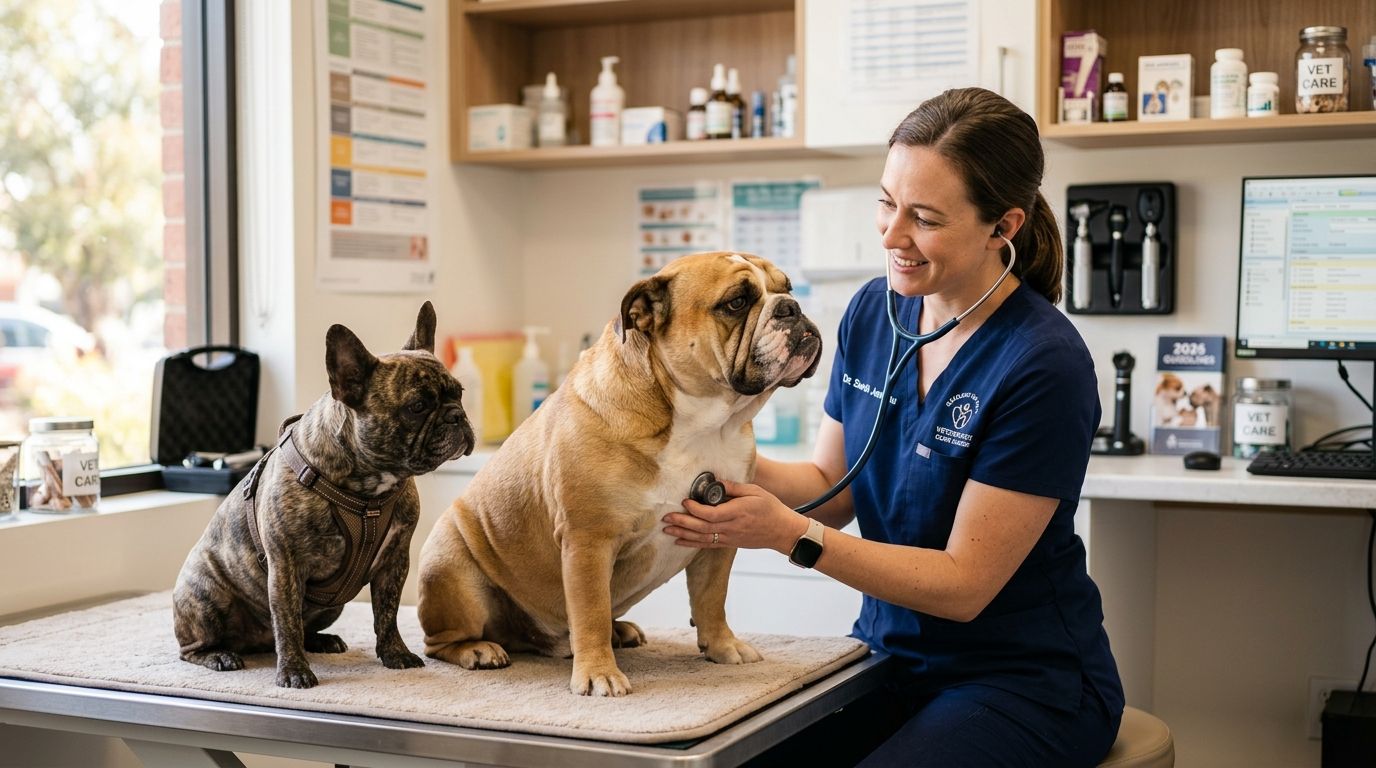
Brachycephalic dog breeds — Pugs, French Bulldogs, English Bulldogs, Boston Terriers, Shih Tzus and similar flat-faced dogs — need vet care built around one anatomical fact: a shortened skull compresses the airway, so breathing, cooling and healing all work differently than they do in a Labrador or a Kelpie. The right care plan for these breeds starts with airway grading, not a generic annual check.
- Vet care for brachycephalic breeds means BOAS airway grading, heat management, skin fold checks and dental reviews every 6-12 months.
- Pugs, French Bulldogs and English Bulldogs need airway assessment before any anaesthetic, not after a breathing crisis.
- Two by Two Vet runs flat-faced health checks in Balgowlah; book before Sydney's summer heat spikes airway distress.
- Six-monthly reviews of weight, skin folds and breathing sounds catch problems annual-only checkups miss in 2026.
Why vet care for brachycephalic breeds matters
A flat-faced skull shortens the nasal passages and soft palate without shrinking the amount of soft tissue that has to fit inside them. That crowding is what vets call brachycephalic obstructive airway syndrome, or BOAS, and it is the single biggest reason these breeds show up as emergencies rather than routine visits. Book a flat-faced health check with Two by Two Vet before summer, not during a heatwave, and the airway gets assessed while the dog is calm and cool.
Heat intolerance, skin fold dermatitis, corneal exposure and dental crowding all stem from the same shortened-skull anatomy, which is why brachycephalic vet care can't be a copy-paste version of care for a long-nosed breed. Anaesthesia is riskier for these dogs too — a compressed airway makes intubation harder and recovery slower, so every dental clean or desexing procedure carries a bit more weight than it would for a Border Collie.
“If your Pug or Frenchie snores like a chainsaw at rest, that's not cute — it's a clinical sign vets grade on a BOAS scale.”
The vet care spine for flat-faced dogs
1. Book a BOAS-specific health check, not just an annual check
A standard once-a-year checkup can miss early airway narrowing if the dog is calm and cool in the exam room. Ask specifically for a functional BOAS assessment.
- Request airway noise scoring at rest and after 3 minutes of light exercise
- Ask the vet to check nostril (nares) width for stenosis
- Get soft palate length and thickness assessed
- Flag any exercise intolerance, gagging after eating, or reverse sneezing episodes
- Repeat this assessment every 6-12 months, not just annually, once a dog is graded mild or moderate
2. Manage heat exposure year-round, not just in summer
Brachycephalic dogs can't pant as efficiently as longer-nosed breeds because there's less surface area to cool air passing over. Heat stroke risk climbs fast once ambient temperature and humidity both rise, which is a known factor in Sydney's Northern Beaches summers.
- Walk before 8am or after 6pm from October through March
- Avoid exercise entirely above roughly 27-28°C with high humidity
- Keep a cooling mat available at home and in the car
- Never leave a flat-faced dog unattended in a parked car, even briefly
- Watch for excessive drooling, bright red gums or collapse as emergency signs, and call a vet immediately if they appear
3. Clean and monitor skin folds daily
Facial and body folds trap moisture, dirt and yeast, which turns into dermatitis fast in humid weather. This is one of the most common reasons Pugs, English Bulldogs and Shar Peis end up back at the vet between scheduled visits.
- Wipe facial folds with a vet-recommended cleanser after meals
- Dry folds completely before the dog settles for the night
- Check tail pocket folds in screw-tailed breeds weekly
- Watch for redness, odour or discharge as signs of infection
- Book a vet review if folds don't clear up within a few days of home care
4. Watch for eye injuries and keep eyes lubricated
Shallow eye sockets in brachycephalic breeds mean the eyes protrude further and are more exposed to scratches, dust and dryness. Corneal ulcers develop quickly in these breeds and can worsen within 24-48 hours without treatment.
- Use vet-approved lubricating drops if the dog's eyes look dry or irritated
- Check for squinting, excess tearing or a cloudy cornea daily
- Keep hair trimmed away from the eyes in breeds prone to facial hair growth
- Treat any scratch or ulcer as an urgent same-day vet visit, not a wait-and-see situation
5. Schedule dental checks earlier and more often
A shortened jaw still has to fit a full set of adult teeth, which crowds them and speeds up plaque buildup. Brachycephalic breeds often need their first professional scale-and-polish earlier than longer-nosed dogs.
- Book a dental review from age 2-3 rather than waiting until age 5-6
- Brush teeth at home 3-4 times a week if the dog tolerates it
- Read through dental care guidance built for older dogs since brachycephalic breeds hit similar crowding issues younger
- Ask the vet to check for retained baby teeth, which are common in small brachycephalic breeds
- Flag bad breath or reluctance to chew as early warning signs, not just cosmetic issues
6. Prepare for higher-risk anaesthesia events
Any anaesthetic — for a dental clean, a desexing procedure or a skin biopsy — carries more airway risk in a brachycephalic dog than in a longer-nosed breed. This isn't a reason to avoid necessary procedures; it's a reason to pick a vet team experienced with the anatomy.
- Ask what pre-anaesthetic bloodwork and airway checks are standard practice
- Confirm the clinic has monitoring equipment suited to short-nosed breathing patterns
- Ask about recovery protocols, since brachycephalic dogs often need closer monitoring coming out of sedation
- Discuss timing procedures for cooler months where possible
7. Track weight tightly
Extra weight worsens airway compression and heat intolerance in these breeds more than in most others, because there's less room to begin with. A Pug or English Bulldog carrying even a kilogram or two above ideal weight breathes noticeably harder.
- Weigh the dog at every vet visit and compare against a body condition score, not just the number on the scale
- Adjust food portions seasonally, since activity typically drops in summer heat
- Ask about joint and weight-appropriate diets if the dog is already overweight
8. Plan ahead if breeding is involved
Brachycephalic breeds are well known for difficult natural whelping due to puppy head size relative to the birth canal. If a dog is intended for breeding, this needs vet input well before mating, not during labour.
- Discuss elective caesarean planning with a vet in advance
- Get a pre-breeding health screen that includes an airway and heart check
- Have an emergency plan and a vet on call for the expected whelping date
Book a flat-faced health check
Airway, skin fold and dental review for Pugs, Frenchies and Bulldogs in Balgowlah.
Comparing your options for brachycephalic vet care
| Option | Best for | Key limitation |
|---|---|---|
| Standard annual health check | Mild cases with no snoring or exercise intolerance | Won't catch subtle airway narrowing without a dedicated BOAS exam |
| BOAS functional grading assessment | Pugs, French Bulldogs and English Bulldogs showing snoring, gagging or exercise intolerance | Needs a vet trained in respiratory grading; book ahead rather than waiting for symptoms to worsen |
| Surgical airway correction (soft palate/nares) | Dogs graded moderate to severe on the BOAS scale | Requires referral to a surgical specialist for advanced cases |
| At-home monitoring only | Managing an already-mild, already-diagnosed case between checkups | No professional diagnosis; symptoms can progress without anyone noticing |
Verdict: a BOAS functional grading assessment, done every 6-12 months through a vet experienced with flat-faced breeds, catches problems earlier than a standard annual check and costs owners less in emergency visits down the line.
Common mistakes brachycephalic dog owners make
- Treating loud snoring as a breed quirk instead of a sign that warrants a BOAS assessment
- Exercising dogs at midday in summer, when heat and humidity peak together on the Northern Beaches
- Skipping pre-anaesthetic workup for a "routine" dental clean, when airway risk is exactly why that workup matters most
- Not drying skin folds after bathing or meals, which lets yeast infections take hold within days
- Waiting until teeth are loose to book a dental review, rather than starting checks from age 2-3
FAQ
What is BOAS in dogs?
BOAS stands for brachycephalic obstructive airway syndrome, a condition where a shortened skull crowds the nasal passages and soft palate, restricting airflow. It's graded from mild to severe based on breathing effort at rest and after exercise, and it's common in Pugs, French Bulldogs and English Bulldogs.
How often should brachycephalic dogs see the vet?
Brachycephalic breeds should have a health check every 6-12 months rather than a single annual visit, with airway, weight, skin fold and dental checks at each one. Dogs already graded with mild or moderate BOAS often need closer review.
Can brachycephalic dogs have anaesthesia safely?
Yes, with a vet team experienced in short-nosed airway anatomy and proper pre-anaesthetic bloodwork and monitoring. The risk is higher than in longer-nosed breeds but manageable with the right preparation and recovery protocol.
What temperature is too hot for a Pug or Bulldog?
Exercise above roughly 27-28°C combined with high humidity raises heat stroke risk significantly in flat-faced breeds. Early morning or evening walks and full shade access are safer through the Sydney summer months.
How do I know if my flat-faced dog is overheating?
Watch for excessive drooling, bright red or purple gums, wobbling, or collapse — these are emergency signs requiring an immediate vet call. Brachycephalic dogs overheat faster than longer-nosed breeds because they pant less efficiently.
Do all brachycephalic dogs need airway surgery?
No. Surgery is generally reserved for dogs graded moderate to severe on a BOAS functional assessment. Mild cases are often managed with weight control, heat avoidance and regular monitoring instead.
What breeds are considered brachycephalic?
Pugs, French Bulldogs, English Bulldogs, Boston Terriers, Shih Tzus, Pekingese and Cavalier King Charles Spaniels are among the most common brachycephalic breeds seen in Australian vet clinics.
Does pet insurance cover brachycephalic-specific conditions?
Coverage for BOAS-related surgery and skin fold treatment varies by insurer and policy, so it's worth checking the specific product before signing up. Comparing policies designed for dogs is a useful first step.
One last thing
Brachycephalic dogs often go through more anaesthetic events over a lifetime than other breeds — dental crowding, skin fold surgery and airway correction each carry their own procedure — which is exactly why picking a vet team comfortable with short-nosed anatomy matters more for these breeds than almost any other single decision an owner makes in 2026.