Recovering from surgery is uncomfortable enough without a bed that fights against healing — the wrong surface stresses incisions, makes standing painful, and turns a two-week recovery into a month of setbacks. Best overall: the orthopedic memory foam recovery bed. Best for dogs with limited mobility: the low-profile bolster bed. Best for large and giant breeds: the extra-large orthopedic bed.
- The best dog bed for post-surgery recovery in 2026 is an orthopedic memory foam bed with low, easy-access sides.
- Low-profile bolster beds suit dogs with limited mobility or hip and spine surgery.
- Elevated mesh cot beds help manage swelling and keep incisions away from trapped heat.
- Waterproof covers matter more than softness in the first 7-10 days after surgery.
- Extra-large and giant breeds need a bed rated for their weight, not just their length.
Why this matters
A dog recovering from surgery spends most of the day lying down, often for 10 to 14 days straight depending on the procedure. The vets at Two by Two Vet in Balgowlah see the same pattern every week: dogs discharged after cruciate repairs, spays, or dental surgery go home to a soft bed that's too high to climb onto, or too hot for a shaved and bandaged belly. The bed isn't a comfort item during recovery — it's part of the treatment plan.
The wrong bed can undo good surgical work. Dogs that struggle to get up and down put uneven pressure on healing joints. Beds that trap heat can irritate incision sites. A bed that's too soft lets the spine sag, which matters a lot for anything involving the back or hips. None of this requires an expensive purchase — it requires picking the right type of bed for the specific recovery.
What makes the best dog bed for post-surgery recovery
- Low entry height — the dog should be able to step or roll on without jumping
- Firm, even support — memory foam or dense orthopedic foam, not loose stuffing that shifts
- Washable, waterproof cover — incisions weep, bandages leak, accidents happen
- Breathable materials — reduces heat buildup around shaved and bandaged skin
- Size matched to the dog's weight, not just their sleeping length
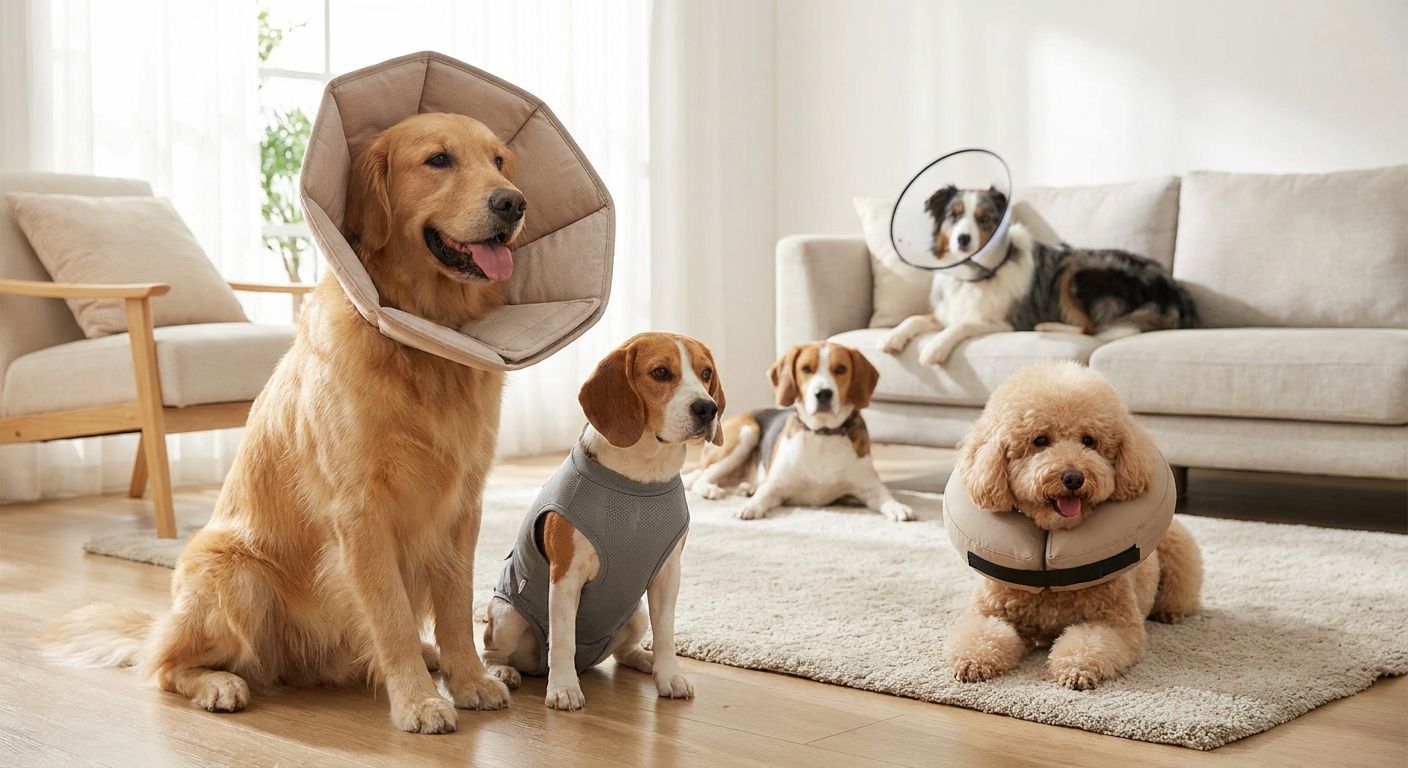
- Chew and scratch resistance — dogs in Elizabethan collars often paw and gnaw at bedding
Dog beds for post-surgery recovery at a glance
| Bed type | Best for | Standout feature | Key limitation |
|---|---|---|---|
| Orthopedic memory foam recovery bed | Overall post-surgery healing | Even spinal support, low sides | Not fully waterproof on most models |
| Low-profile bolster bed | Dogs with limited mobility | Near-ground entry height | Less structured support for large breeds |
| Elevated mesh cot bed | Cooling and swelling reduction | Airflow underneath the dog | Firm surface can feel harsh post-op |
| Waterproof-cover recovery bed | Incision leakage and bandage changes | Wipe-clean, fully sealed liner | Cover materials feel less soft |
| Extra-large orthopedic bed | Large and giant breed recovery | Weight-rated foam density | Bulkier, harder to move between rooms |
1. Orthopedic memory foam recovery bed: best overall for post-surgery healing
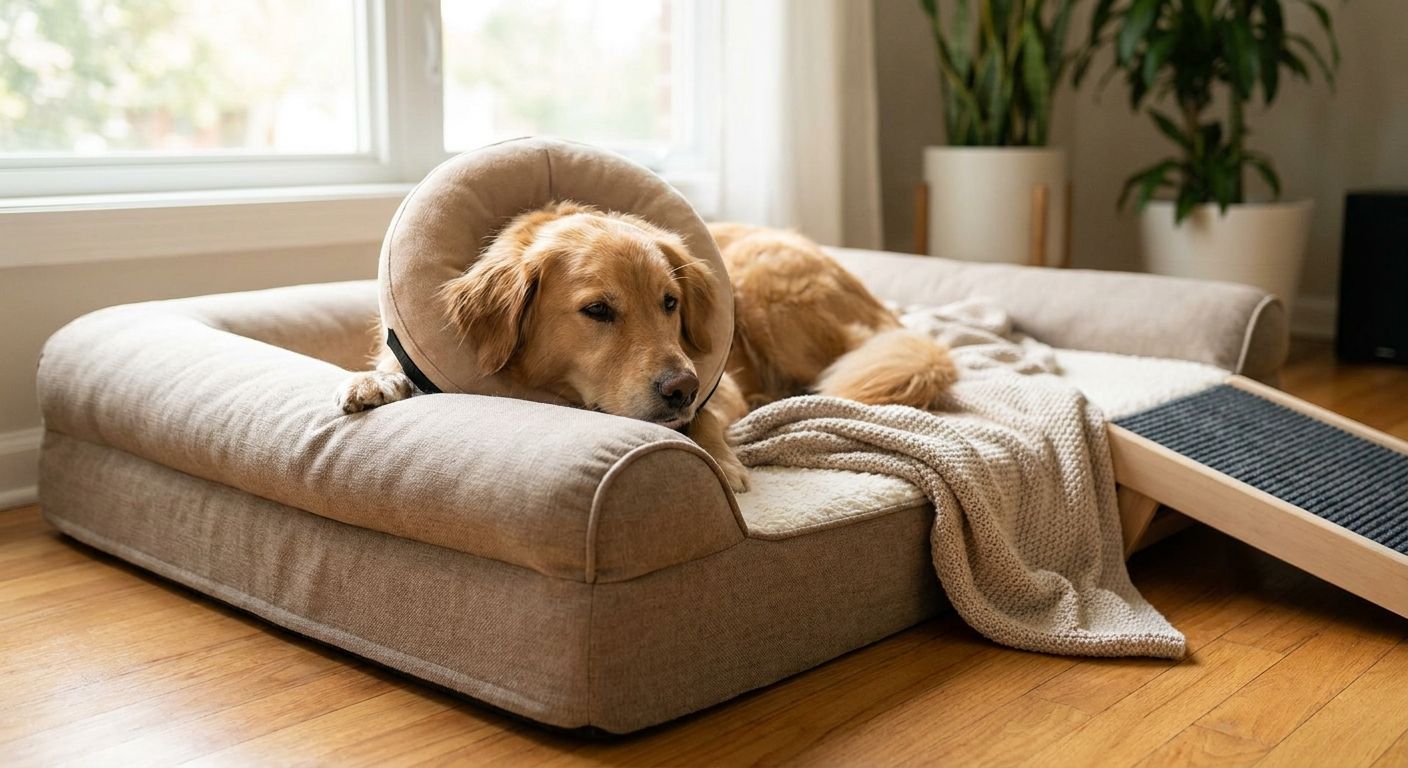
This is the standard recommendation for most soft-tissue and orthopedic surgeries in 2026 — a dense memory foam base, low bolster sides for support without a climb, and a cover that unzips for washing. The foam holds its shape under a stationary dog for days at a time, which matters when a pet is resting almost around the clock.
Orthopedic memory foam recovery bed pros:
- Even weight distribution reduces pressure points on hips and elbows
- Low sides let a sore dog get in and out without jumping
- Firm enough to prevent the spine from sagging during long rest periods
Orthopedic memory foam recovery bed cons:
- Covers are washable but the foam core itself usually isn't
- Standard foam density can flatten under very heavy dogs over months of use
Best for: general post-surgery recovery across most breeds and procedures. Verdict: Buy.
2. Low-profile bolster bed: best for dogs with limited mobility
Dogs recovering from cruciate repairs, spinal surgery, or amputation often can't lift a leg high enough to clear a raised bed edge. A low-profile bolster bed sits almost flush with the floor, with just enough of a raised rim to support the head and prevent rolling off during sleep.
Low-profile bolster bed pros:
- Near-zero entry height suits dogs who can't jump or step up
- Raised rim still gives a sense of security for anxious recovering dogs
- Lightweight designs are easy to reposition near the dog during recovery
Low-profile bolster bed cons:
- Less structured support than a true orthopedic foam base
- Large breeds can compress the padding faster given the thinner profile
Best for: dogs with reduced mobility from joint, spine, or limb surgery. Verdict: Buy.
3. Elevated mesh cot bed: best for cooling and swelling reduction
Swelling around an incision is common in the first few days, and heat buildup from lying on solid foam doesn't help. An elevated mesh cot — fabric stretched over a raised frame — lets air move underneath the dog and keeps the surgical site off a warm surface.
Elevated mesh cot bed pros:
- Airflow underneath reduces heat and moisture around bandages
- Easy to hose down or wipe clean outdoors
- Keeps the dog off cold tile floors during winter recovery
Elevated mesh cot bed cons:
- The taut mesh surface is firmer than most dogs want immediately post-op
- Frame height can be too tall for dogs with hind-limb weakness
Best for: recovery in warmer months or when swelling management is the priority. Verdict: Hold — check with your vet before use in the first 48 hours if swelling is significant.
4. Waterproof-cover recovery bed: best for incision leakage and bandage changes
Some procedures — dental extractions, drain placements, wound repairs — come with ongoing leakage for the first week. A bed with a fully sealed, waterproof liner under the fabric cover protects the foam core and makes cleanup a wipe-down instead of a wash cycle.
Waterproof-cover recovery bed pros:
- Fully sealed liner stops fluid soaking into the foam
- Quick wipe-clean surface suits frequent bandage changes
- Reduces odour buildup during multi-week recovery periods
Waterproof-cover recovery bed cons:
- Vinyl or PU liners feel less soft against the skin than plain fabric
- Some designs trade support quality for waterproofing
Best for: dogs with drains, weeping incisions, or post-dental bleeding. Verdict: Buy.
5. Extra-large orthopedic bed: best for large and giant breed recovery
A Great Dane or Rottweiler recovering from surgery needs a bed rated for their actual body weight, not just one long enough to lie flat. Undersized foam compresses fast under a heavy, mostly stationary dog, which defeats the point of an orthopedic surface within weeks.
Extra-large orthopedic bed pros:
- Weight-rated foam density holds support for genuinely large dogs
- Extra surface area accommodates dogs who can't curl up post-surgery
- Reinforced seams handle repeated in-and-out movement
Extra-large orthopedic bed cons:
- Bulkier and harder to move between rooms during recovery
- Takes up significant floor space in smaller homes
Best for: large and giant breed dogs recovering from any major surgery. Verdict: Buy.
How we ranked these beds
Each type was assessed against the criteria above: entry height, support firmness, washability, breathability, and size accuracy. Beds that scored well on support but failed on entry height (traditional raised-wall beds, deep-sided donut beds) were left off the list entirely — a comfortable bed a recovering dog can't get into isn't a recovery bed. Every entry here recognises that recovery needs shift week to week, which is why several types work better in combination than alone.
“A recovery bed's job is support and access, not softness.”
Joint support doesn't stop at the bed. Dogs recovering from orthopedic surgery in 2026 often do better long-term when the bed is paired with the right nutrition — see the guide to the best senior dog food for joint health for options that support healing tissue alongside a good surface to rest on. For dogs coming off cruciate or hip surgery, the best joint supplements for older dogs is worth reading before the vet visit, not after.
Book a post-op check
Get personalised recovery advice for your dog's specific surgery.
Which dog bed should you choose?
For most dogs coming home after routine surgery in 2026, the orthopedic memory foam recovery bed is the safest default — low sides, firm support, washable cover. Swap to the low-profile bolster bed if your dog genuinely can't step over a raised edge, and move to the extra-large orthopedic bed for anything over large-breed size. If your vet flagged ongoing drainage or bleeding, the waterproof-cover recovery bed earns its place regardless of which support type you choose underneath it.
Dogs recovering from surgery often need support beyond bedding, too — a soft harness makes lifting and short toilet walks far easier on healing tissue, and the guide to the best dog harnesses for small breeds covers options that avoid pressure on the abdomen and chest.
FAQ
What's the best dog bed for post-surgery recovery?
An orthopedic memory foam bed with low sides is the best all-round choice for post-surgery recovery in 2026, giving firm support without requiring the dog to climb or jump. Dogs with limited mobility do better on a lower-profile bolster bed instead.
Is a bolster bed better than an orthopedic bed for recovery?
A bolster bed is better when a dog can't step over a raised edge, since it sits almost flush with the floor. An orthopedic memory foam bed gives firmer, more even support for dogs who can still get in and out unassisted.
Do dogs need a waterproof bed after surgery?
Yes, if the procedure involves drains, weeping incisions, or dental extractions with bleeding. A sealed waterproof liner protects the foam core and makes cleanup far quicker during the first week of recovery.
How long should a dog use a recovery bed after surgery?
Most dogs need a dedicated recovery bed for 10 to 14 days after routine surgery, longer for orthopedic procedures like cruciate repair. Your vet's discharge instructions will specify the expected recovery window for your dog's procedure.
Should a recovery bed be elevated or on the floor?
Floor-level or low-profile beds suit dogs with reduced mobility, while elevated mesh cots suit dogs needing cooling and swelling control. The choice depends on the type of surgery, so check with your vet before switching bed types.
Can a dog sleep in their normal bed after surgery?
Only if that bed already meets the low-entry, firm-support, washable criteria that matter during recovery. Most standard cushioned or raised-wall beds fail on entry height or support and aren't suitable for the first two weeks.
One last thing
The detail most pet owners miss: bed height matters more than bed softness in the first week after surgery. A dog with a sore abdomen or a repaired joint will avoid getting up at all if the climb hurts, and reduced movement slows healing more than a firmer surface ever would.
Before your dog's next surgery at Two by Two Vet, ask about the specific recovery position best suited to the procedure — a cruciate repair and a spay have different bedding needs even though both fall under "post-surgery recovery."