Getting your dog microchipped is only half the job — until that chip number is linked to your details on the NSW Pet Registry, your dog is legally unregistered, chip or no chip. Instead of assuming the vet visit ticks every box, run the two steps as one workflow: microchip first, register the same week, and keep the confirmation somewhere you can find it.
- Microchip registration nsw means linking a 15-digit chip number to your name on the NSW Pet Registry, not just implanting the chip.
- NSW law requires microchipping by 12 weeks of age and lifetime registration by 6 months of age or at change of ownership.
- You have 28 days after microchipping to complete registration online through the NSW Pet Registry.
- Two by Two Veterinary Hospital in Balgowlah microchips dogs and cats and can walk you through the registration step in the same visit.
- Adopted or rescue dogs already chipped still need the registration transferred into the new owner's name.
Why this matters
A microchip on its own does nothing for compliance. The Companion Animals Act 1998 (NSW) treats microchipping and registration as two separate legal steps, and councils on the Northern Beaches do check. A dog picked up by a ranger with a chip that's never been registered on the NSW Pet Registry is treated the same as an unidentified stray until the details are traced back — which can mean delays getting your pet home and a possible infringement.
The fix is a five-minute admin task most owners skip because nobody explains it clearly at the time of the appointment. Microchip registration nsw is a two-part workflow: implant, then register. Miss the second half and the first half barely matters.
Before you start
- Your details ready to enter: full name, current address, mobile number, and email — the NSW Pet Registry needs these tied to the microchip, not the breeder's or previous owner's.
- The microchip number from the implant: your vet gives you this on paperwork or a receipt straight after the procedure, usually a 15-digit number.
- The gotcha: microchipping and registering are not the same action. A vet implanting a chip does not automatically register it to you on the NSW Pet Registry — you (or the vet, depending on the clinic's process) still have to complete that separate online step within 28 days, or the dog counts as unregistered even with a working chip.
If you're bringing home a dog that's already been microchipped as a rescue, skip to the second workflow further down — you don't need a new chip, just a transfer of the registration record.
Set up the microchip implant
- Book a microchipping appointment with your vet. Puppies need this done by 12 weeks of age; older dogs need it before any sale or change of ownership, whichever comes first.
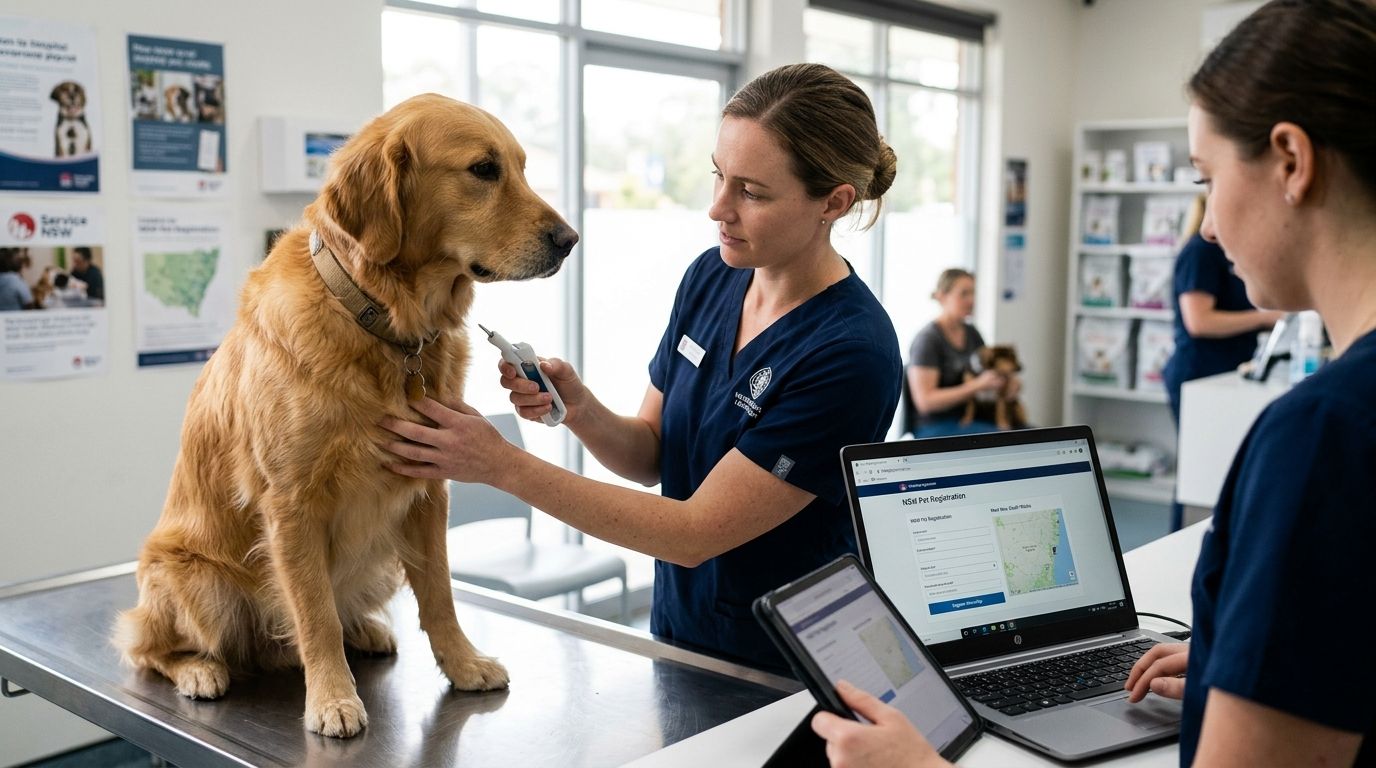
- The vet scans the dog first to confirm there's no existing chip, then inserts the new microchip under the skin between the shoulder blades.
- The vet scans again immediately to confirm the chip is reading correctly and hasn't migrated.
- You're handed (or emailed) a form or receipt showing the unique microchip number — this is the number you'll enter on the NSW Pet Registry, so keep it.
Expected result: you leave the clinic with a working, scanned-and-confirmed chip and a document showing the 15-digit number. Nothing is registered yet.
If you're choosing a chip brand rather than letting the clinic decide, the differences mostly come down to scanner compatibility across states — the dog microchip brands compared guide breaks down which ones are read reliably by Australian pound and vet scanners.
Register the microchip and your details
- Go to the NSW Pet Registry website (petregistry.nsw.gov.au) and select Register or Create account.
- Set up your profile with your name, address, and contact details — this becomes the record a ranger or vet looks up if your dog is ever found.
- Enter the microchip number exactly as shown on your vet paperwork, then select the species, breed, sex, and colour.
- If your dog is desexed, upload the desexing certificate from your vet — this affects which registration category applies.
- Pay the lifetime registration fee through the site to finalise the record. This is a one-off payment, not an annual renewal.
- Download or screenshot the confirmation page as proof of registration.
Expected result: a confirmation showing your dog's name, microchip number, and your details as the registered owner, dated and ready to produce if a ranger or shelter ever asks.
Registering a chipped rescue or adopted dog
Dogs adopted from a shelter or rescue almost always already have a microchip — you don't repeat the implant step. What you do need is a transfer: the previous registration record still shows the shelter or foster carer as the owner until you update it.
- Ask the rescue organisation for the existing microchip number at handover — it should be on the adoption paperwork.
- Log into the NSW Pet Registry and search or add the microchip number to start a transfer of ownership.
- Enter your details as the new owner and submit any transfer documentation the rescue provided.
- Confirm the record now shows your name and address, not the shelter's.
This matters more than it sounds — if the record still lists the rescue and your dog goes missing, the ranger calls the shelter, not you. A full health check for rescue and adopted pets at the same appointment is a good way to confirm the chip is reading correctly before you finalise anything.
Troubleshooting
- Microchip number doesn't match what's on the registry form: ask your vet to rescan the chip on the spot — transposed digits from handwritten forms are the most common cause.
- Registration payment times out or fails online: the NSW Pet Registry system occasionally drops sessions during busy periods; try again later rather than re-entering all details from scratch, which can create a duplicate record.
- You moved to NSW with a dog registered in another state: you still need to register on the NSW Pet Registry within 28 days of establishing residency — interstate registration doesn't automatically transfer.
- Desexing discount wasn't applied: this usually means the certificate upload didn't attach correctly; contact the registry to add it after the fact rather than paying the higher category by mistake.
- You never got around to registering and it's been months: register now. Late registration is still better than none, and it stops the compliance gap from growing every day the dog is out and about.
Customize your workflow
If you've got a puppy, book the microchip appointment alongside a vaccination visit rather than as a separate trip — most Northern Beaches vets, including Two by Two Vet in Balgowlah, do both in one consult. The puppy vaccination schedule guide lays out when those shots fall relative to the 12-week microchipping deadline, so you can plan one trip instead of three.
Owners who've had a dog for years and aren't sure if the chip was ever registered should check the NSW Pet Registry directly rather than guess — a quick lookup by microchip number confirms whether the record exists and whose name is on it.
Book your dog's microchip appointment
Microchipping and registration guidance in one Balgowlah visit.
FAQ
What is microchip registration nsw and how is it different from microchipping?
Microchipping is the physical implant of a chip under your dog's skin; registration is the separate legal step of linking that chip number to your name and address on the NSW Pet Registry. A dog can be microchipped and still legally unregistered if that second step is never completed.
How old does my puppy need to be for microchipping in NSW?
NSW law requires puppies to be microchipped by 12 weeks of age, or before sale or change of ownership if that happens earlier. Lifetime registration is then due by 6 months of age.
How long do I have to register the microchip after my vet implants it?
You have 28 days from the microchipping date to complete registration on the NSW Pet Registry. Missing this window doesn't remove the obligation, it just leaves the dog unregistered until you finish the process.
Is registration a one-off payment or does it renew every year?
NSW lifetime registration is a single one-off payment tied to the dog for its life, not an annual renewal. You only need to update the record if your details change or ownership changes.
Do I need to re-register a dog I adopted from a rescue?
Yes. The dog already has a chip, but the NSW Pet Registry record usually still lists the shelter or foster carer as the owner. You need to transfer the registration into your own name after adoption.
What happens if my dog's microchip is never registered?
An unregistered dog, even with a working chip, is treated as non-compliant under the Companion Animals Act 1998 and can attract a council infringement. It also slows down reuniting you with a lost dog because the record has no current owner details.
Can my vet register the microchip for me?
Some clinics will start the registration process on your behalf at the time of implanting, but the legal responsibility to confirm it's completed and linked to your correct details sits with you as the owner.
Does desexing affect my dog's registration category?
Yes, desexed dogs are registered in a different category than entire dogs, and you'll need to upload a desexing certificate to have that reflected correctly on the NSW Pet Registry.
One last thing
The part almost every owner misses isn't the microchip appointment — it's checking the record years later. Chips outlast phone numbers and addresses, so if you've moved house or changed your mobile since your dog was first registered, the NSW Pet Registry may still be holding your old details, which defeats the entire point of chipping in the first place. Update it the same week you move, not when the dog goes missing and you realise the contact number on file is disconnected.