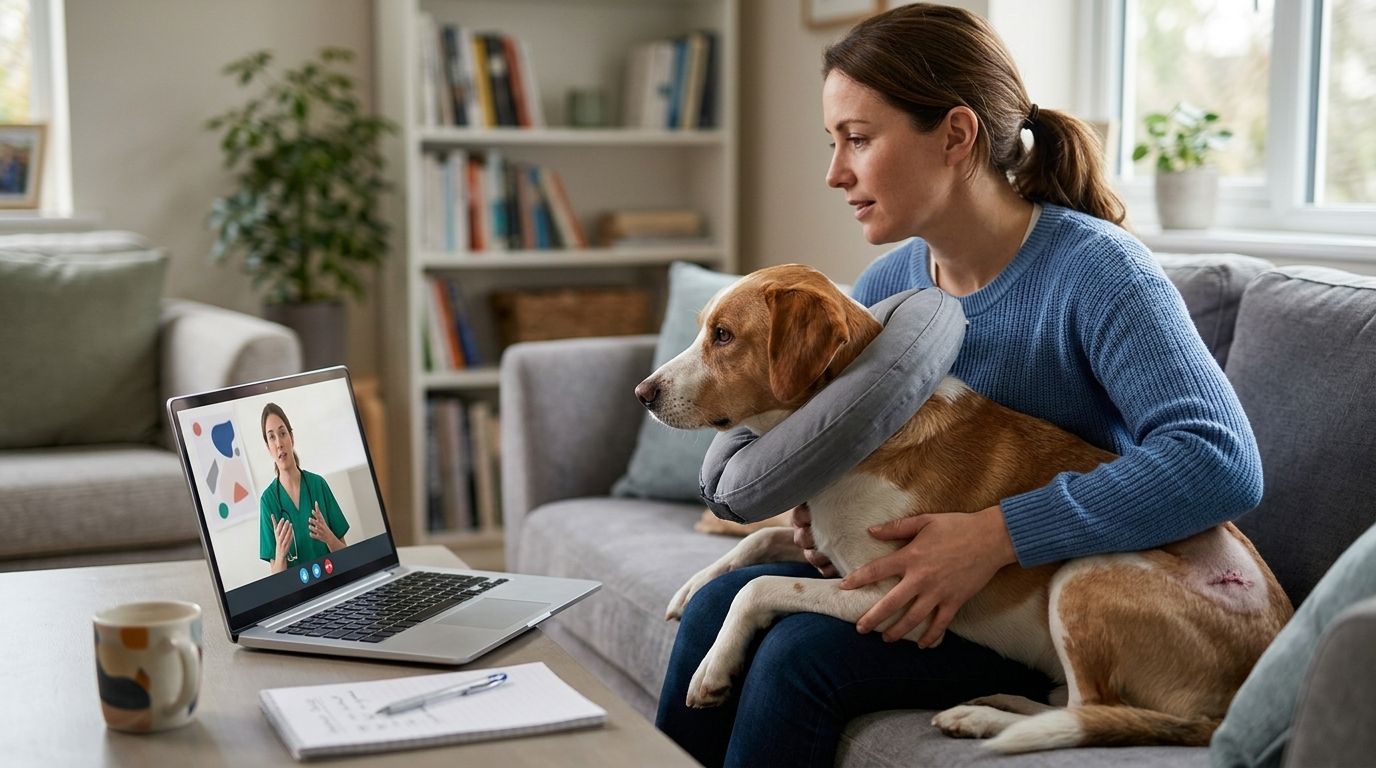
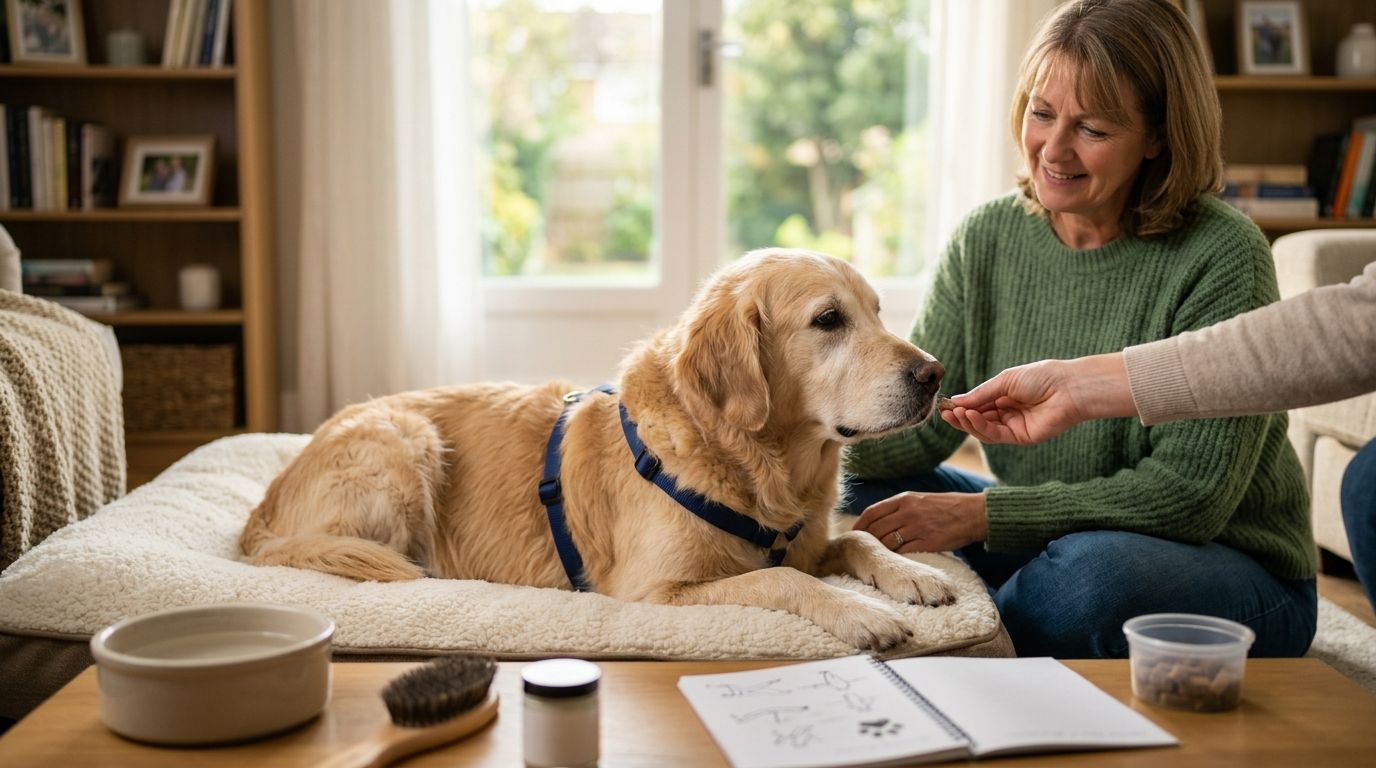
Bringing a dog or cat home after tick paralysis treatment feels like the crisis is over, but the first 5-7 days at home are where relapses actually happen. Instead of guessing what "rest" means and hoping for the best, set up a structured recovery routine – quiet space, upright feeding, twice-daily symptom checks – so you catch a setback before it becomes an emergency again.
- Tick paralysis recovery at home means 5-7 days of strict rest, upright feeding, and twice-daily breathing checks.
- Ixodes holocyclus toxin can keep affecting the nervous system for 24-48 hours after the tick is removed and antiserum given.
- Regurgitation, a changed bark or meow, or noisy breathing after discharge means call the vet immediately, not wait for the morning appointment.
- Dogs and cats both need elevated feeding positions post-treatment because megaesophagus is the most common relapse complication in 2026 caseloads.
- A quiet, non-slip recovery space with no stairs or jumping cuts the risk of injury while muscle strength is still returning.
Why this matters
Tick paralysis on Sydney's Northern Beaches is caused by the paralysis tick, Ixodes holocyclus, and the neurotoxin it injects doesn't switch off the moment the tick is removed or antiserum is given. Toxin already circulating in the bloodstream keeps affecting nerve and muscle function for a day or two after hospital discharge, which is exactly why the at-home phase matters as much as the treatment itself.
Most pets discharged after tick paralysis treatment are still wobbly, easily fatigued, and at risk of regurgitation from oesophageal weakness (megaesophagus). Getting the home environment and feeding routine right in this window is what prevents aspiration pneumonia – the complication that sends more tick paralysis patients back to hospital than the paralysis itself.
The pets that relapse are almost never the ones with the worst initial paralysis – they're the ones whose owners resumed normal activity and feeding too soon.
Before you start
- Confirm your discharge instructions specify strict rest duration (usually 5-7 days) and any medication schedule – write it on paper, not just memory, because dosing gets confused after a stressful hospital stay.
- Set up a ground-floor recovery area now, before you bring your pet home. Stairs and jumping are the two things most likely to cause a fall while muscle strength is still returning.
- The non-obvious gotcha: feeding position matters more than food type. A dog or cat fed lying down or with its head low can regurgitate and aspirate food into the lungs even days after discharge, because the oesophagus can stay weak longer than the limbs do. Get the upright feeding setup ready before the first meal home, not after a scare.
If you don't already have a first aid kit with a thermometer and basic supplies at home, a pet first aid kit is worth having on hand for temperature checks during recovery, not just emergencies.
Set up the recovery space
- Choose a single ground-floor room with non-slip flooring – tiles and floorboards are the main hazard, throw a towel or bath mat over the danger patches.
- Block access to stairs, furniture your pet normally jumps onto, and any raised surface with a baby gate or closed door.
- Keep the room at a stable, comfortable temperature. Pets recovering from tick paralysis regulate body heat poorly for the first few days.
- Add a supportive, low-sided bed so your pet doesn't have to climb in or out. A recovery bed designed for post-surgery pets works well here because the low entry reduces strain on legs still regaining coordination.
Expected result: your pet can move between water, bed, and toilet spot without stairs, jumps, or slippery surfaces in the way.
Configure feeding and hydration
- Feed small meals 4-6 times a day rather than one or two large ones – smaller volumes are easier for a weakened oesophagus to move.
- Elevate the food and water bowls, or hold your pet upright on your lap during feeding, so gravity assists swallowing instead of fighting it.
- Keep your pet upright or standing for 10-15 minutes after each meal before letting them lie down. This is the single step owners skip most often and the one most linked to regurgitation.
- Offer water frequently in small amounts rather than leaving one large bowl down all day – dehydration and over-drinking both slow recovery.
Expected result: meals go down without coughing, gagging, or immediate vomiting, and your pet's energy improves meal over meal rather than staying flat.
Monitor for relapse and complications
- Check breathing rate and effort twice daily at rest – noisy, laboured, or rapid breathing is the most urgent warning sign.
- Listen for a changed voice: a hoarse bark, weak meow, or loss of voice signals laryngeal muscle weakness returning.
- Watch gait after each rest period – increasing wobbliness or collapse, rather than steady improvement, means the toxin effect may be worsening rather than clearing.
- Track appetite and swallowing at each meal. Gagging, coughing during eating, or food coming back up (regurgitation, not vomiting) needs same-day attention.
Expected result: a visible day-over-day improvement in strength, breathing, and appetite. Flat or worsening trends at any check point mean it's time to call, not wait.
Recovery for cats vs dogs
Cats get tick paralysis less often than dogs but the recovery protocol is nearly identical – upright feeding, strict rest, and twice-daily checks. The difference is presentation: cats hide weakness more effectively, so a cat that's simply "quiet" or hiding more than usual deserves the same scrutiny as an obviously wobbly dog. Cats are also more prone to overheating stress during recovery because they're less likely to pant visibly when distressed, so temperature monitoring matters more in cats than in dogs during 2026's warmer months.
Troubleshooting
- Regurgitates food after every meal: switch to even smaller, more frequent meals and confirm the upright-after-feeding rule is being followed for the full 10-15 minutes.
- Won't eat at all: offer a stronger-smelling, warmed version of the usual food in tiny amounts by hand before assuming appetite loss is a relapse sign.
- Breathing sounds different overnight: don't wait until morning – this is one of the few tick paralysis signs that genuinely can't wait for a scheduled visit.
- Seems fine one day, weaker the next: toxin already in the system can still be working through the body for 24-48 hours post-antiserum; report it rather than assuming it's normal fluctuation.
- Reluctant to walk even short distances: mild reluctance is expected in the first 2-3 days; reluctance that isn't easing by day 4-5 needs a recheck.
If any of these escalate outside normal clinic hours, know how to book a same-day vet appointment on the Northern Beaches before you need it, not while you're already worried at 9pm.
Worried about a relapse sign?
Get your pet checked the same day rather than waiting it out.
What to do next
Once the strict-rest window closes and your vet clears normal activity, the job shifts from recovery management to prevention. Tick paralysis recovery at home is a one-time protocol; ongoing tick prevention is what keeps you out of this situation again. Review your current product against the best flea and tick prevention products for dogs in Australia and confirm the reapplication schedule actually matches what's on the label – missed doses are the most common reason for repeat tick paralysis cases in 2026.
FAQ
How long does tick paralysis recovery take at home?
Most pets need 5-7 days of strict rest and monitored feeding after hospital discharge, though full return to normal activity can take up to two weeks in more severe cases. The toxin can keep affecting nerves for 24-48 hours after the tick is removed, so early days matter most.
Can a dog relapse after tick paralysis treatment?
Yes. Toxin already circulating in the body can continue affecting muscles for a day or two after antiserum treatment, which is why symptom checks continue at home rather than stopping at discharge.
Why does my dog need to eat sitting upright after tick paralysis?
Tick paralysis toxin weakens the oesophagus (megaesophagus), so lying flat while eating makes regurgitation and aspiration into the lungs more likely. Upright feeding for 10-15 minutes after each meal lets gravity help food move down safely.
Is tick paralysis recovery different for cats than dogs?
The home protocol is nearly identical for cats and dogs, but cats hide weakness better, so quiet or withdrawn behaviour in a recovering cat deserves the same attention as visible wobbliness in a dog.
What are the warning signs of a tick paralysis relapse?
Noisy or laboured breathing, a changed bark or meow, worsening wobbliness instead of improvement, and regurgitation during feeding are the main relapse signs that need same-day veterinary attention.
Should I restrict my pet's activity after tick paralysis treatment?
Yes, strict rest with no stairs, jumping, or off-leash activity is standard for 5-7 days after discharge because muscle strength and coordination haven't fully returned even when your pet looks alert.
When can my pet go back to normal walks after tick paralysis?
Only after your vet confirms strength, breathing, and swallowing have normalised at a recheck – this is usually assessed around the one-week mark, not on a fixed calendar date.
One last thing
The detail most owners miss: it's not the paralysis itself but the combination of a weak oesophagus and resumed normal feeding that causes most post-discharge complications. A pet can look 80% recovered on its feet while still being at real risk of aspiration at the food bowl – treat feeding position as seriously as you treat the rest restriction, right through the full recovery window.