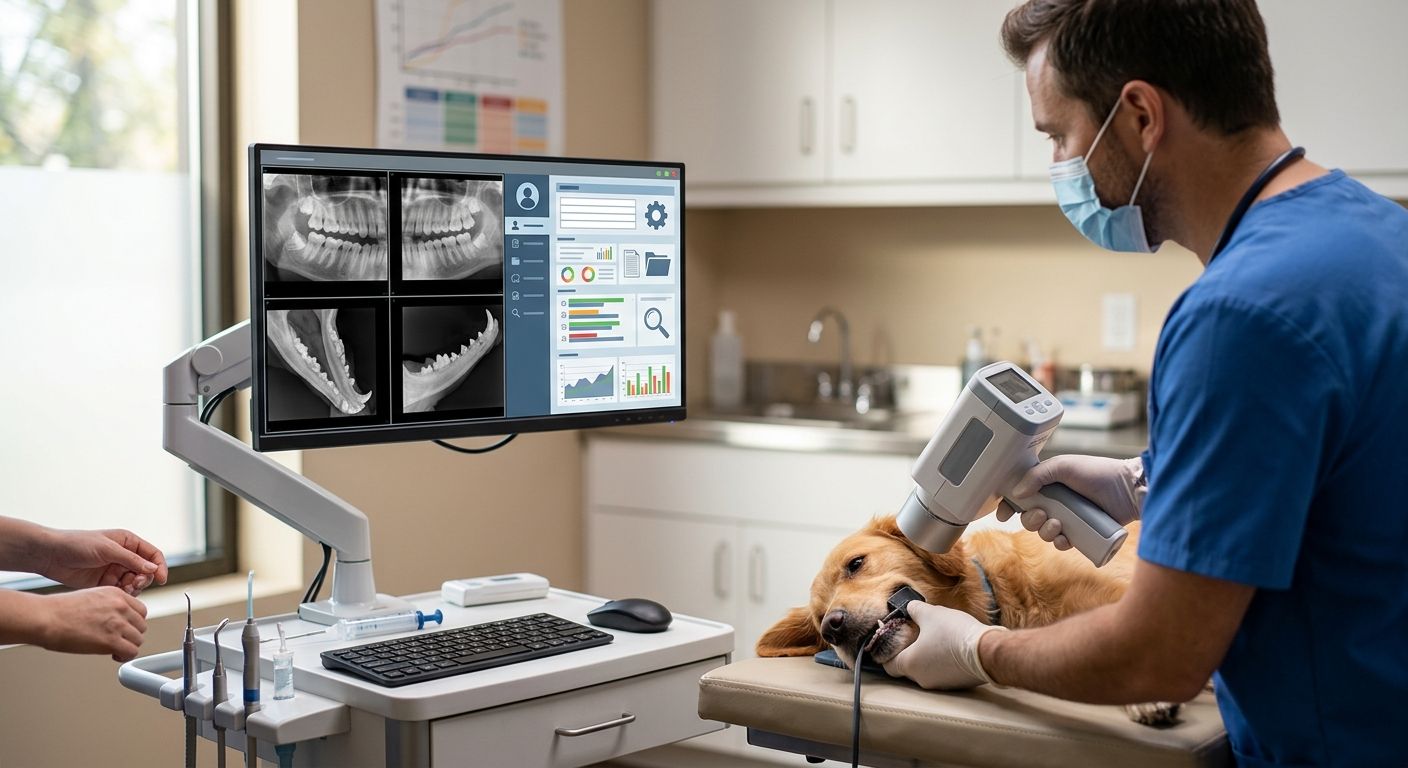
Dental x-rays taken during your pet's clean at Two by Two Vet don't sit in a separate dental file somewhere — they attach directly to the same digital health record that holds vaccination dates, surgery notes and bloodwork, so any vet who sees your pet later has the full picture in one place.
- Dental x-rays taken at Two by Two Vet attach to your pet's main digital health record, not a standalone dental file.
- A pet dental x-ray health record matters most when you switch clinics, lodge an insurance claim, or need a specialist referral.
- Up to 80% of dogs show some periodontal disease by age three, and most of it is only visible on an x-ray, not a visual check.
- Missing x-ray images are a common reason Australian pet insurers query or delay a dental claim.
- Ask for your pet's x-ray images in writing before you leave the clinic — record transfer between vets is not automatic.
Why this matters
A dental x-ray shows what's happening under the gumline: root abscesses, bone loss, retained roots from old extractions. None of that shows up on a visual exam while your pet is awake.
The problem isn't taking the x-ray. It's what happens to the image afterwards. If it sits on a machine and never reaches the written record, your pet's next vet — or your own vet a year later — is starting from zero. A dental x-ray only has long-term value if it's actually attached to the health record other vets and insurers can see. That's the workflow this guide walks through.
If your pet is older, dental disease and general health checks tend to overlap more, and the senior dog dental care guide covers what changes once your dog passes seven or eight.
Before you start
- Fasting is required before the anaesthetic. Dental x-rays are taken while your pet is under general anaesthetic, so food needs to be withheld the night before — the clinic will confirm exact timing when you book.
- Bring or confirm any existing history if your pet has had dental work, extractions or bloodwork done elsewhere. Old x-rays from another clinic don't transfer automatically — you need to request them.
- The gotcha: if your pet is on pet insurance, ask whether the x-ray images themselves (not just a written summary) need to be submitted with the claim. Several Australian insurers reject or query dental claims when only a report is attached and the actual image isn't — get this sorted before the appointment, not after a rejection letter.
Attaching x-rays to the initial dental record
- During check-in, the vet confirms your pet's current health record — vaccination status, any existing conditions, current medications. This matters because anaesthetic risk is assessed against that history.
- Once your pet is under anaesthetic, full-mouth x-rays are taken tooth by tooth. Each image is tagged to your pet's individual chart, not a general dental log.
- The vet reviews the images against the visual exam done moments earlier. Expect the result: any tooth needing extraction, a root abscess, or bone loss gets flagged directly against that tooth number in the chart.
- Images and findings are saved to your pet's permanent digital record before you're called for pickup. This is the point where the x-ray stops being a loose file and becomes part of your pet's ongoing history.
Reading the x-ray against past records
- If your pet has visited Two by Two Vet before, the vet cross-checks new x-ray findings against prior visits — a tooth flagged as borderline last year either resolved, stayed stable, or worsened.
- Any pattern that repeats (recurring gum disease on the same side, for example) gets noted as an ongoing issue in the record rather than treated as a one-off event each visit.
- Expected result: your pet's chart shows a timeline, not just a snapshot — useful if you ever need to prove a condition existed before a certain date for an insurance claim.
Sending findings to insurance and referrals
- If a claim is being lodged, the clinic can attach the x-ray images and written findings directly to the claim documentation rather than a generic summary letter.
- Confirm with your insurer which format they require — some accept a PDF report with embedded images, others want raw image files. Ask the front desk to check before submission.
- Expected result: a claim that includes the actual x-ray images moves through insurer review faster than one relying on a written description alone.
For claims lodged the same day as treatment, submitting a pet insurance claim without leaving the vet walks through what paperwork the clinic can hand over on the spot.
When the x-ray reveals a problem that needs a specialist
Sometimes a dental x-ray finds something outside routine dental work — a jaw fracture risk, an oral mass, or disease severe enough to need a veterinary dentist. In that case the workflow shifts:
- The vet flags the finding in the record with the specific x-ray image attached, not just a written note.
- A referral letter is prepared that includes the imaging, so the specialist isn't starting the diagnostic process from scratch.
- Expected result: the specialist sees the same x-ray your vet saw, which shortens the time to a second opinion or surgical plan. The specialist referral workflow covers what happens after that handoff in more detail.
Troubleshooting
- Insurer says the claim is missing supporting imaging — the written report was submitted without the actual x-ray file. Ask the clinic to resend with images attached, not just the summary.
- New vet has no history when you switch clinics — records including x-rays don't move automatically between practices in Australia. You need to request a transfer in writing.
- You can't find last year's dental x-ray results — ask reception to pull the record by your pet's name and date of birth, not just your surname; multi-pet households are the most common mix-up.
- Follow-up x-ray recommended but no reminder arrived — confirm your contact details are current in the record; reminder systems only work if the email or mobile on file is correct.
- Anaesthetic risk questioned because of an old undocumented condition — this is why disclosing full history before the dental appointment matters; gaps in the record can delay same-day treatment while the vet confirms it's safe to proceed.
Customize your workflow
Once the dental x-ray is logged, the same principle applies to the rest of your pet's file. If you're planning to move clinics, read through how to transfer your pet's medical records to a new vet clinic before you book the first appointment elsewhere, so nothing — including x-ray images — gets left behind.
If cost is the reason you're weighing whether to go ahead with a dental clean at all, how much a dog dental clean costs in Australia in 2026 breaks down what's typically included alongside the imaging.
Book your pet's dental check
Get x-rays taken and logged straight into your pet's Two by Two Vet record.
FAQ
Do dental x-rays get added to my pet's permanent health record?
Yes — at Two by Two Vet, dental x-rays are attached to your pet's ongoing digital health record alongside vaccination history and surgery notes, not stored as a separate dental file.
Why does my pet need x-rays if the vet already checked their teeth visually?
A visual exam only shows the crown of the tooth above the gumline. Root abscesses, bone loss and hidden disease only show up on an x-ray, and up to 80% of dogs have some periodontal disease by age three.
Will my pet insurance cover a dental x-ray?
Coverage depends on your policy and whether the condition is pre-existing, so check your specific plan. Insurers generally want the actual x-ray image submitted with the claim, not just a written summary.
Can I get a copy of my pet's dental x-rays?
Yes, ask the clinic directly and they can provide copies of the images for your own records or to send to another vet.
What happens to my pet's x-rays if I switch vet clinics?
Records including x-ray images don't transfer automatically between Australian vet clinics. You need to request the transfer in writing from your previous clinic.
How long does a dental x-ray take?
Full-mouth dental x-rays are taken while your pet is under the same general anaesthetic used for the dental clean, so no separate sedation visit is needed.
Is a dental x-ray necessary for every dog or cat?
It's recommended for any pet undergoing a dental clean, since hidden disease under the gumline is common even in pets with teeth that look fine on the surface.
What if the x-ray finds something serious?
The finding gets flagged in your pet's record with the image attached, and if specialist treatment is needed, that same x-ray goes with the referral so the specialist isn't starting from scratch.
One last thing
The single biggest gap owners hit isn't the x-ray itself — it's assuming the image automatically follows their pet everywhere. It doesn't, unless someone requests it. Ask for a copy of your pet's dental x-rays in writing at pickup in 2026, even if you have no plans to switch clinics. It costs nothing to have it, and it's the one document that saves the most time later, whether that's an insurance query, a second opinion, or a move across Sydney.