Small breed dog desexing is the surgical removal of reproductive organs — spay for females, neuter for males — carried out on breeds like Chihuahuas, Maltese, Cavalier King Charles Spaniels and French Bulldogs, usually under 10kg. The surgery itself is the same procedure as for larger dogs, but the anaesthesia dosing, growth-plate timing and recovery gear all need to be scaled down for a smaller frame and a faster metabolism.
- Dog desexing small breeds typically happens between 5 and 6 months, earlier than the 12-18 month window often used for giant breeds.
- Small dogs process anaesthetic drugs faster than large breeds, so weight-based dosing and warming during surgery matter more.
- A correctly sized recovery cone or suit prevents licking-related infections, which are more common in toy breeds than owners expect.
- Two by Two Vet in Balgowlah runs pre-anaesthetic screening before every small-breed desexing booking, not just for older dogs.
Why this matters for small breed dogs
Small breeds hit skeletal maturity months before large and giant breeds, which is why vets bring desexing age forward for toy dogs rather than waiting until 12 months or later. Patella luxation — a common orthopedic condition in Chihuahuas, Pomeranians and other toy breeds — is also a factor vets weigh when discussing timing, since some surgeons prefer to address joint concerns before or alongside desexing.
Anaesthesia is the other big difference. A 3kg Maltese has far less margin for dosing error than a 30kg Labrador, so accurate weight, careful IV fluid rates and active warming during surgery all matter more for dog desexing small breeds than the same procedure in a bigger dog. At Two by Two Vet in Balgowlah, small-breed desexing bookings go through the same pre-anaesthetic blood screening used for cats and larger dogs, just calibrated for pets often under 10kg.
Update your timing plan first
Before booking anything, work out where your dog sits on the age curve.
- Check your breed's typical adult weight and growth-plate closure age
- Note any known orthopedic risk (patella luxation, hip issues) that might shift timing
- Ask your vet whether your specific breed benefits from earlier or slightly later desexing
- Confirm your dog's current weight against breed averages before locking in a date
Book the pre-anaesthetic health check
This step happens whether you're going with a general practice vet or a specialist surgical centre.
- Bloodwork to check kidney and liver function before anaesthesia
- A full physical exam including heart and lung auscultation
- Weight confirmation on the day, since small dogs can shift 200-300g week to week
- A dental check, since small breeds are prone to early dental disease that can affect the anaesthesia plan
Ask about the anaesthesia protocol for small dogs
This is where a clinic's experience with toy and small breeds actually shows up.
- Weight-based drug dosing rather than a flat adult-dog dose
- An IV catheter placed before induction for rapid drug access if needed
- Active warming (heat mats, warmed fluids) since small dogs lose body heat fast under anaesthesia
- Continuous monitoring of heart rate, oxygen saturation and temperature throughout surgery
Two by Two Vet applies this protocol to every small-breed desexing, adjusting drug volumes and monitoring intervals for dogs under 10kg rather than using a one-size-fits-all approach.
Prepare the recovery space at home
Set this up before surgery day, not after you get home groggy and holding a dog.
- A quiet, low-traffic room away from stairs and other pets
- Non-slip flooring or a rug over tiles, since sedated dogs are wobbly
- A low bed or crate so there's no jumping in or out
- Food and water within easy reach without bending to reach high bowls
Manage the cone or recovery suit properly
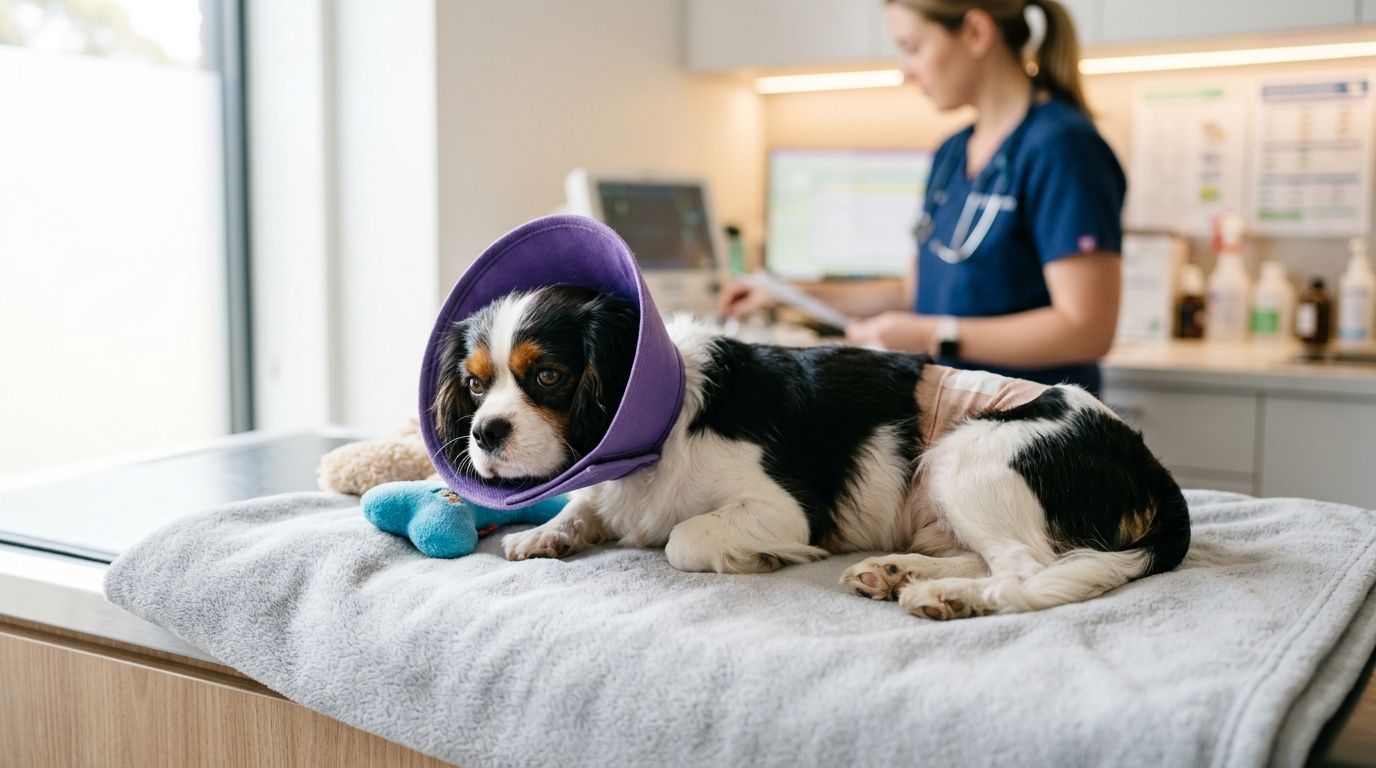
Small breeds are notoriously good at wriggling out of standard-sized cones, and licking a fresh incision is the fastest way to turn a routine desexing into an infected wound. A well-fitted cone or post-desexing recovery suit sized for a toy or small breed frame, not a generic medium-dog size, solves most of this.
- Fit the cone so it extends past the nose but doesn't rub the neck
- Consider a soft recovery suit as an alternative for dogs that fight the cone
- Check the incision daily for redness, swelling or discharge
- Keep the cone on 24/7 for the first 7-10 days unless your vet says otherwise
Restrict exercise for the first 10 to 14 days
Small dogs recover fast and start acting normal within days, which is exactly when owners let their guard down.
- Lead walks only, no off-lead running or jumping onto furniture
- A well-fitted harness for small breeds that doesn't press on the abdominal incision
- No stairs unless carried, especially for males with scrotal incisions
- Short toilet-break walks rather than full walks until the follow-up check
Book the follow-up wound check
Most small breed desexing follow-ups happen 7-10 days post-op.
- Confirm the incision is closed and dry before removing the cone
- Ask whether sutures need removing or are dissolvable
- Flag any behaviour changes (lethargy, appetite loss) at this visit
- Get the green light before resuming normal exercise levels
Book a small breed desexing consult
Talk through timing, anaesthesia and recovery with the Balgowlah team.
Comparing desexing options for small breeds
| Option | Best for | Key limitation | Verdict |
|---|---|---|---|
| Standard (open) desexing | Most healthy small breed dogs at a general practice vet | Standard recovery cone and rest period still apply | Buy |
| Laparoscopic (keyhole) spay | Owners wanting a smaller incision and often faster comfort recovery | Not offered at every clinic; usually females only | Hold |
| Early-age desexing (8-16 weeks) | Rescue and shelter puppies before rehoming | Debated for pure breeds with known growth-plate or joint concerns | Wait |
| Delayed desexing (12+ months) | Dogs flagged with orthopedic risk factors by a vet | Longer window of unwanted pregnancy, marking or roaming risk | Wait |
For owners comparing clinics rather than procedures, it's worth reading how different Sydney practices approach desexing options for small breeds before booking, since protocols and post-op support vary more than the surgery itself.
Common mistakes small breed owners make
- Overfeeding during recovery — small breeds gain weight proportionally faster than large dogs, and reduced activity after surgery makes this worse within weeks.
- Skipping the cone because the dog hates it — this is the single fastest route to a licked-open incision and a return trip to the vet.
- Off-lead exercise too soon — a tiny backyard sprint can pull sutures just as easily as a big dog's run.
- Using an ill-fitting harness — straps that sit across the incision line irritate healing tissue and can cause swelling.
- Ignoring growth-plate timing for toy breeds — desexing a Chihuahua or Pomeranian on the same schedule as a Labrador ignores real differences in skeletal maturity.
FAQ
What age should I desex a small breed dog?
Most small breed dogs are desexed between 5 and 6 months, earlier than the 12-18 month window some vets use for giant breeds. Your vet will adjust this if your dog has a known orthopedic risk like patella luxation.
Is it safe to desex a small dog before 6 months?
Yes, when a pre-anaesthetic health check confirms the dog is healthy and at an appropriate weight for surgery. Vets weigh growth-plate timing and breed-specific risk before recommending an exact age.
How long does recovery take after small breed desexing?
Most small dogs are back to normal energy within a few days but need 10-14 days of restricted exercise and a cone or recovery suit. The incision is usually checked at a follow-up visit around day 7 to 10.
Do small dogs need a different anaesthetic protocol than large dogs?
Yes, small breeds need precise weight-based drug dosing and active warming during surgery because they lose body heat and process anaesthetic drugs faster than large dogs. Continuous monitoring throughout the procedure reduces the risk this creates.
Does my small breed dog need a smaller cone or suit?
A generic medium-dog cone often lets toy breeds reach the incision, so a correctly sized cone or soft recovery suit is worth fitting before surgery day. Ill-fitting gear is one of the most common causes of post-op licking injuries.
How much exercise restriction does a small dog need after desexing?
Lead walks only for 10-14 days, with no jumping, stairs or off-lead running until the follow-up check clears the incision. Small dogs recover fast and often act normal within days, which is exactly when owners let restrictions slip.
Is laparoscopic desexing available for small breed dogs?
Laparoscopic, or keyhole, spay is an option for some female dogs and offers a smaller incision, but it isn't offered at every clinic and is generally only used for spays, not neuters. Ask your vet whether it's available and appropriate for your dog.
Does desexing cause weight gain in small dogs?
Desexing lowers a dog's metabolic rate slightly, and small breeds can gain weight faster than large breeds if feeding isn't adjusted. Portion control and consistent exercise after the recovery period keep this in check.
One last thing
The detail most owners miss in 2026 isn't the surgery — it's the cone. A standard medium-dog cone on a 3kg Maltese leaves enough gap for the dog to reach the incision with its tongue, and that single fit issue causes more post-op vet visits than anaesthesia complications ever do. Get the sizing right before surgery day and the rest of recovery is mostly about patience.